Last updated November 16, 2026



Free written scope consultation - allowances, timeline, and change-order rules on paper before a single trade is scheduled
Windows & Doors Troubleshooting: Common Problems and How to Fix Them
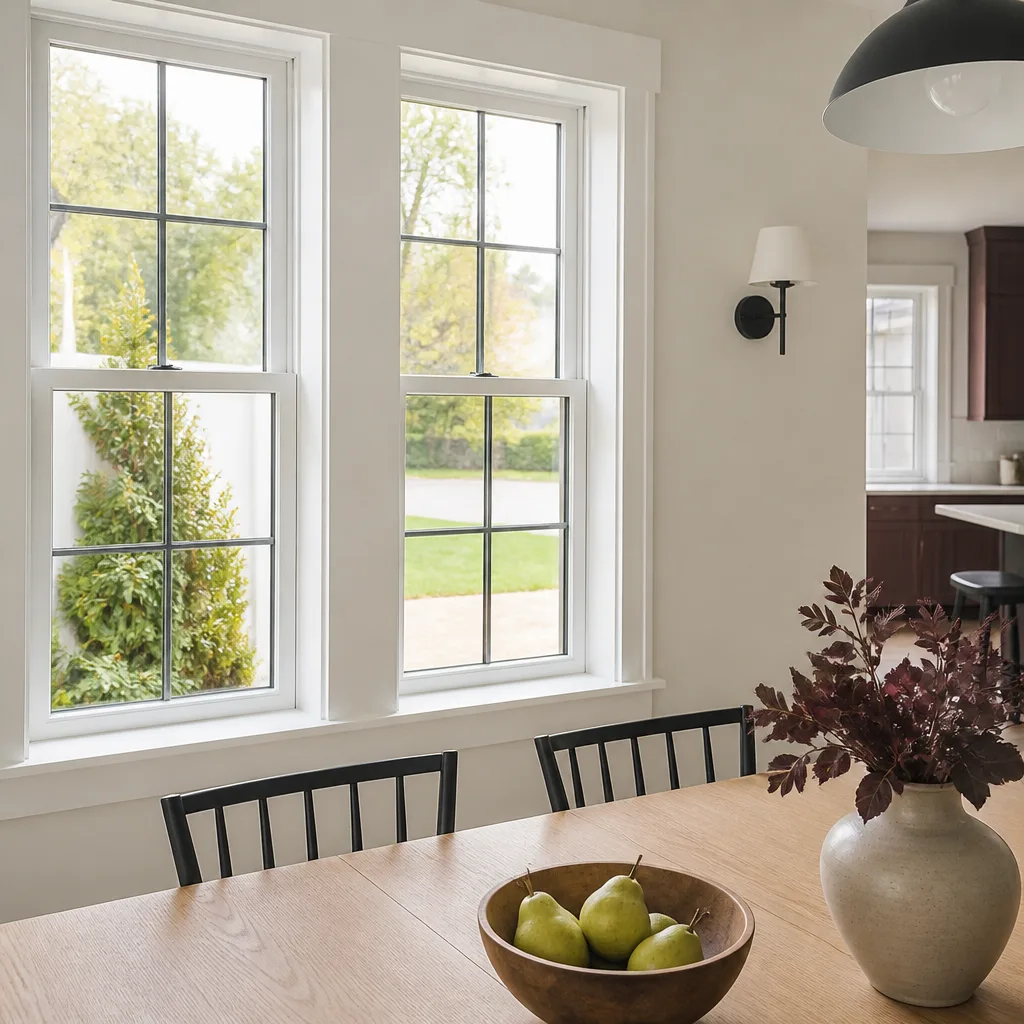
A sliding patio door that glides in January and grinds in July is not a track problem. It is a frame expansion problem, usually caused by improper shimming at installation. Lubricating the track fixes nothing, and it delays a diagnosis that gets more expensive every season. That pattern repeats across most of the window and door complaints we’re called to in Glendale: the symptom shows up at the sash or the frame, but the cause lives in the flashing, the rough opening, or the sill pan. This guide works backward from that visible symptom to the actual source, so you stop replacing hardware that was never the problem.
Quick Answer
Most window and door problems that look like hardware failures are building envelope failures. Sticking operation, drafts, and water intrusion usually trace to improper shimming, failed sill pan flashing, or missing rough-opening seals rather than to locks, rollers, or hinges. Fixing the hardware without fixing the envelope means the same symptom returns by the next season change, and in Glendale the swing between dry summers and wet winters exposes it fast.
Styles & brands we work with
- Kitchen remodeling
- Bathroom remodeling
- Home additions & ADU
- Roofing
- Windows & doors
- Driveway & pavers
- Fence
Table of Contents
- Symptom-to-Source Diagnostic Table
- Failed Weatherstripping vs. Failed Sill Pan Flashing
- Condensation Between IGU Panes: What It Really Means
- Door Alignment Diagnostics: The Three Measurements
- Why Glendale’s Climate Swing Exposes Installation Errors
- Troubleshooting Repairs, Re-Inspection, and Resale Disclosures
- Common Mistakes to Avoid
- When to Call a Professional
Symptom-to-Source Diagnostic Table
Before you touch a screwdriver, trace the symptom to its likely source. The table below is the fastest way to avoid fixing the wrong thing. Each row pairs a visible problem with the cause we find most often when we open up the assembly, plus the general repair range you should expect so you know what kind of conversation you’re about to have.
- Drafts around the sash or frame: worn weatherstripping or a missing rough-opening seal. Cheapest of the group to resolve, and the most often misdiagnosed as a window replacement candidate.
- Condensation between panes: a failed seal in the insulated glass unit (IGU), not a condensation problem in the room. Covered by the glass warranty, not the cleaning rag.
- Sticking or grinding operation: improper shimming, frame racking, or a roller that’s carrying weight it shouldn’t. Seasonal timing points to the frame, not the hardware.
- Water intrusion at the sill or corner: failed sill pan flashing or a missing kick-out at the flashing termination. This is the expensive one, and the one worth diagnosing early.
- Door out of square at the latch: rough opening out of plumb or a hinge-side shim that has compressed. The door is usually fine; the opening is not.
In Glendale we see the water-intrusion row surge after the first real winter rain, when a sill pan that was never correctly sloped finally fills and spills inward. The window looks guilty. The flashing is.
Failed Weatherstripping vs. Failed Sill Pan Flashing
Both problems show up as “air or water coming in around the window,” but they sit at opposite ends of the cost and complexity scale, and mixing them up is the most common way homeowners waste money. You can usually tell them apart with a flashlight and a garden hose.
A failed weatherstripping repair is a DIY job. Replacement bulb or fin seal runs $15 – $40 for most standard windows and doors, and you can often finish it in an afternoon with a putty knife and a clean channel. Failed sill pan flashing is a contractor repair. Expect $300 – $800+ depending on how much siding and interior trim has to come off to reach it. Here’s the test:
- Flashlight test for weatherstripping. At night, have someone run a bright light along the exterior frame while you watch from inside. Light crossing the gap at the sash edge means the seal is worn.
- Garden hose test for flashing. On a dry day, run a slow stream against the base of the window from outside for five minutes. Watch the interior sill. Water appearing at the interior sill or below the frame points to the sill pan or the flashing behind the siding, not the weatherstripping.
- Read the seam. If the interior sill shows a water line that follows the frame rather than the sash, the pan is the suspect.
Caulking over a failed sill pan buys one season. The water is coming from behind the siding, and the caulk is on the wrong side of it. If you’re already weighing a broader exterior repair, our Rowan Construction Group Glendale home page lays out how we sequence envelope work.
Condensation Between IGU Panes: What It Really Means
Fog or droplets between the two panes of glass mean the sealed insulated glass unit has lost its desiccant and its seal. That is inside the sandwich, sealed at the factory. You cannot clean it out, dry it out, or drill it out. The unit is failing.
The good news is that this is almost always a warranty item, not a structural one. Read the NFRC label on the glass and the warranty documentation before you call anyone. The label tells you the unit’s U-factor, Solar Heat Gain Coefficient, and Visible Transmittance, and the model number lets the manufacturer trace the exact unit. Coverage for seal failure commonly runs the life of the unit on the glass itself, but the labor to swap it often falls outside that, so the written warranty document is what tells you the real answer.
What to check before you call
- Locate the NFRC label. It may be a sticker on the glass, or a mark etched in the corner of the spacer.
- Find the original purchase or installation paperwork. Warranty claims without a build date are harder to process.
- Confirm whether it’s condensation between the panes or on the room side. Room-side condensation is a humidity problem, not a failed unit, and reducing interior moisture with a bath fan or a dehumidifier solves it for free.
If the fog sits between the panes, no amount of squeegee work will touch it. Read the label, find the paperwork, and let the warranty do its job. In Glendale, west-facing units cook through the summer and the seal fatigue shows up faster than on shaded elevations; that’s normal failure, not a defective install.
Door Alignment Diagnostics: The Three Measurements
The three measurements below tell you whether the problem lives in the door or in the rough opening. Take them with a tape measure and a level, and write them down. This is the fastest way to avoid buying a new slab when the opening is what moved.
- Hinge gap: the gap between the door edge and the jamb on the hinge side, top to bottom. Should be consistent. A gap that widens toward the bottom means the door has racked, or a shim under the jamb has compressed.
- Latch gap: the gap on the latch side, top to bottom. If the latch gap is tight at the top and open at the bottom, the opening is out of plumb. If it’s the reverse, the door slab itself has warped.
- Top gap: the gap across the head of the door. Uneven side-to-side means the frame is out of level, which almost always traces to the rough opening.
In our experience the rough opening is the culprit far more often than the slab. Glendale homes built between 2015 and 2025 in the hillside tracts around Adams Hill and Chevy Chase sit on soil that moves with the dry-wet cycle, and a rough opening that was plumb at install can go out of level by a quarter inch over a few years. Shim adjustment often resolves it. Replacing the door does not. If the opening has actually moved, you’re looking at a repair that overlaps with structural work; our Home Additions & ADU in Glendale team handles that scope when a wall needs reframing.
Why Glendale’s Climate Swing Exposes Installation Errors
Glendale runs a dry summer and a wet winter, and the day-to-night temperature swing is wide enough to expand and contract a vinyl frame or a wood door slab noticeably over a season. That swing is the free diagnostic tool a homeowner gets. If a door or window sticks only in one season, the frame is moving against something it shouldn’t. If it sticks year-round, the geometry is wrong.
Improper shimming is the most common root cause we find. A frame that’s been shimmed tight at the middle and loose at the ends will bind as it expands, and the track or hinge gets blamed for the noise. The fix is to relieve the shim and re-level the frame, not to lubricate or replace the roller. The same pattern shows up on sliding glass doors facing south in Glendale’s San Rafael Hills, where afternoon sun drives a wider swing on the leaf than on the frame.
What to watch:
- Operation that changes with the season = frame expansion, not hardware failure.
- Fog between panes that appears after one hot summer = IGU seal fatigue on a sun-exposed elevation.
- Water intrusion after the first winter rain = sill pan or flashing termination, which the summer heat hid.
One measurement at the frame corner, taken in July and again in January, will tell you whether the movement is stress or failure. If it’s stress, a trained crew can usually re-set the frame without a tear-out.
Troubleshooting Repairs, Re-Inspection, and Resale Disclosures
A repair that touches flashing, framing, or the rough opening is a repair that may need a permit, and Glendale’s building department expects the work to match the original scope when it does. The line that matters: a repair done inside the existing opening usually closes without a re-inspection, while a repair that opens the envelope and changes the flashing or the rough opening needs one. Getting this wrong creates a disclosure issue at sale.
What a homeowner walks away with depends on the documentation:
- Weatherstripping and hardware swaps: no permit, no disclosure. Keep the receipt.
- IGU replacement: no permit, but keep the warranty and the manufacturer’s spec sheet because a buyer’s inspector will check for a failed unit.
- Sill pan and flashing repair: usually a permit, and definitely a re-inspection. If the work wasn’t inspected, a buyer’s title company can flag it and hold up the sale.
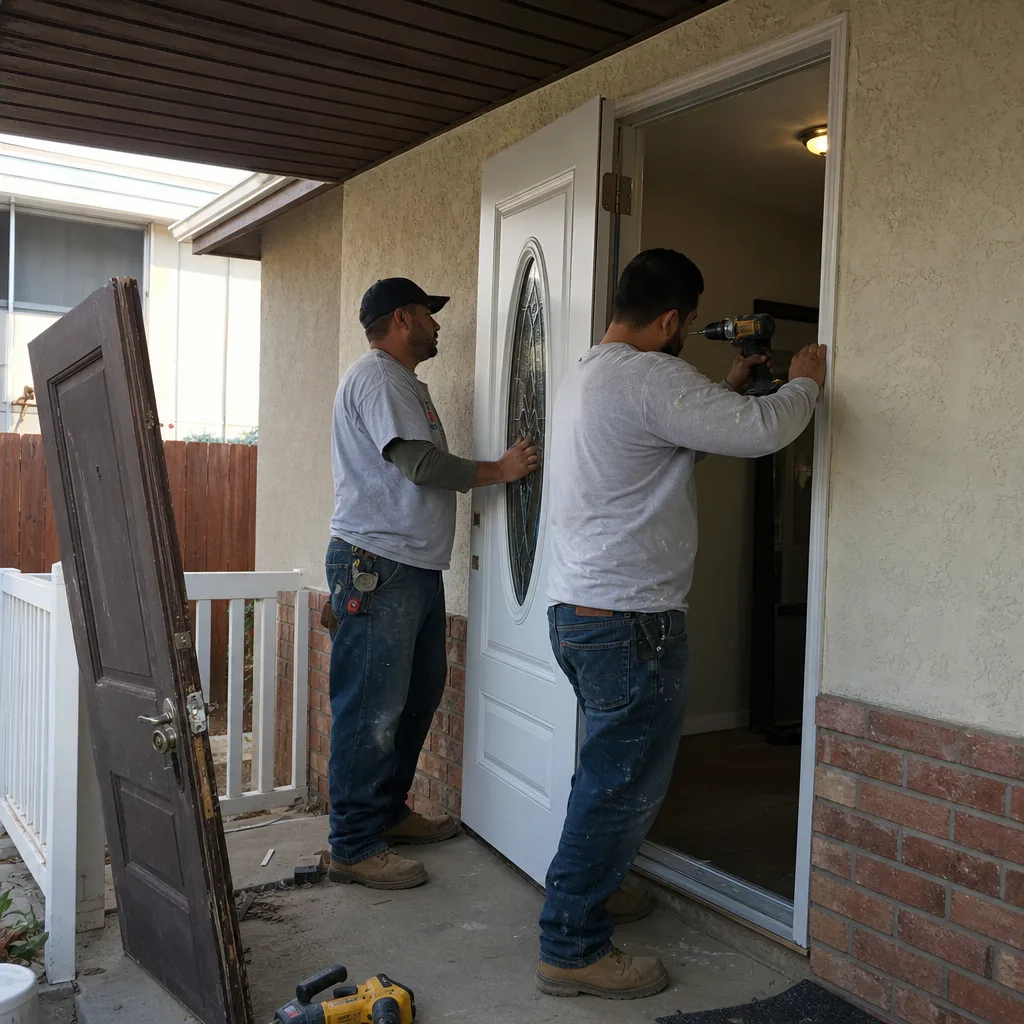
- Full window or door replacement: permit, inspection, and a written warranty that should transfer with the home.
Our written scope documents the inspection status on every envelope repair so it lives in the customer’s file, not in someone’s memory. If you’re also reaching the end of your fence’s life in the same season, our Fence Installation in Glendale page covers the same documentation approach; and for driveways and hardscape, see Driveway & Pavers in Glendale.
Common Mistakes to Avoid
- Lubricating a seasonal sticking door. If the operation changes with the weather, the frame is expanding against a shim. Lubrication hides it for one season and lets a fixable shim problem grow into a frame refit.
- Caulking a leak you haven’t traced. Caulking the exterior seam when the water is coming from behind the sill pan seals the wrong side. It looks fixed for a season and returns worse in Glendale’s next winter rain.
- Buying a new door to fix a latch-gap problem. If the three measurements show the rough opening is out of plumb, a new slab will hang exactly the same way. Diagnose the opening first.
- Cleaning or drilling a fogged IGU. The fog is between the panes in a factory seal. Cleaning won’t reach it, and drilling voids the warranty you’d have used to replace it.
- Skipping the NFRC label. Most failed-seal claims need the model number and build date. If you tossed the sticker, the claim is harder and sometimes refused.
- Patching flashing without a permit. A hidden permit issue turns into a resale disclosure problem in Glendale, where title companies check. Document the scope and pull the permit when it’s required.
- Assuming a sticking slider is a roller problem. In the tracts above the Verdugo corridor we routinely find the roller was fine and the track was out of level because a shim settled. Replace the level first, then the hardware.
When to Call a Professional
Call a professional when the symptom involves water, framing, or the rough opening. Sill pan and flashing failures, rough-opening alignment, IGU replacement on a permit-track repair, and any repair that will need a re-inspection are all work that a trained crew should document. Failed weatherstripping, room-side condensation, and a light roller adjustment are within reach for a careful homeowner.
Rowan Construction Group Glendale offers free estimates in Glendale. If a competitor’s written quote is already on the table, we’ll review it line by line at no charge, so you know whether the scope and the price belong together. Every project we quote comes with a flat written price before work starts, a signed change order before any change, background-checked technicians, and a documented photo record on every visit. Under the 365-Day Done Right Promise, if it isn’t done right, we make it right. Call (844) 320-5930 to schedule your free estimate, and read our work against the Rowan Construction Group Glendale home page to see the seven trades and our documented record across 4,000-plus projects.
See the difference
 Before
 After
 Before
 After
 Before
 After
Frequently Asked Questions

It’s a frame expansion problem, not a track problem. The frame grows with summer heat and binds against a shim that was set too tight, and the fix is to relieve the shim and re-level the frame rather than lubricate the track. Call (844) 320-5930 for a free diagnosis.
No. Fog between the panes means the sealed insulated glass unit lost its seal, and the moisture is inside the factory-sealed sandwich. It’s a warranty item, not a cleaning task, and the NFRC label plus the original paperwork are what start the claim.
Expect $300 – $800+ depending on how much siding and trim has to come off to reach the pan. A failed weatherstrip is $15 – $40 and a DIY job, so the hose test is worth running before you commit to the larger repair. Call (844) 320-5930 for an exact quote.
No, not without a signed change order. At Rowan, no work proceeds on a change until the change order is signed, which is why projects finish within a few percent of the agreed price across 4,000-plus jobs. If the scope you agreed to changes, we quote the change in writing first.
It depends on what’s being opened. A weatherstripping swap or IGU replacement usually doesn’t need one; a sill pan or flashing repair that opens the envelope usually does and needs a re-inspection. Getting that wrong creates a disclosure issue at resale, so we document the permit status on every envelope repair.
Yes. When a repair or replacement requires a permit, we pull it and schedule the inspection as part of the written scope, so your file shows a closed permit and a transferable warranty. Free second opinions on any written estimate are available at (844) 320-5930.
The Bottom Line
Trace the symptom to its source before you buy a part. Season-change sticking is frame expansion, not a roller; fog between panes is an IGU seal failure, not a cleaning problem; water at the interior sill is a sill pan, not caulk. Run the hose test and the three door measurements first, and you’ll know whether the repair is a $15 weatherstrip or a $300 – $800 flashing job. In Glendale, the dry-wet cycle makes these calls urgent sooner than you’d expect. When the work touches water, framing, or a permit, call a crew that documents it. Call (844) 320-5930 for a free estimate.
Written by the team at Rowan Construction Group Glendale.