Last updated November 16, 2026


Free written scope consultation - allowances, timeline, and change-order rules on paper before a single trade is scheduled
Fence Installation Maintenance Schedule: What to Do and When
Vinyl fence manufacturers sell “no maintenance” as the whole pitch. What they actually mean is “no painting.” Ultraviolet light still breaks vinyl down. On a south-facing run in Glendale’s sun load, chalking and brittleness show up in 8 to 12 years, and a UV-inhibitor wash every two years can stretch that to roughly 20. Wood fails differently again: it drinks water, swells, and rots from the post base up. Aluminum fails at the coating. CMU block fails at the mortar joints and the seal coat. Four materials, four clocks. This guide gives you a maintenance calendar for each, a post-fire-season checklist for Glendale, and the dollar figures that show why catching a problem in year two beats catching it in year six.
Quick Answer
Wood fences need an inspection once a year and a stain or seal cycle every two to three years. Vinyl needs a UV-inhibitor wash every two years and hardware lubrication annually. Aluminum needs one annual inspection for coating chips, with touch-up before bare metal oxidizes. CMU block needs a sealant reapplication every five years and an annual crack survey. Every material needs a hardware check and a post-fire-season inspection in Glendale, because ember debris and heat-stressed fasteners are local conditions that manufacturer schedules don’t account for.
Styles & brands we work with
- Kitchen remodeling
- Bathroom remodeling
- Home additions & ADU
- Roofing
- Windows & doors
- Driveway & pavers
- Fence
Table of Contents
- Wood Fence Maintenance Schedule
- Vinyl Fence Maintenance Schedule
- Aluminum Fence Maintenance Schedule
- CMU Block Fence Maintenance Schedule
- The Glendale Post-Fire-Season Inspection
- Hardware: The Maintenance Everyone Skips
- How to Grade Your Fence on a 1 to 5 Scale
- Early Intervention vs. Deferred Maintenance Cost
Wood Fence Maintenance Schedule
Wood is the material we see most often in Glendale, and it’s the one where a missed cycle costs the most. The failure mechanism is moisture: end grain at the post base wicks groundwater up, the wood swells, and rot starts inside the post where you can’t see it until the post is soft. In Glendale’s dry summers and wet winters, that cycle runs twice a year.
Here’s the calendar we recommend:
- Every year, in early spring: Walk the full run and probe each post base with a screwdriver. If the tip sinks in easily, the post is compromised. Check rail-to-post connections for looseness and look for boards that have cupped or split.
- Every two years: Clean with a wood-safe detergent and a soft brush, let it dry 48 to 72 hours, then apply a penetrating stain or sealant. Two coats on the sun-facing side. Cedar and redwood take a penetrating oil better than a film-forming finish, which cracks and traps water.
- Every five years: Full hardware check. Tighten or replace every screw and nail, inspect post anchors at the concrete, and confirm gate hinges haven’t pulled from the frame. Replace the post caps if the seal has failed.
Skip the two-year seal cycle and you’re looking at board replacement in year five or six instead of a stain job. If you’re planning a full replacement rather than repair, our Fence Installation in Glendale page covers material options and what a new run costs.
Vinyl Fence Maintenance Schedule
Vinyl doesn’t rot and doesn’t need paint, which is why it sells. But vinyl is a plastic, and plastic degrades under UV. The mechanism is chalking: the surface oxidizes, turns powdery, and over time the material loses flexibility and becomes brittle. The south and west faces take the most sun in Glendale, and that’s where you’ll see it first.
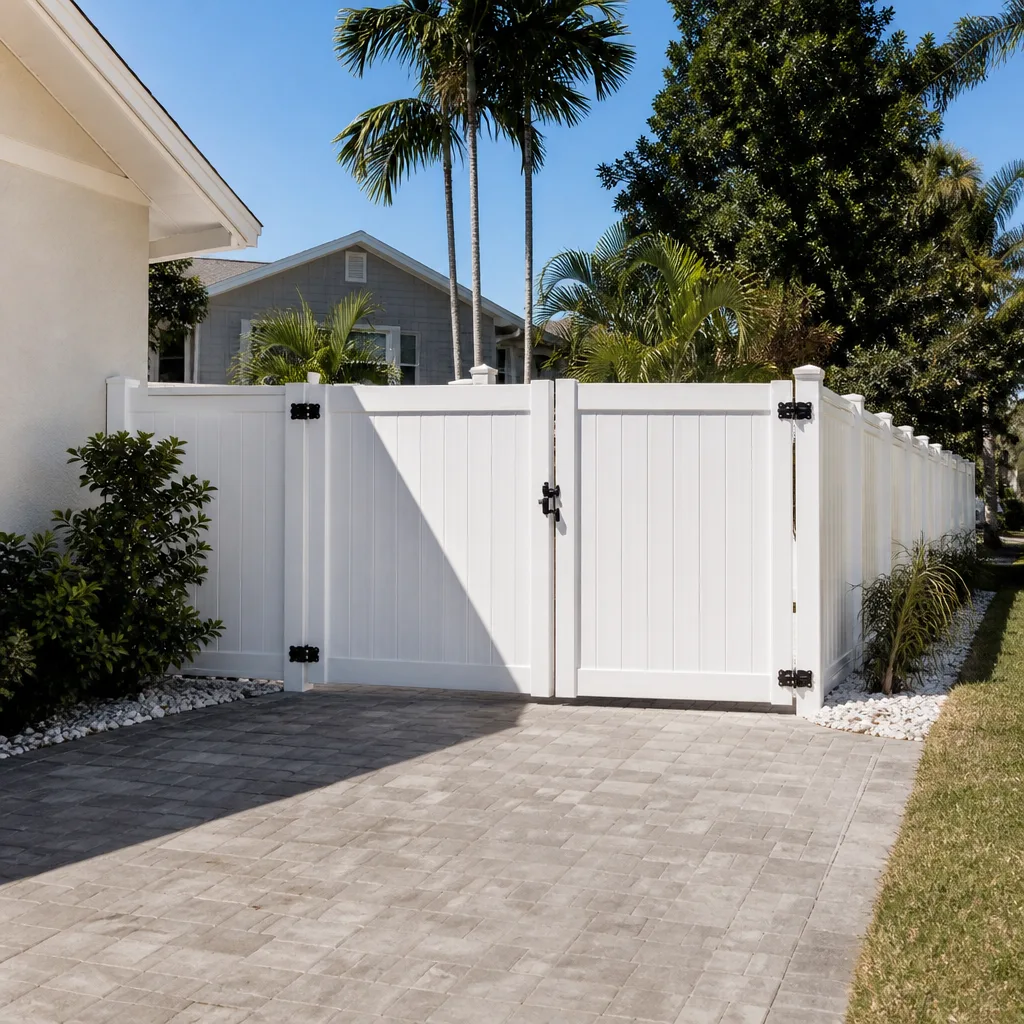
The two-year UV wash is the single most important step. It removes the chalk layer and lets a UV-inhibitor product bond to the surface. Without it, chalking accelerates and the fence reaches the end of its useful life years earlier.
- Annually: Lubricate gate hinges and latches with a silicone-based lubricant (not oil, which attracts dust). Check that gate posts haven’t shifted and that latches still align.
- Every two years: Wash the full run with a UV-inhibitor cleaner using a soft brush or low-pressure sprayer. Never use a pressure washer above 1,500 PSI on vinyl; it scores the surface and creates a place for dirt and UV to take hold.
- Every five years: Inspect the bottom rail and post bases for soil movement or heaving. In Glendale, expansive clay soils can shift a post over time, and a tilted post puts stress on the panel connections.
One more thing: vinyl panels expand and contract with temperature. In Glendale’s summer heat, a panel installed tight in January can buckle by August. If you see a wavy panel, the fix is usually adjusting the fastener slots, not replacing the panel.
Aluminum Fence Maintenance Schedule
Aluminum is the lowest-maintenance of the four, but “low” isn’t “none.” The failure mechanism here is coating failure. Powder-coated aluminum holds up well until the coating chips, scratches, or wears through at a contact point. Once bare metal is exposed, oxidation starts, and while aluminum doesn’t rust the way steel does, the oxidation pits the surface and the coating around the chip lifts.
The annual inspection is the whole game with aluminum:
- Walk the run and look for chips and scratches, paying particular attention to the bottom rail (rock strikes from string trimmers) and any point where a gate swings against a stop.
- Touch up any chip within the same season. Clean the spot, let it dry, and apply a matching touch-up paint. A quarter-inch chip caught early is a two-minute fix. Left for two years, it’s a pitted panel section.
- Check the fasteners at every post connection. Aluminum expands more than steel with heat, so fasteners can loosen over a summer. A loose connection flexes the panel and cracks the coating at the joint.
- Lubricate gate hinges and the latch mechanism annually with a dry silicone spray. Oil-based lubricants collect grit in Glendale’s dusty air and wear the hinge faster than no lubricant at all.
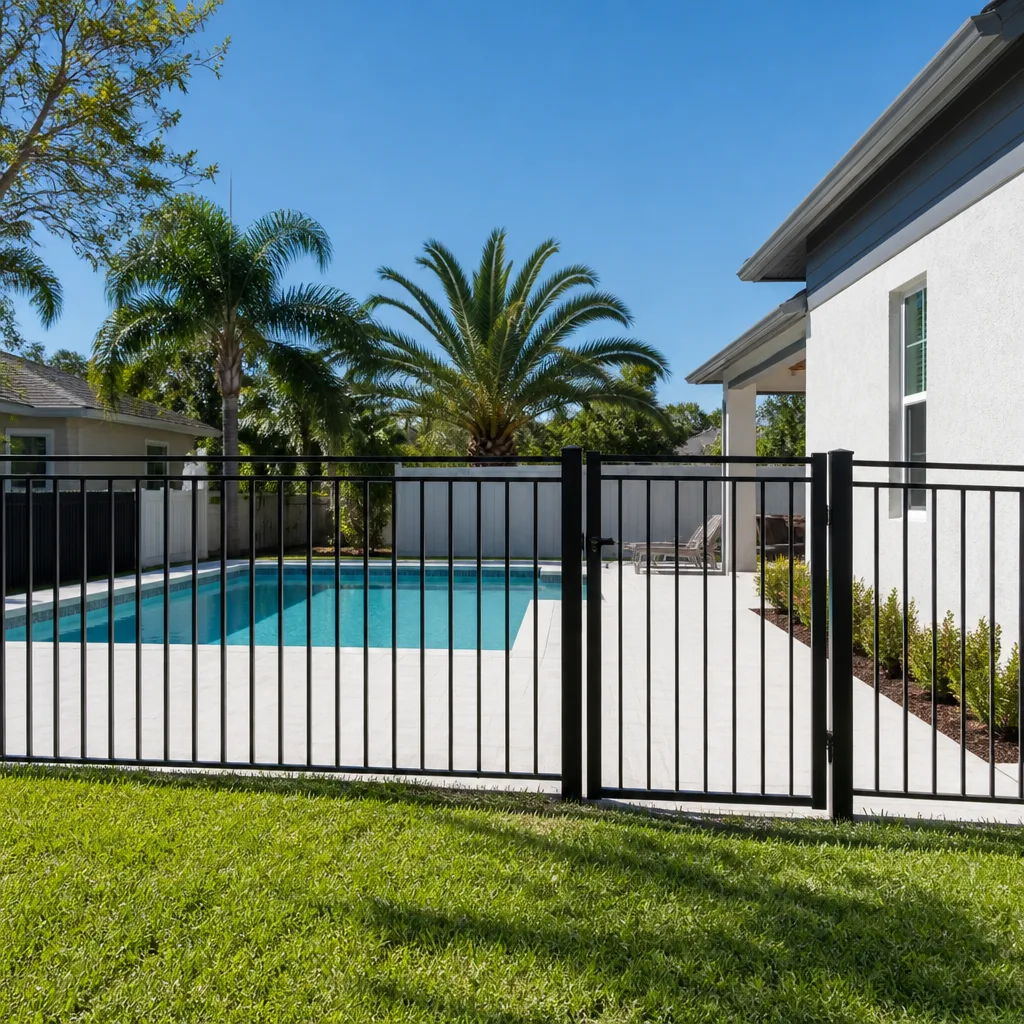
Aluminum is often chosen for pool enclosures and property lines where a wood fence would need more upkeep. If you’re weighing materials for a new install, that trade-off belongs in the quote conversation, not in year six.
CMU Block Fence Maintenance Schedule
Concrete masonry unit (CMU) fences, what most people call block walls, are the material our crews see neglected most often. The reasoning goes that a block wall is permanent, so it needs nothing. That holds until the first big rain, when water gets into a hairline crack, freezes or expands, and the crack grows. CMU fails through water intrusion at the mortar joints and through the seal coat wearing off.
The schedule is longer, but skipping it is expensive:
- Annually: Crack survey. Walk the wall on both sides and note any crack wider than a hairline. Cracks at the base of the wall or running diagonally across blocks can indicate footing movement and deserve a closer look. Small cracks get sealed with a flexible masonry caulk, not rigid mortar.
- Every five years: Reapply a breathable masonry sealant. This is the step that keeps water out of the block. A breathable sealant lets moisture vapor escape while blocking liquid water. A non-breathable coating traps moisture inside and causes spalling, where the face of the block flakes off.
- Every five years: Check the wall cap and any pilasters for loose mortar and re-point as needed. The cap is the first line of defense against water entering the wall core.
Block walls also need vegetation clearance. Ivy and climbing plants hold moisture against the block face and their roots work into mortar joints. We’ve seen a well-built wall lose ten years of life to a mature fig tree planted two feet from it.
The Glendale Post-Fire-Season Inspection
Glendale sits in a high fire severity zone, and the fence is often the first thing embers reach. After fire season, which in Southern California runs roughly from late spring through fall, a fence inspection is not optional. It’s a maintenance item with a specific checklist.
- Clear ember debris from rail cavities. On wood and composite fences, the gap between the rail and the panel collects dried leaves, twigs, and ash. That debris is a fuel source sitting inside the fence.
- Check fasteners for heat stress. Metal fasteners in a fence that has been near a fire can lose temper or show discoloration. A discolored screw or a hinge that’s suddenly loose after a fire season is a sign to replace the hardware.
- Verify vegetation clearance. Glendale fire code requires defensible space around structures, and a wood fence with dry brush against it undermines that. Clear vegetation at least 5 feet from any combustible fence and keep tree limbs pruned back from the fence line.
- Inspect for char or scorch marks on any fence section, even if the fire didn’t reach the property. Radiant heat can damage wood and vinyl without direct flame contact.
- Check gate operation. Heat can warp a wood gate or distort a vinyl one enough that the latch no longer catches. A gate that won’t latch after fire season is a security issue, not just a convenience one.
If the inspection turns up damage beyond the fence, the same crew visit can look at the roof. Our roofing work with GAF and Owens Corning systems follows the same documented photo record on every visit, so you get the condition in writing.
Hardware: The Maintenance Everyone Skips
Almost every fence maintenance schedule people find online covers the panels and skips the hardware. That’s backwards in terms of cost. A gate hinge is a $6 part. A gate that swings out of alignment because the hinge seized puts stress on the post, and a failed gate post is a $400 to $800 repair.
The hardware calendar is simple:
- Hinges: Lubricate every six months. Silicone or dry-film lubricant, not oil. If a hinge is stiff or squeaks, it’s already wearing.
- Gate latches: Check alignment annually and adjust the strike plate rather than forcing the gate. A latch that has to be lifted or pushed to catch is misaligned, and forcing it wears both the latch and the post.
- Post caps: Check annually. A cracked or missing post cap lets water straight into the top of the post, which is the fastest route to post rot on a wood fence. Replace a failed cap the same season you find it.
- Post anchors: Check at the five-year mark and after any major soil movement. A loose anchor lets the post shift, and a shifted post is the beginning of a fence that leans.
We include hardware condition in the documented photo record on every visit because it’s the item homeowners most often miss and the one that fails first.
How to Grade Your Fence on a 1 to 5 Scale
The value of a maintenance schedule is that it gives you a written record. A 1-to-5 condition grade, recorded once a year, lets you project repair or replacement timing instead of guessing. Here’s the scale we use:
- Grade 5 – Like new. No visible wear, hardware operates smoothly, finish intact. Maintenance only.
- Grade 4 – Good. Minor cosmetic wear, one or two touch-ups needed, hardware functional. Routine maintenance.
- Grade 3 – Fair. Visible finish failure in spots, some loose fasteners, early wood softening at post bases or vinyl chalking. Plan maintenance this season.
- Grade 2 – Poor. Multiple compromised posts or panels, coating failure over significant area, cracks in CMU needing repair. Plan repair within the year; budget for partial replacement.
- Grade 1 – End of life. Structural failure, multiple soft posts, panels missing or failing, CMU cracks indicating footing movement. Replacement is the better spend than repair.
Grade each section of the fence separately, not the whole run as one number. A fence that’s a 4 on the shaded side and a 2 on the south run tells you where to spend. Keep the grades in a note on your phone with the date. Two years of grades show you the rate of decline, and the rate is what tells you when to replace rather than repair.
Early Intervention vs. Deferred Maintenance Cost
The dollar case for maintenance is concrete. Here’s what catching a problem in year two versus year six actually costs, by material, using Glendale market ranges:
- Wood: A two-year stain and seal on a 100-foot fence runs $600 to $1,200. Deferred until boards rot, you’re replacing 8 to 12 boards and possibly two posts: $1,400 to $2,600, plus the stain you still have to do.
- Vinyl: A UV-inhibitor wash every two years costs $250 to $500 for 100 feet. Deferred until panels chalk and go brittle, a south-facing run of 6 to 8 panels needs replacement: $500 to $1,100, and the panels have to be sourced to match.
- Aluminum: Touch-up paint and a hinge lubrication kit is under $50 for the year. A pitted panel section runs $150 to $400 to replace, and matching the powder coat on an older fence is not guaranteed.
- CMU block: A five-year breathable sealant application runs $400 to $900 for 100 feet. A spalled wall face needing repair and re-seal is $1,500 to $3,000, and footing movement that requires a partial rebuild is well above that.
Those are ranges, not quotes. A written price is what we give before any work starts, with a scope and a warranty attached, so you can compare the number against what you’d spend doing nothing. If you’re weighing repair against replacement, our Rowan Construction Group Glendale home and Driveway & Pavers in Glendale pages show how hardscape and fence projects are quoted together when they share a property line.
Common Mistakes to Avoid
- Applying a wood schedule to a vinyl fence. Wood sealant on vinyl traps dirt and accelerates chalking. Vinyl needs a UV-inhibitor wash, not a stain.
- Skipping the CMU wall entirely. A block wall looks permanent until the first crack grows. An annual crack survey is 15 minutes; a footing repair is not.
- Pressure-washing vinyl at high pressure. Anything above 1,500 PSI scores the surface. The score holds dirt and gives UV a starting point.
- Ignoring hardware until a gate fails. A $6 hinge caught early is a $400 to $800 post repair caught late.
- Leaving a failed post cap in place. One missing cap means water straight into the post top, which is the fastest rot path on a wood fence.
- Skipping the post-fire-season inspection. Glendale fire season leaves ember debris in rail cavities and can stress fasteners. It’s a local condition, not a generic one.
- Grading the whole fence as one number. A single grade hides where the decline is happening. Grade by section so you know where to spend.
See the difference
 Before
 After
 Before
 After
 Before
 After
When to Call a Professional
Some fence maintenance is a homeowner job: a UV wash, a hinge lubrication, a touch-up on a chip. The jobs that need a trained professional are the ones where the failure is structural or where the repair could go wrong. Call a pro if a post base is soft when you probe it, if a CMU wall has a crack wider than a hairline or a diagonal crack that suggests footing movement, if a gate post has shifted enough that the latch won’t catch, or if a fire-season inspection turns up heat damage you can’t assess. Galvanized post anchors set in concrete and footing repairs are also worth a professional look. Rowan Construction Group Glendale offers free estimates in Glendale, and the price is written down before any work starts. Call (844) 320-5930 to schedule yours.
Frequently Asked Questions
Every two to three years in Glendale’s climate, with a full inspection once a year. Two coats on the sun-facing side, and a penetrating stain for cedar and redwood. Waiting longer than three years is when board replacement starts to compete with the stain cost. Call (844) 320-5930 for a written quote on staining or repair.
No. Vinyl needs a UV-inhibitor wash every two years and hardware lubrication annually; what it doesn’t need is paint. Skip the UV wash and south-facing panels chalk and go brittle in roughly 8 to 12 years instead of 20. Call (844) 320-5930 for an estimate on a UV wash or panel repair.
An annual crack survey and a breathable sealant reapplication every five years. Seal only with a breathable masonry sealant so moisture vapor can escape; a non-breathable coating traps water and causes spalling. Call (844) 320-5930 for an estimate on sealing or crack repair.
Ember debris in rail cavities, heat-stressed fasteners, vegetation clearance under Glendale fire code, char or scorch marks, and gate latch operation. Any of these found needing repair is worth a professional inspection. Call (844) 320-5930 for a free estimate in Glendale.
Ranges run $250 to $500 for a vinyl UV wash on 100 feet, $600 to $1,200 for a wood stain and seal, $400 to $900 for a CMU sealant application, and under $50 in materials for aluminum touch-up. Those are ranges; a written price is what you should get before anyone starts. Call (844) 320-5930 for an exact quote, and estimates are free.
Not without a signed change order. Under Clause 1 of the Haven Standard, the price is written before anyone picks up a tool, and no change proceeds until you sign off. That discipline is why projects finish within a few percent of the agreed number. Call (844) 320-5930 for a written estimate.
The Bottom Line
Four fence materials fail four different ways: wood rots from the post base up, vinyl chalks under UV, aluminum fails at the coating, and CMU block fails at the joints and the seal coat. Applying one schedule to all of them is how homeowners spend money they didn’t need to. Match the calendar to the material, grade each section once a year on a 1-to-5 scale, and treat the post-fire-season inspection in Glendale as a standing item, not an afterthought. Caught in year two, most of these repairs are a few hundred dollars. Caught in year six, they compete with replacement.
Related Reading
If the fence inspection points to a larger project, the same documented approach applies across our other trades. Our Home Additions & ADU in Glendale page explains how a written scope and signed change orders keep an addition on budget. Rowan Construction Group Glendale offers a Free Second Opinion on any written estimate: bring a competitor’s quote and we’ll review it line by line at no charge. Our technicians have up to 19 years of experience, our crews are background-checked, and every visit includes a documented photo record as standard. The 365-Day Done Right Promise backs the work: if it’s not done right, we make it right.
Call (844) 320-5930 for a free estimate on fence maintenance, repair, or replacement in Glendale. A live person answers, the price is written before any work starts, and you’ll have the photo record and the warranty in hand when the crew leaves.
Written by the team at Rowan Construction Group Glendale.