Last updated November 16, 2026





Free written scope consultation - allowances, timeline, and change-order rules on paper before a single trade is scheduled
Fence Installation Warning Signs Every Homeowner Should Know
A fence that leans 18 months after installation almost always had a warning sign in the original contract: no post depth specified, no concrete mix named, final payment due before inspection. The failure was written down long before it appeared in the yard. In Glendale, where clay-heavy soil and summer heat work against poorly set posts, that warning trail shows up faster than most homeowners expect. This guide teaches you to read the bid document, the payment schedule, and the material spec sheet before the first post goes in, so you can catch problems while they’re still words on paper instead of a leaning fence in your yard.
Quick Answer
The biggest fence installation warning signs are a bid that omits post embedment depth, a payment schedule demanding more than 10% upfront before materials are ordered, and a material spec sheet with no grade or thickness stated. These three gaps in the paperwork predict almost every workmanship failure we see in Glendale, because a contractor who won’t write down the specification won’t build to it either.
Styles & brands we work with
- Kitchen remodeling
- Bathroom remodeling
- Home additions & ADU
- Roofing
- Windows & doors
- Driveway & pavers
- Fence
Table of Contents
- Three Contract Red Flags That Predict Workmanship Failure
- On-Site Warning Signs During Installation
- Material Substitution: How to Verify What You Paid For
- What a “Lifetime Warranty” on a Fence Actually Means
- Post-Installation Checkpoints at 30 Days and 6 Months
- Why Glendale Soil Makes These Warnings Worse
- Common Mistakes to Avoid
- When to Call a Professional
Three Contract Red Flags That Predict Workmanship Failure
The bid document is the blueprint for how a contractor thinks. When a quote for fence installation in Glendale runs two pages of adjectives and half a page of specifics, that ratio is the first warning sign. Here are the three omissions that matter most, and why each one shows up later as a physical failure.
- No post embedment depth stated. The industry standard for a wood or vinyl privacy fence is burying each post one-third of its above-ground height. A 6-foot fence means 2 feet in the ground, so the post needs to be at least 8 feet long. If the bid says “posts set in concrete” without a depth, assume the crew is burying 18 inches or less, especially on a low bid. In Glendale’s expansive clay, a shallow post heaves within one or two wet winters.
- No concrete mix specified. “Set in concrete” is not a specification. Dry-pack (pouring dry mix into the hole and letting ground moisture cure it) behaves very differently from a wet pour mixed to a stated ratio. Dry-pack is fine in sandy, well-drained soil. In Glendale’s clay, where water sits against the post, a dry-pack that never fully hydrates leaves a loose collar that lets the post rock. A written quote should name the method and the sack count per post.
- A deposit over 10% before materials are ordered. A deposit should cover the material order and nothing more. When a contractor asks for 40% or 50% upfront on a $6,000 fence, you’re funding their cash flow, not your project. Worse, that deposit structure removes the leverage you need if the work stalls. A fair schedule in Glendale runs roughly 10% at signing, material payment on delivery with a receipt, and the balance after a walkthrough.
Under Clause 1 of The Haven Standard, the price is written down before anyone starts, with the scope spelled out. That’s the standard to hold any bid against, whether it’s ours or someone else’s.
On-Site Warning Signs During Installation
You don’t need to know how to build a fence to spot a crew cutting corners. These are the tells, visible from your kitchen window, that predict a short-lived installation.
- Posts set without a level check. A crew that sets posts by eye instead of checking plumb with a 4-foot level on two faces is guessing. Watch whether a level appears at all in the first hour. If it doesn’t, the fence will lean within a season.
- Concrete poured and panels hung the same day. Concrete needs time to set before it carries lateral load. Hanging pickets or panels on posts that were poured that morning pushes the posts out of plumb while the mix is still green. A careful crew pours posts, waits, then hangs rails and panels, or at minimum braces the posts and returns.
- No string line for alignment. A taut string line run post to post is how you keep a 100-foot fence straight. Without one, a fence wanders. Walk the line end to end once panels are up and you’ll see the drift immediately.
- Holes dug too shallow to reach gravel. Good post setting includes a few inches of gravel at the bottom of the hole for drainage. If the crew is dropping posts into bare clay with no gravel base, water will pool at the base of every post through Glendale’s rainy season.
- No gate hardware alignment check. A gate that’s hung and immediately sags or drags signals the posts on either side weren’t set true. Gate fit is the fastest field test of whether the whole fence is square.
The general principle: if the crew is rushing the parts you can’t see, the parts you can see will fail first. A documented photo record of each stage, including post holes before the pour, is the standard you should expect and the thing we build into every visit.
Material Substitution: How to Verify What You Paid For
Material substitution is the quietest form of fence fraud. You sign for cedar and get a lower grade of pine. You pay for 6-foot vinyl and get a thinner wall. It happens after the ink is dry, so the only defense is a spec sheet you can check against what arrives.
Here’s how to verify in the driveway before the crew unloads:
- Lumber grade. Cedar fencing is graded, and a No. 1 grade has far fewer knots and straighter grain than a No. 2 or a “builder” grade. Ask the bid to state the grade, then look at the stamp or the actual boards. Knots the size of a quarter or larger, and boards that cup on sight, mean you got the cheaper grade.
- Vinyl wall thickness. Vinyl privacy panels are sold by wall thickness, often stated in thousandths of an inch. A 1,200-pound-rated panel and a budget panel can look identical in a photo. The spec sheet should name the thickness and the manufacturer. Brands like Boral and PGT set documented standards you can look up; a no-name panel with no spec sheet is a substitution waiting to happen.
- Post and rail dimensions. Confirm the actual post size (4×4 or 6×6) and rail size on delivery. A 4×4 post on a 6-foot privacy run is under-built, whatever the quote implied.
- Fastener type. Hot-dipped galvanized or stainless fasteners cost more and last longer than electro-galvanized or plain steel. Check the box the crew is using from. Plain screws on cedar will streak and rust within two seasons.
Ask for the material list to be written into the quote with brand names and grades spelled out, not summarized as “premium cedar fence.” That list is the contract. It’s also the single best reason a written, line-item price beats a verbal estimate, because it makes substitution a breach of written scope rather than a matter of opinion.
What a “Lifetime Warranty” on a Fence Actually Means
A lifetime warranty on a fence is only as strong as the manufacturer documentation behind it, and most of the ones homeowners show us after a failure are unenforceable for three predictable reasons.
The warranty isn’t registered. Many vinyl and composite manufacturers require the homeowner to register the product within a set window after installation. If nobody did it, the warranty may not be valid. A contractor who never mentions registration isn’t likely to have done it for you.
“Lifetime” means the product’s rated life, not yours. Read the small print. Many fencing products define “lifetime” as the expected service life stated in the manufacturer’s literature, not the length of your ownership. A “lifetime” warranty on a panel rated for 20 years is a 20-year warranty.
Workmanship is a separate warranty, and often missing. The manufacturer covers the material against defects. Nobody covers the installation unless the contractor writes a workmanship warranty into the contract. If your post heaves because it was set 14 inches deep, that’s a workmanship failure, and the manufacturer’s lifetime warranty won’t touch it. Ask for the workmanship term in writing, and ask what happens to the warranty if the contractor’s business changes. Our own 365-Day Done Right Promise exists because a piece of paper that outlives the business that gave it is worth less than a promise that gets honored while the contractor is still around to honor it.
Post-Installation Checkpoints at 30 Days and 6 Months
Small settling issues caught early are cheap to fix. The same issue caught at two years is a post replacement. Run these checks on a schedule.
At 30 days:
- Walk the full fence line and sight down it. A post that’s moved even a half inch out of line is easier to spot this way than from close up.
- Check every post for rock. Grab each post and push. Any movement beyond a hair of flex means the concrete collar is loose.
- Open and close every gate. A gate that’s begun to drag has shifted because its posts have moved.
- Look for concrete cracking at the post base. Spider cracks are normal; a split running down the collar is not.
At 6 months:
- Re-check post plumb with a level. Glendale’s first wet season is when clay soil heaves and reveals shallow posts.
- Inspect for wood rot at the base of cedar or pine boards, especially on the north-facing side that stays damp.
- Check fastener rust and any streaks below the rails.
- Confirm the finish (stain or seal) is holding where the sun hits hardest.
Document each checkpoint with photos and dates. If a problem surfaces, the record protects you and makes the conversation with the contractor a short one.
Why Glendale Soil Makes These Warnings Worse
Glendale’s soil profile is part of why these warning signs matter more here than in many other places. The clay-heavy ground in areas like Adams Hill and Chevy Chase expands when wet and shrinks when dry, and that seasonal movement works on a post all year. A post set 18 inches deep in sand is a gamble anywhere; a post set 18 inches deep in Glendale clay is a fence waiting to lean.
The summer heat matters too. Cedar and unstained pine dry and check, and the sun-side boards will cup and split if they weren’t sealed when installed. The dry season also pulls water out of the ground around shallow footings, which is when the first lean shows up, usually the autumn after installation. If your fence is on a slope, in a yard that drains toward the street, the post depth and the gravel base do even more work. A careful installer reads the drainage before picking a post depth, and writes that reasoning into the scope so you can see the evidence behind the number.
Fence Installation vs. Replacement: Reading the Bid
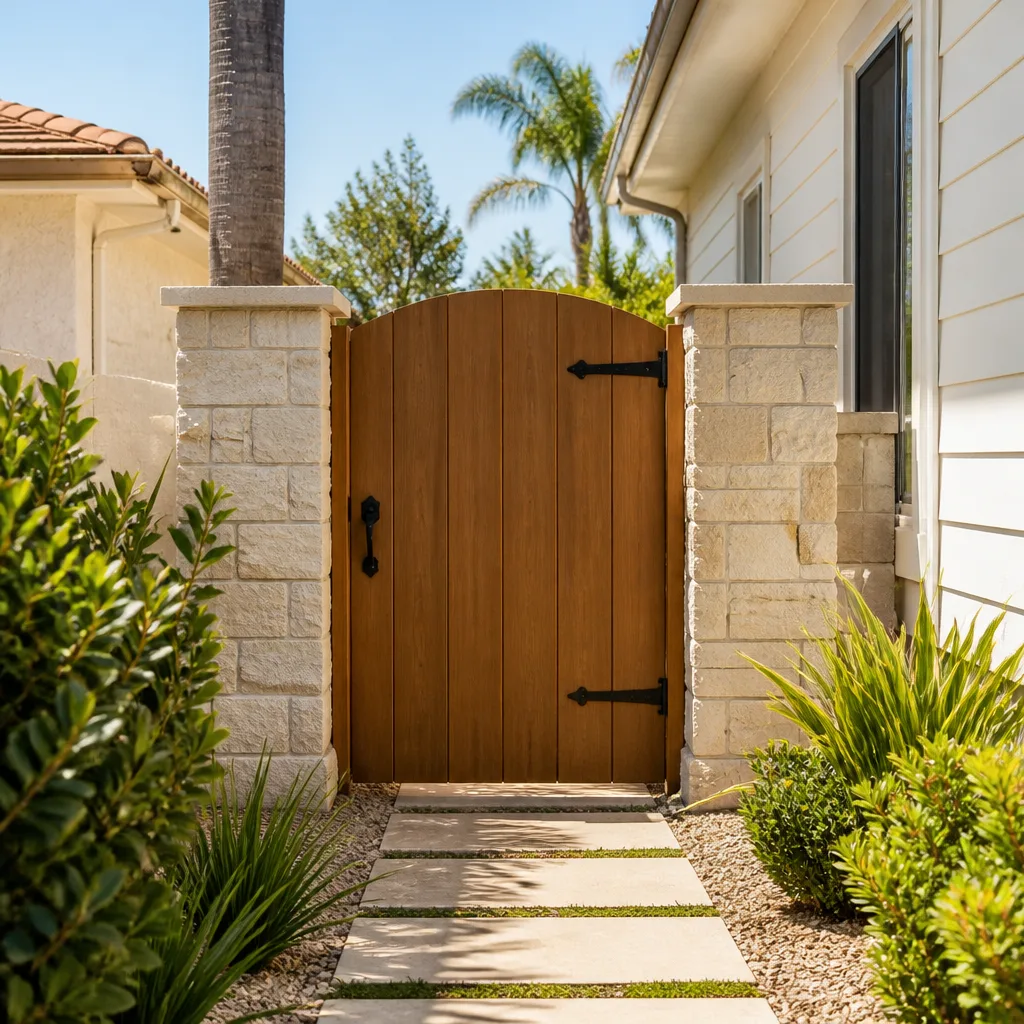
A replacement bid carries the same red flags as a new build, plus one more: what happens to the old fence. A quote that doesn’t state removal, haul-away, and whether the old concrete footings come out of the ground hasn’t priced the hardest part of the job. Footings that stay in the ground and get built over are a free gift to a future lean. If you’re weighing a replacement against a repair, ask for both options in writing with the line items separated, then compare the per-post cost. That comparison is the kind of number that belongs on the page, not in a phone call.
If the project grows into a larger yard plan, whether that’s a new patio, a widened parking area, or a home addition behind the fence line, get the layout decisions settled before the fence goes in. A fence installed around a future project gets torn out and reset. If you’re planning an ADU or extension, we’d tell you to talk to whoever is doing that work first, and the same applies if we’re the one doing it. Our guides to Driveway & Pavers in Glendale and Home Additions & ADU in Glendale cover the site work that affects where a fence line should run.
Common Mistakes to Avoid
- Accepting a verbal quote on post depth. If it isn’t written, it isn’t promised. Get the depth number in the bid in feet.
- Comparing total price without comparing the spec. A bid that’s $1,000 cheaper often buried the difference in inferior lumber grade and shallow posts. Compare the words, not just the bottom number.
- Paying a deposit that funds the contractor, not the materials. Any request over 10% before the order goes in is money you can’t get back if the project stalls.
- Skipping the material inspection on delivery. Ten minutes checking the grade stamp and vinyl thickness on arrival is worth more than any warranty clause.
- Not registering the manufacturer warranty. The paperwork that makes a “lifetime” warranty real is easy to forget and impossible to reconstruct later.
- Ignoring the first lean for a season. In Glendale clay, minor post movement in the first wet season is the cheapest possible moment to address it.
- Hiring on an unverified license. Ask for the license number and check it against the state database before signing. A contractor who hesitates has a reason.
See the difference
 Before
 After
 Before
 After
 Before
 After
When to Call a Professional
Some fence work is genuinely yours to handle: restaining a cedar run, rehanging a gate, replacing a split picket. But a post that’s rocking after the first wet season, a fence line that’s wandered more than an inch over 20 feet, gate posts that have shifted, or a replacement where the old footings need pulling are jobs for a trained crew with the right tools and a written scope. Post setting is a structural job in Glendale clay, and it’s where the real cost and the real risk sit. If you’re weighing that repair or replacement, Rowan Construction Group Glendale offers free estimates in Glendale. Call (844) 320-5930 and we’ll put the price and the scope in writing before any work starts.
Frequently Asked Questions

Wood and vinyl privacy fence posts should be set one-third of their above-ground height, so a 6-foot fence means 2 feet in the ground and a post at least 8 feet long. In Glendale’s clay, we recommend going deeper on slopes and drainage paths, and always with a gravel base at the bottom of the hole. Get the depth stated in the written bid before you sign.
A deposit should be about 10% of the project cost, enough to cover the material order and nothing more. A contractor asking for 40% or 50% upfront is funding cash flow, not your materials. Ask for a payment schedule tied to materials delivery and the final walkthrough.
Check the grade stamp on the boards and look at the actual knots and grain. A No. 1 grade has tighter grain and fewer large knots than a No. 2 or builder grade. The bid should name the grade so the delivery can be checked against it.
It’s enforceable only if the manufacturer documentation is in hand and registered per the product terms. Read the fine print on what “lifetime” means, confirm the workmanship warranty separately, and keep the registration paperwork. The manufacturer warranty won’t cover a post that was set too shallow; only the contractor’s workmanship warranty will.
A post that rocks to the touch, a gate that starts to drag, or a fence line that isn’t straight when you sight down it from the end. In Glendale clay, these often show up the first wet season after installation. Check at 30 days and again at 6 months.
Permit requirements depend on the fence height, location, and the property line, and they vary by jurisdiction. A reputable contractor will tell you whether a permit is needed for your specific install and pull it for you. Ask the question in writing before work starts; any bid that dodges it is a warning sign.
The Bottom Line
Fence failures are usually written down before they happen: a bid with no post depth, no concrete spec, a deposit that’s too big, and a material list with no grade. The homeowner who reads those documents before signing catches the problem while it’s still a missing sentence. That’s your best protection, in Glendale and everywhere. The rest is a schedule: check the fence at 30 days and 6 months, keep the photos, and register the warranty. Do that, and a fence that should last 15 to 20 years usually will. If a red flag shows up in your bid, our team can review it line by line as a free second opinion before you sign, and we’ll tell you plainly whether the number holds up. You can start from our Rowan Construction Group Glendale home or go straight to Fence Installation in Glendale.
Ready to put the price and the spec in writing before a single post is set? Call (844) 320-5930 for a free estimate from Rowan Construction Group Glendale. We’ll send a written line-item quote with the post depth, the concrete method, and the material grades named, and answer your call 24/7 with a live person.
Written by the team at Rowan Construction Group Glendale.