Last updated November 16, 2026
Free written scope consultation - allowances, timeline, and change-order rules on paper before a single trade is scheduled
Driveway & Pavers Maintenance Checklist for Glendale Homeowners
A paver that looks perfectly flat can already have two to three inches of compaction loss underneath it. That’s the counterintuitive part most maintenance guides skip: the failure starts below the surface, quietly, and by the time you see a crack or a rock, the repair has moved from a $200 – $400 base correction to an $1,800 – $4,500 rebuild. Glendale’s particular mix of 280-plus dry days, sudden heavy rain events, and clay-heavy hillside soils pushes that sequence along faster than most of Southern California. This checklist is built around that sequence so you catch problems in the order they actually happen.
Quick Answer
Maintain driveway pavers in Glendale with three checks per year: an October base-and-joint inspection before the rainy season, an April post-rain walkthrough for heaved or settled stone, and an August heat check on joint sand. Test base compaction by observation before renting equipment, use polymeric sand rated for Zone 10 heat, and keep dated photos of every resand. Catching settlement at the base stage runs $200 – $400; catching it after it reaches the surface runs $1,800 – $4,500.
Styles & brands we work with
- Kitchen remodeling
- Bathroom remodeling
- Home additions & ADU
- Roofing
- Windows & doors
- Driveway & pavers
- Fence
Table of Contents
- Why Glendale Degrades Pavers Differently Than Most of LA
- The Walking-Load Test: How to Spot Compaction Loss Before You See It
- The Season-by-Season Glendale Paver Calendar
- Joint Sand: Polymeric vs. Silica, and Why Zone 10 Heat Changes the Math
- The Three Glendale Drainage Failure Points That Void Warranties
- What to Photograph and Keep (It Affects Liability and Insurance)
- Common Mistakes to Avoid
- When to Call a Professional
- Frequently Asked Questions
Why Glendale Degrades Pavers Differently Than Most of LA
Glendale sits in a particular spot: Mediterranean climate, but with the San Rafael Hills feeding clay-heavy soil down into neighborhoods like Adams Hill, Rossmoyne, and the Chevy Chase canyon edges. That soil is the whole story. Clay expands when it absorbs water and contracts when it dries. In most of coastal LA, the swing is gentle. In Glendale, it happens against a backdrop of long dry spells and then five or six hard rain events between December and March. Those events dump two or three inches on clay in a day, the clay swells, the paver base shifts, and then the soil dries out for another eight months.
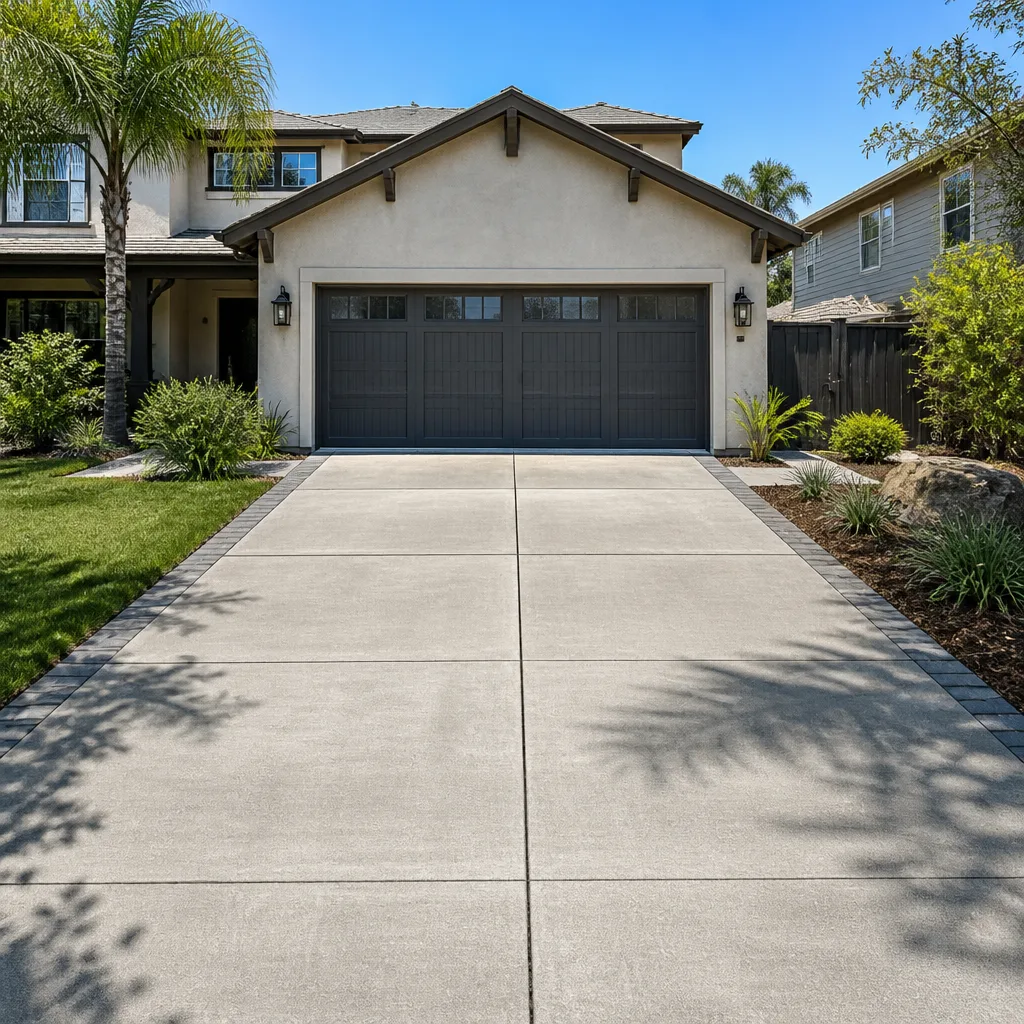
Driveway pavers in Glendale also tend to sit on grade transitions – the pitch of the driveway runs from a garage at the back of the lot down to a street that was often cut into the hillside decades ago. That means water leaves the driveway quickly during rain, which sounds good until you realize the same water is running under the edges of the base layer as it leaves. Edge restraint and base compaction are the difference between a paver surface that lasts 25 years and one that starts to dish in year six.
Add the heat. Glendale sits in Zone 10 for plant hardiness and comparable heat indexing, and driveways on west-facing slopes regularly read 140°F on the surface in August afternoons. That heat cycles the joint sand and the base moisture daily. It’s not a reason to avoid pavers – Belgian-style concrete pavers from Belgard and Techo-Bloc handle Glendale conditions well when they’re installed right and maintained on a schedule. It is a reason to maintain them differently than a homeowner in Pasadena or Burbank would.
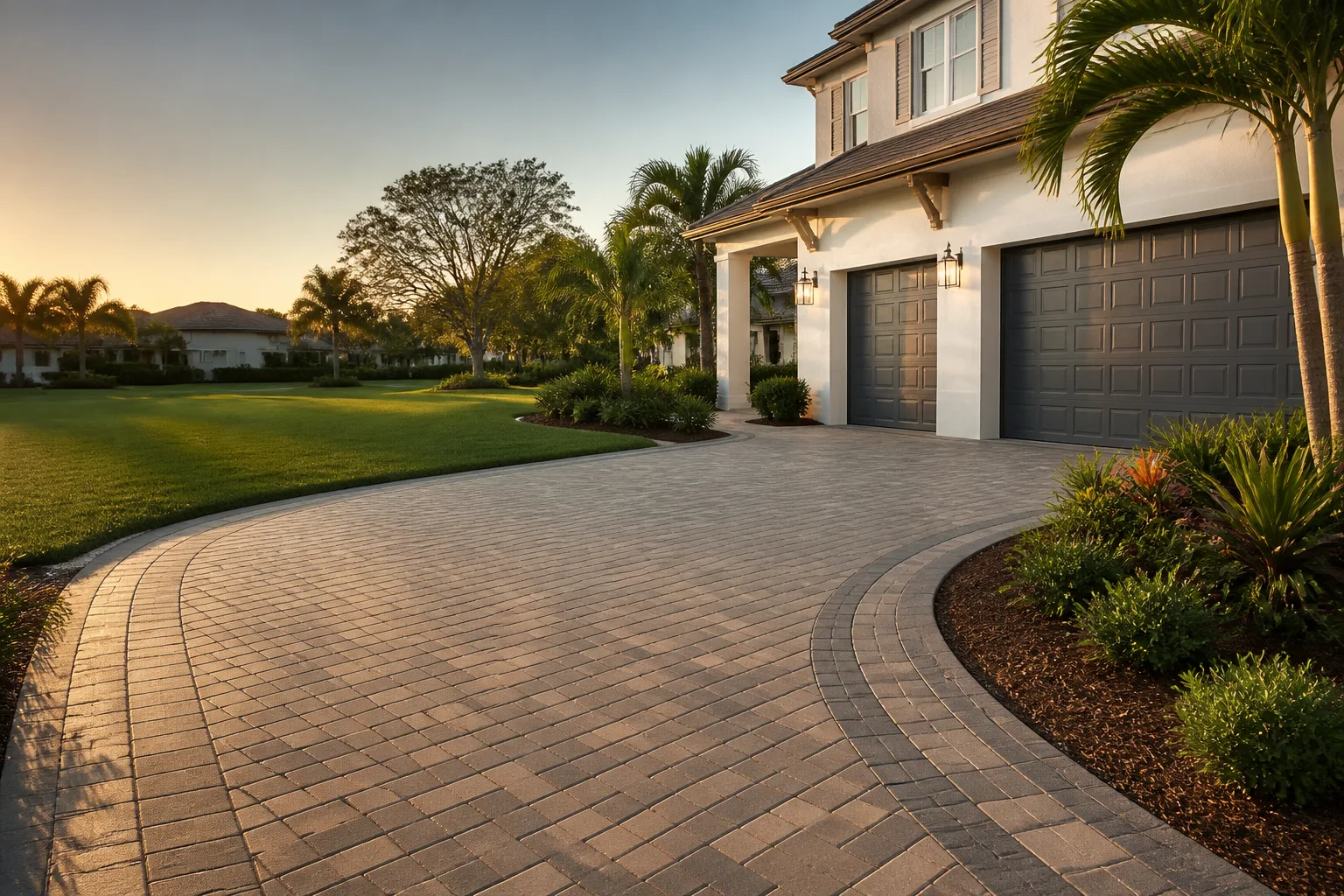
We’ve inspected Glendale driveways where the visible wear was three years newer than the base failure underneath it. If you want the broader service scope on how pavers get installed correctly in the first place, our Driveway & Pavers in Glendale page lays out the base and drainage specifications we work to.
The Walking-Load Test: How to Spot Compaction Loss Before You See It
Before you rent a plate compactor or think about pulling any paver, do this test. It costs nothing and it tells you what kind of problem you actually have. The idea is simple: a paver with compaction loss underneath it will behave differently under a load than a solid paver, and the difference is repeatable.
- Walk the full driveway in street shoes, slowly, listening. Not barefoot, not in soft sneakers. A paver with base loss sounds hollow underfoot – the classic “walking on a drum” tone. Note every hollow-sounding stone.
- Mark each hollow paver with painter’s tape. Walk it again the next day. If the same pavers sound hollow in both passes, you have a base issue, not a loose stone.
- Stand on a marked paver and shift your weight side to side. A stone that rocks slightly is a joint problem. A stone that doesn’t move but sounds hollow is a compaction problem. Those are different repairs.
- Check for standing water marks. Look for faint sediment rings around the base of a paver, especially near the apron or along the wheel path. Sediment under a paver means water is moving under it – the base is losing fines.
- Press your palm flat against the driveway surface near a suspect paver. Temperature differences of 5 – 10°F between a hollow paver and its neighbors are common; the hollow one is holding air, not soil. It’s a rough gauge, but it’s reliable enough to prompt a proper look.
- Probe a joint with a flathead screwdriver, gently, not through the sand. If the sand depth in the joint is above about a half-inch, the joint has lost fill and the water is reaching the base. That’s a resand job, not a rebuild.
What you’re looking for is a pattern, not a single paver. If the hollow stones cluster along a wheel path, an apron, or the low side of a slope, that’s the base telling you it’s failing. In Glendale, we see this most often on the downhill side of hillside driveways in Adams Hill and Whiting Woods, one to two winters after installation, when the clay has finished its first full wet-dry cycle. Catching it there is a $200 – $400 fix. Letting it run two more years is the $1,800 – $4,500 number.
The Season-by-Season Glendale Paver Calendar
A maintenance checklist without dates is a wish list. Glendale’s weather gives you three natural inspection windows, and each one is timed to a failure mode. Put these in your phone calendar and don’t move them.
October: Pre-Rainy-Season Inspection
- Walk the walking-load test above and photograph any tape-marked stones.
- Refill joints with the correct polymeric sand (more on that below). This is the single most important October task – a full joint holds the base together during the first rain.
- Check edge restraint along the entire perimeter. Loose or missing restraint is the number one reason water gets under the base, and it’s visible: look for gaps where the paver edge meets soil or the retaining edge.
- Clear the parkway strip and any swale of leaves and debris. Glendale’s parkway strips – the narrow planting band between the driveway and the sidewalk – collect debris that backs water up against your pavers.
- Inspect the driveway apron where it meets the street for cracks or separation. City sidewalk and apron repairs are usually the city’s responsibility; the apron where it transitions to your driveway is usually yours, and the transition is where failures start.
April: Post-Rainy-Season Walkthrough
- Re-do the walking-load test. Compare to your October photos. Any new hollow pavers are winter damage and warrant a look at the base.
- Look for heave: pavers that have risen 1/4 to 1/2 inch above their neighbors. In Glendale clay, frost heave isn’t the driver – it’s saturated clay pushing up under a thin base. Heave is a rebuild indicator, not a resand indicator.
- Check joint sand depth again. Winter rain washes out joints; a joint that was full in October may be half-empty by April.
- Inspect for efflorescence – the white powdery stain on pavers. It’s cosmetic, usually clears with dry weather, but persistent efflorescence means water is flowing through the paver, which means the joint sand and sealer are compromised.
- Address any sediment staining around paver edges – that’s fines migration, and it means the base is washing out from under the pavers.
August: Peak Dry and Heat Check
- Walk the driveway barefoot in the late afternoon. Hot spots – pavers noticeably warmer than their neighbors in a pattern – are almost always pavers with a moisture problem in the joint or base.
- Check for paver spalling or crazing, especially on older concrete pavers. Heat stress shows up first on the surface. Replacing two or three spalled stones in August is cheap; ignoring them is how water gets into the base.
- Verify your sealer’s condition. A penetrating sealer on a Zone 10 driveway typically needs reapplication every 3 – 5 years, and August is when you can see the wear most clearly.
- Check the apron-to-street transition for thermal cracking. Concrete aprons at Glendale driveways take the full sun most of the day, and the joint between apron and street is the most common crack location on the whole driveway.
Joint Sand: Polymeric vs. Silica, and Why Zone 10 Heat Changes the Math
This is where most Glendale homeowners get the wrong product from the wrong aisle at the wrong price. The joint sand in a paver driveway isn’t filler. It’s the structural lock that keeps the pavers from shifting, and it’s the first line of defense against water reaching the base. Standard silica sand is cheap and works in mild climates. Glendale’s heat cycles it into dust and blows it out within two or three seasons.
Polymeric sand – the kind with a binding agent that cures hard when wetted – is what you want here, and specifically the version rated for high heat. Two names you’ll see in Glendale: Alliance Gator Super Sand and Techniseal HP2. Both are rated for the kind of temperature swings Glendale driveways see. Standard silica sand runs $6 – $9 per 50-pound bag at most Glendale-area suppliers. Polymeric rated for Zone 10 heat runs $22 – $32 per bag, and a two-car Glendale driveway typically takes 6 – 9 bags on a full resand. So the total difference is roughly $100 – $200 on a resand that should last 5 – 7 years instead of 2 – 3.
The math gets clearer when you price the failure. A silica-filled joint that washes out in year two requires a resand – $300 – $600 if you hire it done – plus the base is now exposed to water for a full winter. A polymeric joint that holds is doing the base’s job of keeping water out. On a Glendale driveway where the base failure runs $1,800 – $4,500, the $200 upcharge on the correct sand is not the line item to save on.
One more thing: the sand must be installed at the right depth. The joint should be filled to about 1/8 inch below the paver surface, not flush. Flush joints shed sand onto the driveway on the first hot day, and the homeowner blames the sand. It’s the installation depth.
The Three Glendale Drainage Failure Points That Void Warranties
Paver manufacturers – Belgard and Techo-Bloc both do this – write warranties that hold the installer responsible for drainage. If the water can’t leave the driveway the way the manufacturer’s spec requires, the structural warranty doesn’t cover the failure. There are three places in Glendale where this goes wrong most often, and every one of them is visible from the homeowner’s side without any tools.
1. Hillside Sheet-Flow at the Uphill Edge
On any Glendale driveway cut into a slope, water comes off the hillside above the driveway during a rain event. If there’s no swale, no channel drain, or no retaining edge at the uphill boundary, that water sheets directly onto the pavers and then under them. The walking-load test in April will show hollow pavers along the uphill edge first. If you’re seeing this, the fix is a drainage correction before any paver is reset.
2. Parkway Strip Elevation Changes
The parkway strip – the planting band between the driveway and the public sidewalk – is where Glendale’s grading often creates a small local low point. Water pools there, the clay under the pavers on that side stays saturated longer, and the driveway edge on the parkway side settles first. Check the parkway strip in January after a rain event and see where the water sits. If it’s against your pavers, it needs a correction.
3. Apron-to-Street Grade Transitions
The driveway apron – the sloped concrete or paver section that transitions from your driveway to the street – has to match the street grade. When it doesn’t, water either pools at the transition and undermines the apron, or runs the wrong direction back toward the driveway during heavy flow. This is the transition that fails most often in Glendale after a big winter storm. A photo of standing water at the apron after a rain is the documentation you want.
Any of these three, left unaddressed, is the manufacturer’s out. And they’re the reason we treat driveway work as part of the whole property drainage picture. If you’re already thinking about how the driveway edges into a fence line or a new addition, our Fence Installation in Glendale and Home Additions & ADU in Glendale pages cover how drainage gets handled on those scopes.
What to Photograph and Keep (It Affects Liability and Insurance)
This section is the one most homeowners skip, and it’s the one that saves money. In Glendale, a storm-driven driveway failure is often an insurance question – and the answer depends on what you can prove about the condition of the driveway before the storm. A photograph with a date and a context is evidence. A memory is not.
Keep a simple file on your phone or in a shared drive. Photograph:
- The full driveway, wide shot, from the same standing position, three times a year. October, April, August. Same angle each time so the shots line up.
- Every hollow or suspect paver with painter’s tape on it, dated. This is your record of when you first noticed the issue.
- Every resand – before, during, after, with the sand bag label visible. The brand and product line matter thirty months later when the joint is behaving badly and you want the manufacturer to stand behind it.
- Every rain event photo at the three drainage points above. A photo of standing water at the apron on a specific date is the single most useful piece of documentation in an insurance claim.
- Any written estimate you received for corrective work, whether you hired it or not. A written estimate from a licensed contractor, dated, is proof the condition existed and was disclosed.
- The 365-Day Done Right Promise documentation from any contractor you hire. If it’s not done right, the contractor makes it right – that’s not a slogan, it’s a written promise with a terms page behind it.
The value of this file comes down to scope. A contractor’s liability is bounded by what was found and documented. An insurance claim’s outcome is often decided by what can be shown about the pre-storm condition. Both of those runs on photos with dates. Take them.
Common Mistakes to Avoid
- Renting a plate compactor before the walking-load test. Compacting a paver surface that has base loss makes the problem worse – it drives the pavers into the void and cracks the joints. Test observationally first. Always.
- Using silica sand in a Glendale driveway. It’s $15 – $20 cheaper per bag and washes out in two winters. The polymeric rated for Zone 10 heat is the only sand worth putting in a Glendale joint.
- Ignoring the parkway strip and the apron transition until the dining pavers crack. Both are visible failure points. Both fail before the middle of the driveway does. Check them first every season.
- Patching a heaving paver by resetting it on the same base. Heave in Glendale clay means the clay under the base is expanding. Resetting a paver on 2 inches of loose base material will fail inside a year. The base is the repair.
- Skipping the sealer as “cosmetic.” A penetrating sealer isn’t cosmetic on a Zone 10 driveway – it reduces heat-driven joint sand loss and slows the fines migration that hollows out a base. It’s a $400 – $700 line item every 3 – 5 years that protects a five-figure asset.
- Letting the driveway go three seasons without an inspection because nothing is visibly wrong. Visible cracks are year five of a problem that started in year two. The only way to catch it in year two is the walking-load test in October and April.
- Hiring a paver crew that doesn’t write down the scope or the price. If the estimate is verbal, you don’t have a scope, a warranty, or a liability claim later. Written scope, written flat price, written warranty – those three documents are the entire basis of a project that doesn’t surprise you.
When to Call a Professional
Some of this checklist is homeowner work – walking the driveway, taking photos, refilling joints with the right polymeric sand. Other parts genuinely aren’t. Call a professional if any of these are true: the walking-load test finds hollow pavers in a pattern (not one or two stones); the driveway shows heave of more than a quarter inch on a group of pavers; any of the three drainage failure points is failing; the base is exposed and you can see fines migrating; or a winter storm has moved the apron or undermined the edge restraint. Paver resetting, base correction, and drainage rework all involve excavation and compaction to spec, and doing them wrong the second time is more expensive than doing them right the first time.
Rowan Construction Group Glendale offers free estimates in Glendale – call (844) 320-5930. Under Clause 1 of the Haven Standard, the price is written before anyone starts, so you get a flat written number for the base correction or drainage scope, not a verbal range. Every estimate includes a written scope and a written warranty. Our technicians have up to 19 years of experience, and a live person answers calls 24/7.
Frequently Asked Questions
Paver repair in Glendale typically runs $200 – $400 for base correction caught at the joint-and-base stage, and $1,800 – $4,500 for a rebuild once the failure has reached the surface. A full resand costs $300 – $600 depending on driveway size. The gap between the low and high number is not the severity of the crack – it’s how long the base problem went undetected. Call (844) 320-5930 for a written estimate – estimates are free.
Every 2 – 3 years for silica sand, every 5 – 7 years for polymeric sand rated for Zone 10 heat. Glendale’s summer cycles degrade silica sand significantly faster than in coastal LA, and the fall rains wash it out quickly if the joint isn’t full going into October. Check joint depth every October with a flathead screwdriver. Call (844) 320-5930 if the joint depth is under 1/8 inch from the surface – that’s a resand before the first rain.
No – every 3 – 5 years for a penetrating sealer on a Glendale driveway, not annually. Sealing annually is overkill and can trap moisture in the paver, which causes efflorescence. Look for sealer wear in August: if the surface no longer beads water during a July hose test, it’s time. Call (844) 320-5930 for a written estimate on prep and reseal.
You can reset a paver if the base underneath is sound – one loose stone, one stone that received a rock strike, one stone that got a sharp edge lifted. If the paver sounds hollow underfoot, do not reset it yourself. The base is failing and resetting on the same base will fail again within a year. Call (844) 320-5930 for a base inspection before you pull pavers.
Belgard and Techo-Bloc both make paver lines rated for the heat and freeze-thaw range Glendale driveways see, and both are widely installed throughout Glendale neighborhoods. The brand matters less than the base and the drainage spec, though – a good paver on a bad base fails, and a mid-tier paver on a correct base holds. If you’re also planning a storage structure or outbuilding on the property, our Rowan Construction Group Glendale home page covers the broader scopes we work to.
Not if it’s installed to spec – and documentation is the difference. Keep October, April, and August photos, resand records with the sand brand visible, and written scopes for any corrective work. If a storm damages the driveway, the insurance adjuster’s assessment of pre-storm condition is largely built on those photos. If your driveway was installed with correct drainage and maintained with documented records, the coverage question is much cleaner. Call (844) 320-5930 for a written drainage and maintenance scope if you don’t have any of this on file.
The Bottom Line
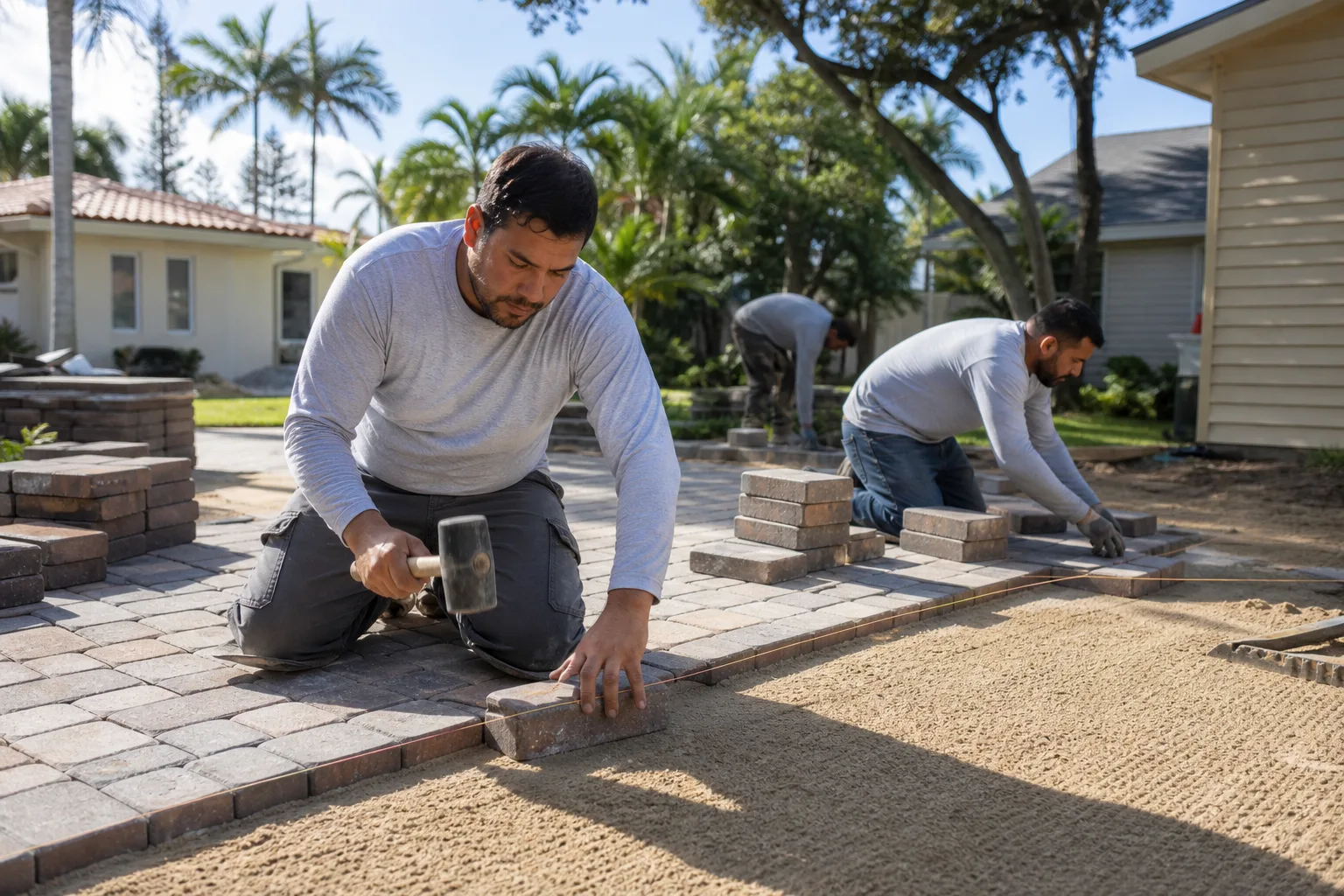
Glendale driveways fail from the base up, not the surface down, and the cost difference between catching it early and catching it late is roughly $1,800 – $4,500 per incident. Maintain the sequence: October walking-load test and polymeric resand, April post-rain heave and efflorescence check, August heat and sealer check. Use polymeric sand rated for Zone 10, watch the three drainage points – hillside sheet-flow, parkway strip, apron transition – because they are the manufacturer warranty’s escape hatch. Photograph everything with dates. And when the walking-load test finds a pattern, don’t rent equipment – get a written scope for a base correction. That written number, before anyone starts, is the whole point.
Written by the team at Rowan Construction Group Glendale.
See the difference
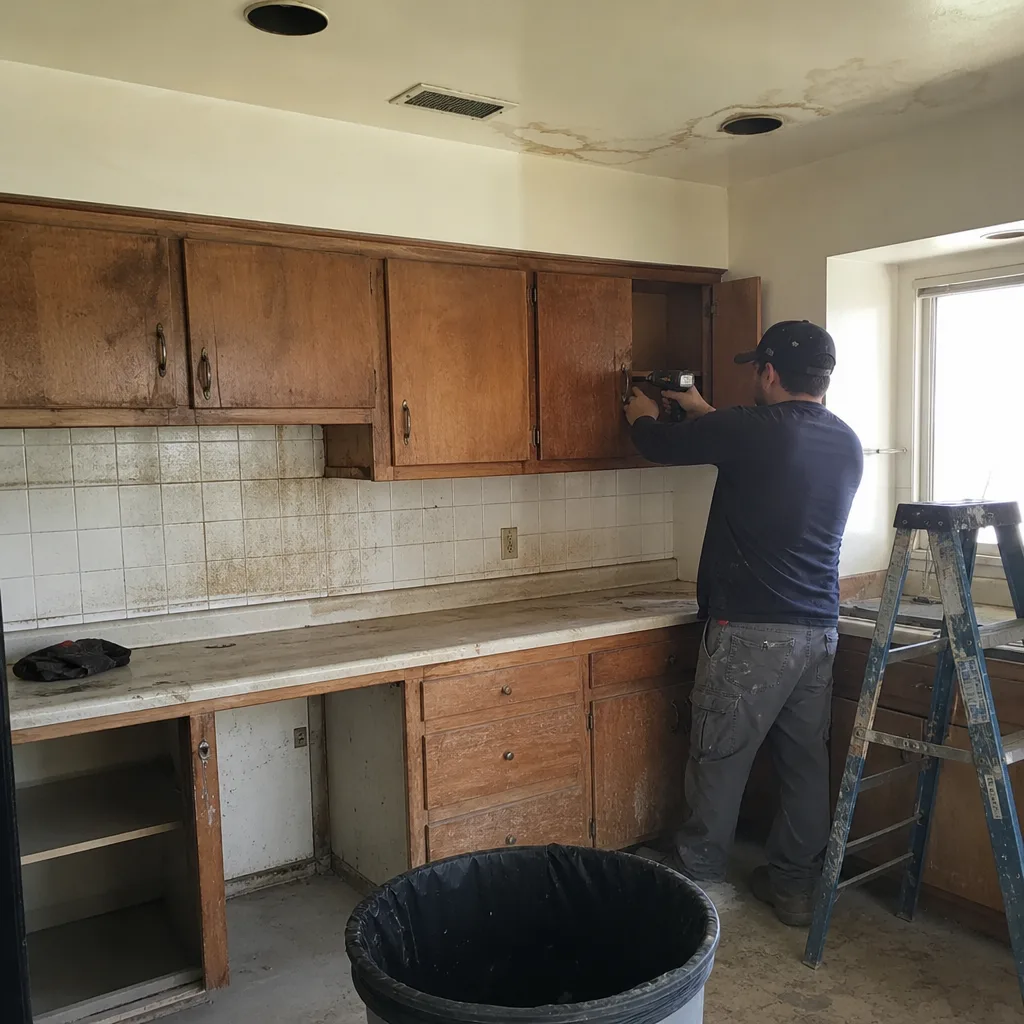 Before
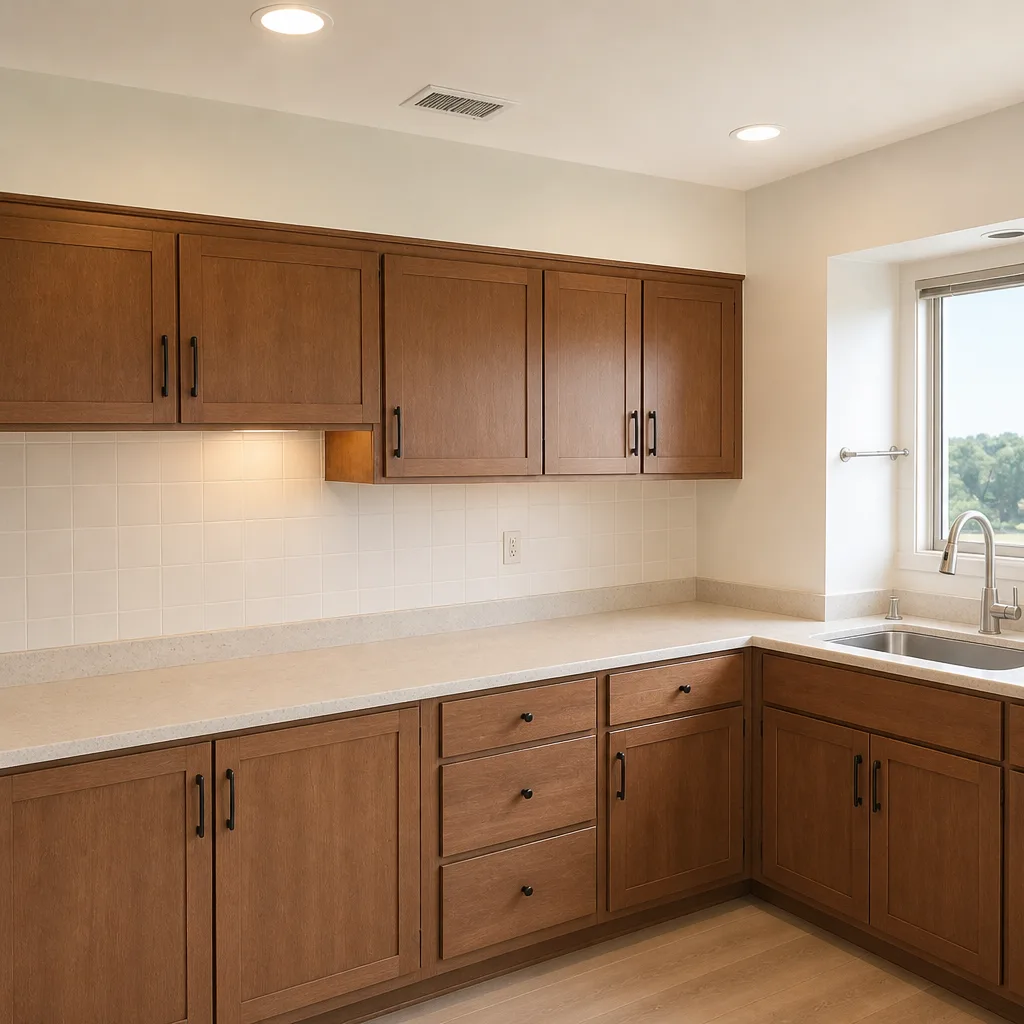 After
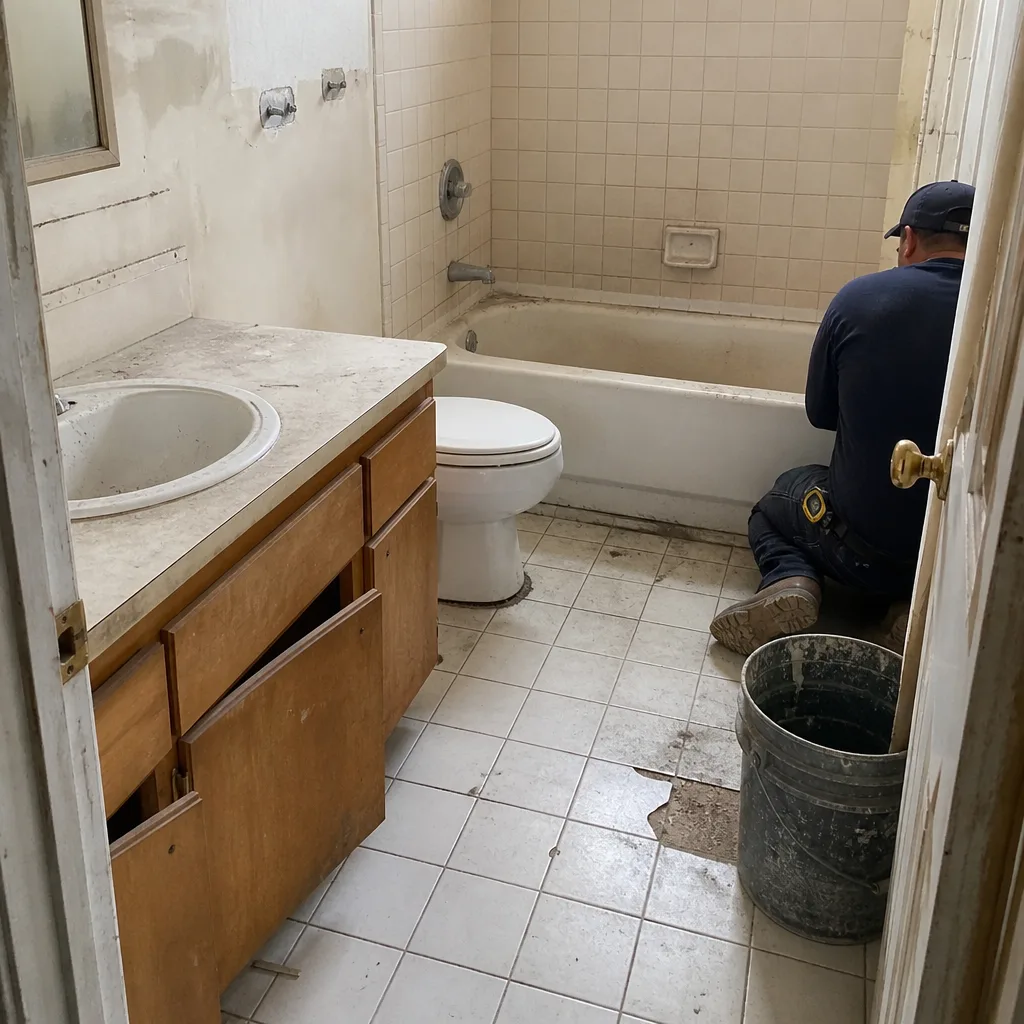 Before
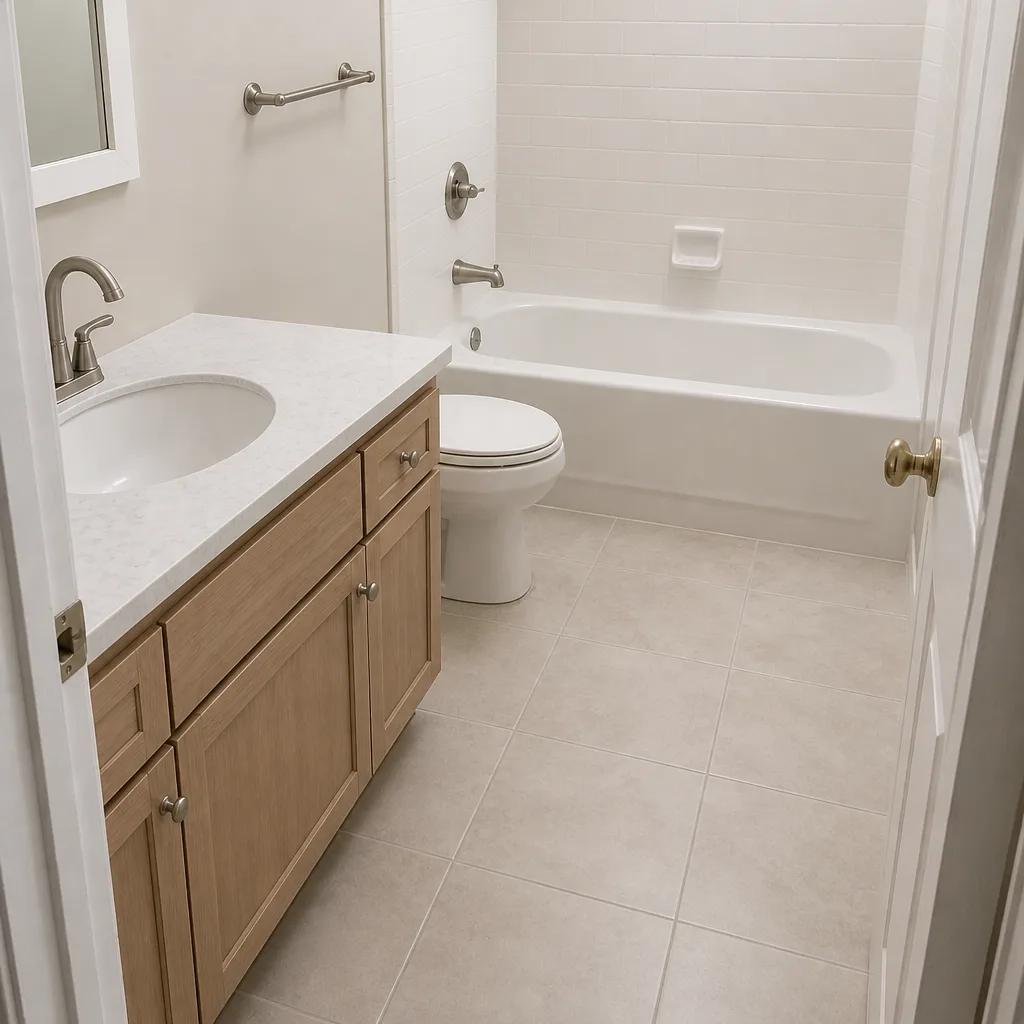 After
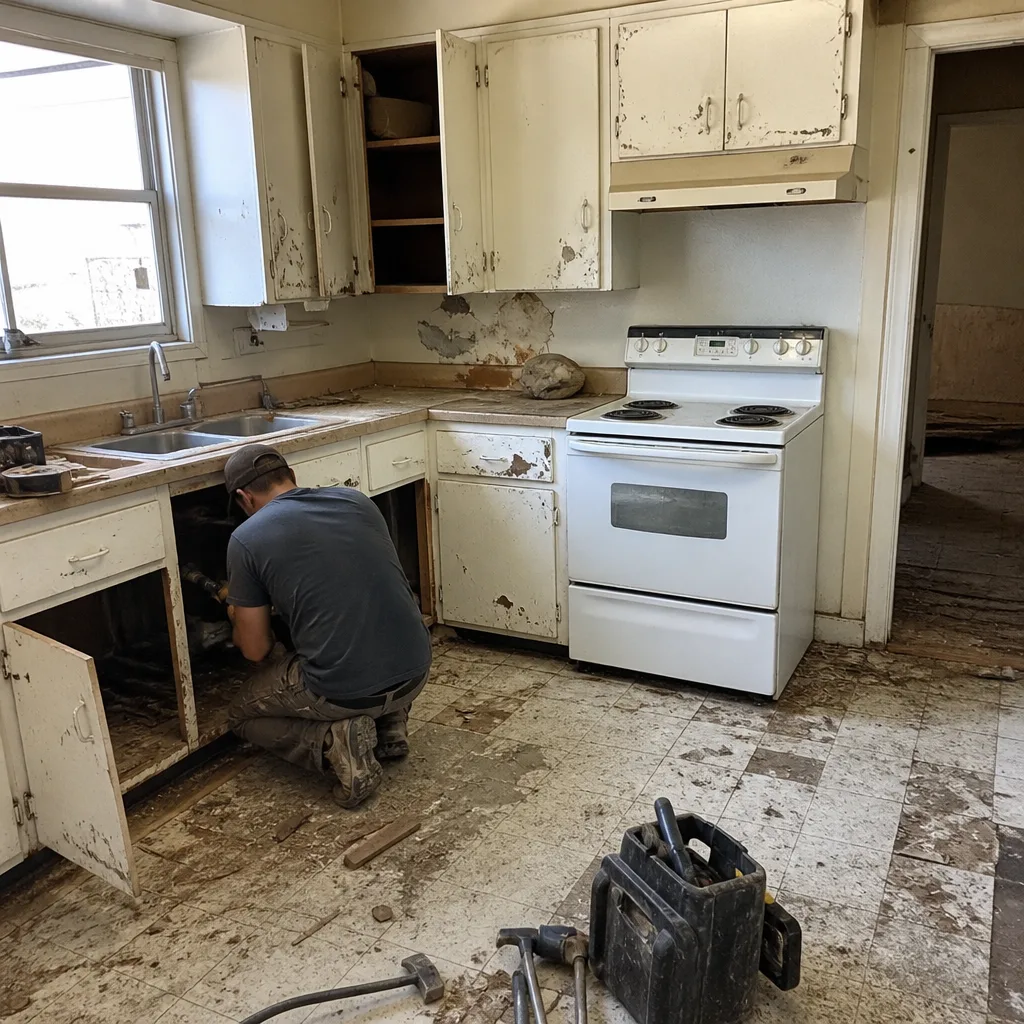 Before
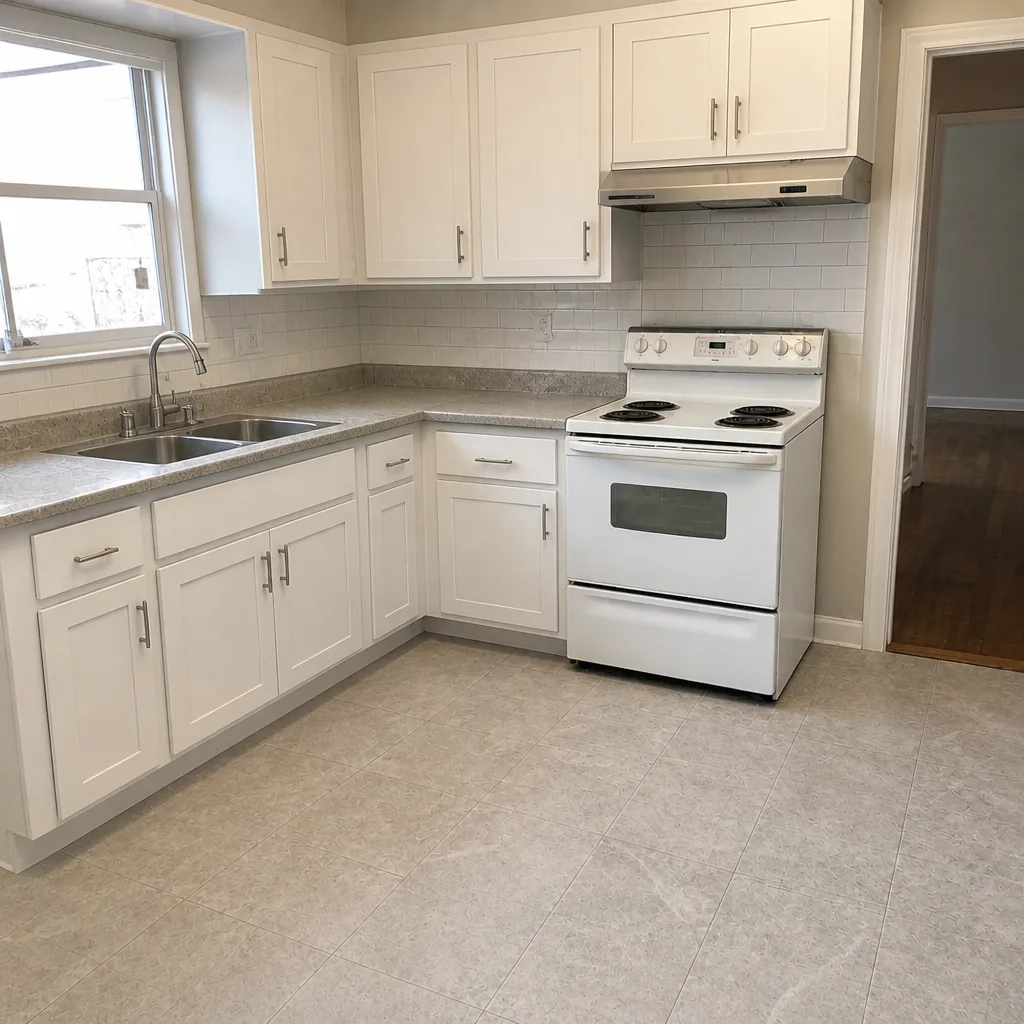 After