Last updated November 16, 2026
Free written scope consultation - allowances, timeline, and change-order rules on paper before a single trade is scheduled
The Complete Driveway & Pavers Guide for Glendale Homeowners
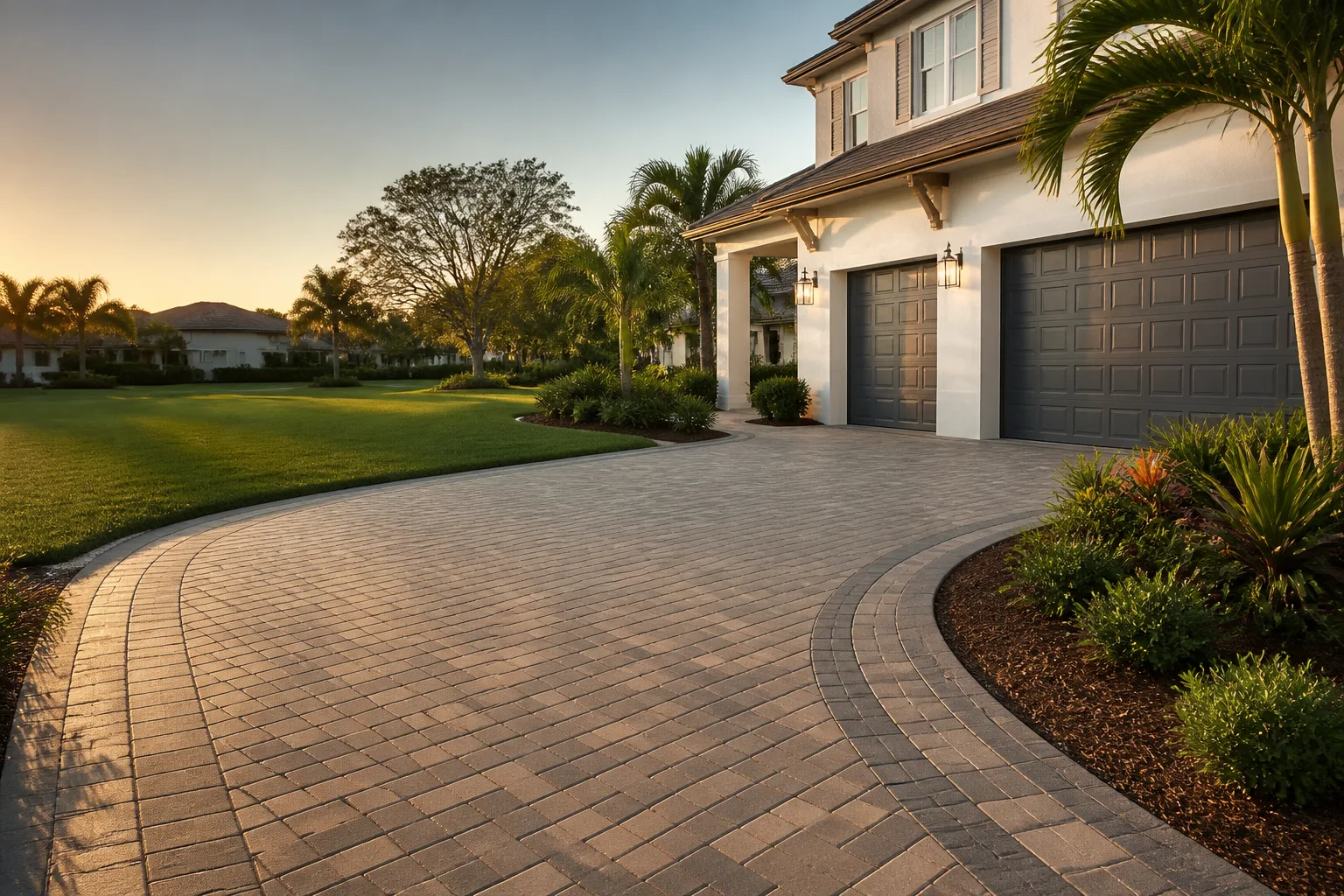
Most paver driveways that fail in Glendale fail within five years, and it usually has nothing to do with the pavers. It has to do with what’s underneath them. A four-inch compacted Class II base is the minimum for passenger vehicles sitting on Glendale’s clay-heavy soils. Plenty of low-bid jobs pour two inches, skip the geotextile, and call it done. You won’t see the difference on day one. You’ll see it after two wet winters when the field starts to rut and the joints open up. This guide covers what actually determines whether a driveway in Glendale lasts thirty years or falls apart in six – base depth, compaction, edge restraint, drainage, permit requirements, and how to read a bid so you’re comparing engineering rather than salesmanship.
Quick Answer
A concrete paver driveway in Glendale runs $18 – $28 per square foot installed, and natural travertine runs $28 – $45 per square foot. The single biggest factor in whether it lasts is base preparation: at least 4 inches of compacted Class II aggregate on flat lots, 6 inches or more on expansive clay hillside sites common in Glendale’s Verdugo foothills neighborhoods. The pavers themselves are the least variable part of the job.
Styles & brands we work with
- Kitchen remodeling
- Bathroom remodeling
- Home additions & ADU
- Roofing
- Windows & doors
- Driveway & pavers
- Fence
Table of Contents
- Why Glendale Soils Change the Base Spec
- What Driveway Pavers Cost in Glendale
- Base Depth and Compaction: The Invisible Engineering
- Edge Restraint Systems Explained
- Drainage and Slope on Glendale Lots
- Glendale Permits and Grading Triggers
- How to Read a Paver Bid
- Paver Brands and Materials We Work With
Why Glendale Soils Change the Base Spec
Glendale sits on two very different soil profiles depending on which side of the city you’re on, and a competent contractor adjusts the base spec accordingly. On the flatter lots around Adams Hill, Somerset, and the corridors near Brand Boulevard, you’re typically dealing with alluvial soils and older fill – clay-rich but relatively stable. On the hillside parcels up in the Verdugo foothills, Chevy Chase Canyon, and the streets climbing toward Glenoaks, you’ll find expansive clay that swells when it’s wet and shrinks when it dries. That seasonal movement is what cracks driveways.
For flat-lot passenger vehicle driveways, 4 inches of compacted Class II base is the floor. On hillside parcels with expansive clay, we spec 6 to 8 inches, sometimes with a geotextile separation layer between the subgrade and the base to prevent fines from migrating up into the aggregate. That fabric costs maybe $0.40 per square foot and adds years to a driveway’s life. It’s also the first line item low bidders drop.
Glendale’s wet season is short – roughly November through March – but it’s concentrated. A driveway that survives one wet season without drainage issues may still fail on the second or third, once the subgrade has cycled through enough wet-dry movement to reveal inadequate base depth. That’s why the failure timeline for underbuilt driveways is almost always year two or year three, not year one. Our technicians have up to 19 years of experience and, in our own work, the calls we get about “new” driveways that already look tired almost always trace back to this pattern.
What Driveway Pavers Cost in Glendale
Homeowners researching pavers want the number, so here it is in a form you can screenshot and compare against any bid.
- Concrete pavers, installed: $18 – $28 per square foot. This covers standard Belgard and Basalite lines on a properly prepped base.
- Natural travertine, installed: $28 – $45 per square foot. Travertine runs hotter to install because it’s heavier, more brittle, and requires careful selection to avoid color drift across the field.
- Premium interlocking systems (Unilock, high-end Belgard): $22 – $32 per square foot. The price bump is for tighter tolerances, more joint pattern options, and better color consistency batch to batch.
- Base prep and excavation, when quoted separately: $4 – $8 per square foot depending on depth and access.
- Edge restraint systems: $2 – $5 per linear foot, which is a small line item but one of the most consequential.
- Permit fees and engineering, where required: $400 – $2,000 depending on scope and whether grading is involved.
A typical Glendale two-car driveway is 400 to 600 square feet. At $22 per square foot, that’s roughly $8,800 to $13,200 for concrete pavers, base, restraint, and standard site work. Under Clause 1 of the Haven Standard, the price is written before anyone starts – which matters here because paver jobs are notorious for change orders once excavation reveals unexpected soil or an old concrete slab nobody mentioned.
For comparison context within our own trades, fence installation in Glendale often pairs with a driveway project and runs in a similar range per linear foot, and home additions and ADU work in Glendale frequently requires the driveway to be reworked for access, which is worth planning together rather than in two phases.
Base Depth and Compaction: The Invisible Engineering
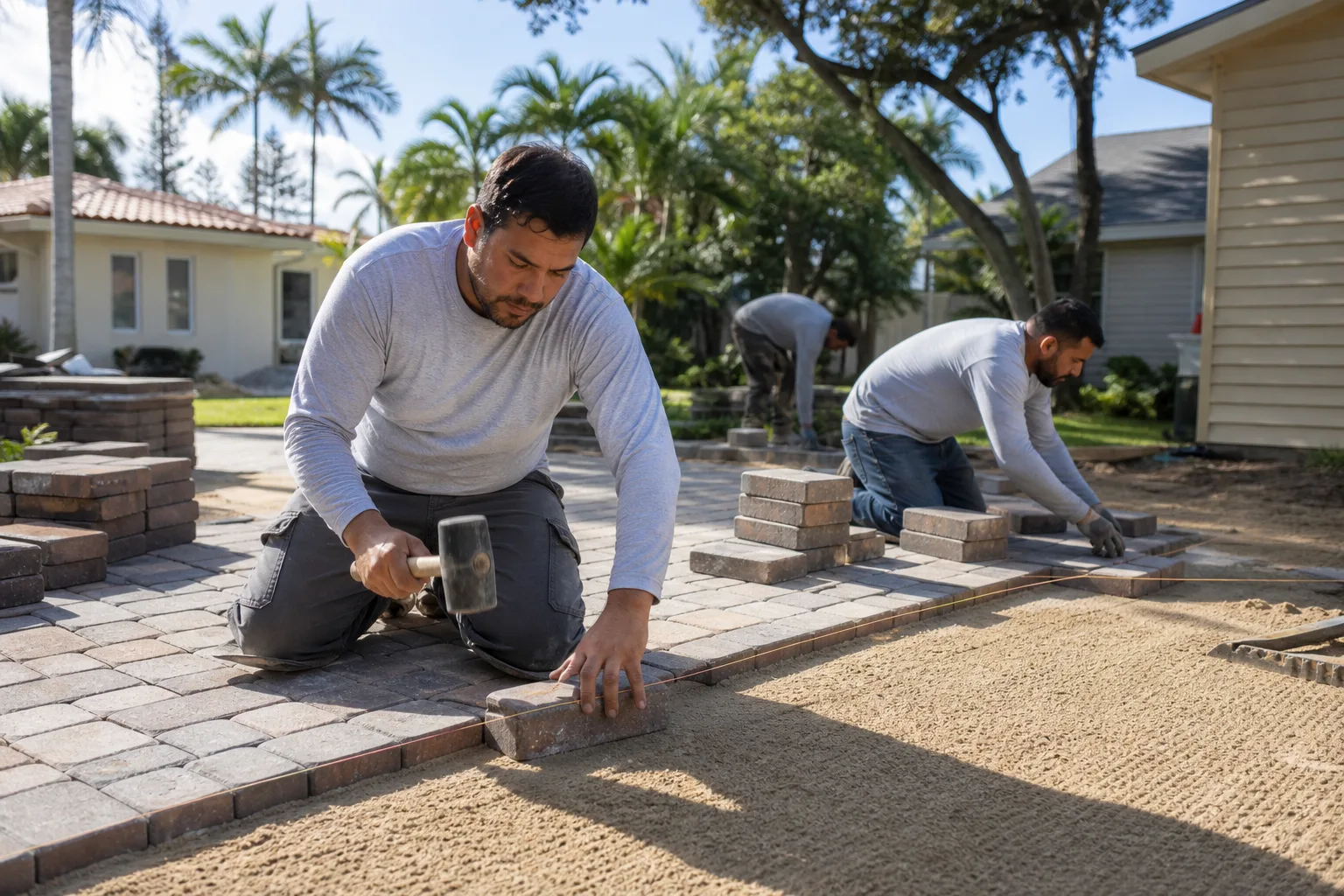
Base depth gets all the attention, but compaction is where the real failures hide. You can install 8 inches of Class II and still have a driveway that ruts, because loose aggregate at 85% compaction performs worse than 4 inches at 95%. Standard spec is 95% relative compaction per ASTM D1557, achieved with a plate compactor in 2-inch lifts. That means a 4-inch base is compacted in two passes, not one, and a 6-inch base is compacted in three. Nobody can verify this after the fact without cutting into the driveway, which is why the compactor needs to be on site while the base is going in.
- Excavate to the specified depth. Base depth plus paver thickness plus bedding sand (usually 1 inch) = total excavation.
- Proof-roll the subgrade. A plate compactor or small roller passes over the subgrade before any aggregate goes down. Soft spots get dug out and replaced.
- Lay geotextile in expansive clay zones. Separation fabric prevents fine particles from pumping upward over the years.
- Place aggregate in 2-inch lifts. Each lift is compacted to 95% before the next one goes down.
- Verify final grade with a laser level. Slope away from the structure should fall between 1.5% and 2%.
- Bedding sand, screeded, then pavers, then edge restraint, then plate-compact the finished field.
This is the sequence. A bid that doesn’t spell out base depth, lift thickness, compaction percentage, and geotextile is telling you something – either the contractor does it consistently without writing it down, or they don’t do it at all. In Glendale, ask.
Edge Restraint Systems Explained
Edge restraint is what keeps the paver field from spreading outward under vehicle loads. Skip it or spec the wrong system, and the outside rows will creep, the joints will widen, and the whole driveway will start to look like it was installed by someone who didn’t finish the job.
Plastic spike-down edge restraint is the standard for residential driveways under normal use. It’s a poly edge strip spiked into the base every 12 to 16 inches, backfilled with compacted soil or aggregate. Cost-effective and adequate for most Glendale properties. It should never be used where the driveway edge sits at the top of a slope or on expansive clay without additional support – the spikes can work loose over wet-dry cycles.
Aluminum edge restraint is stronger and more dimensionally stable than plastic. We spec it on hillside driveways and anywhere the outside edge sits above finished grade. It costs more per foot but resists lateral movement under repeated vehicle weight, which plastic can’t guarantee on steep lots.
Concrete border curb is the most durable option, and the right choice when the driveway edge needs to retain a grade change, sit adjacent to a planter, or transition onto a slope. It’s poured in place, tied to the paver field, and the pavers are cut to it. Cost is the highest, but so is the lifespan.
For any driveway carrying more than two vehicles, or on any Glendale hillside parcel, the edge restraint is not a place to trim the budget.
Drainage and Slope on Glendale Lots
Pavers are permeable at the joint level but they’re not a drainage system. Water that gets under the pavers needs somewhere to go, and on a Glendale lot that’s usually the street or a designed swale. Standard practice is a running slope of 1.5% to 2% away from the house and toward the street or a channel drain. On hillside lots, the driveway often becomes the primary stormwater conveyance for the property above it – which is why we regularly see hillside driveways in Glendale fail in year three after a single heavy storm has washed out the subgrade from below.
Three things prevent that. First, the base perimeter needs a drainage edge – either a perforated pipe in aggregate at the low side, or a channel drain at the transition to a sidewalk. Second, the slope itself has to be designed, not eyeballed; a driveway that slabs flat at the top and pitches steeply at the bottom will pond water at the break. Third, any adjacent planter or softscape needs to drain away from the driveway, not into it.
Glendale gets its rain in concentrated bursts. A 3-inch storm in two days will find any drainage weak point in a driveway. Designing for that storm, not for the average, is what separates a well-built driveway from one that becomes a project again.
Glendale Permits and Grading Triggers
A like-for-like driveway replacement – same footprint, same grade, no expansion – generally doesn’t require a building permit in Glendale. But several common project variations do trigger the permitting process through Glendale Building & Safety, and knowing which is which before you sign a contract matters.
- Grading permit: Any project involving more than 50 cubic yards of cut or fill, or any change to drainage patterns affecting adjacent properties, requires a grading permit. A driveway expansion that requires regrading the slope above or below the slab frequently crosses this threshold.
- Encroachment permit: Required when the driveway apron meets the public right-of-way. The City handles the apron detail, and the permit is part of the scope.
- Hillside grading: Properties in Glendale’s hillside zones face additional review for slope stability and are often subject to geotechnical reports.
- Structural section change: If your new driveway crosses over a utility trench or a retaining wall, engineering review may apply.
A compliant submittal includes a site plan with existing and proposed grades, the drainage plan, the base and paver spec, and the edge restraint detail. Contractors who hand you a permit application and say “you fill this out” are pushing the work onto you. Under our own practice, the submittal is on us.
How to Read a Paver Bid
Two bids for the same Glendale driveway can differ by $4,000 and appear to describe the same work. They don’t. Compare the following twelve lines against each other before you compare the bottom-line number.
- Excavation depth – stated in inches, tied to total section thickness.
- Base material spec – Class II or equivalent, with brand named where applicable (Quikrete and Sakrete both supply engineered base materials).
- Base depth – the number matters more than the word.
- Compaction percentage – should read 95% per ASTM D1557.
- Lift thickness – 2 inches per lift for compacted aggregate.
- Geotextile – specified by product and location, or absent.
- Bedding sand depth – typically 1 inch, screeded, not dumped.
- Paver brand and series – Belgard, Unilock, Basalite, or a named equivalent.
- Edge restraint type – plastic, aluminum, or concrete, with linear footage.
- Drainage scope – channel drain, perforated pipe, or neither.
- Permit responsibility – who pulls it, who pays the fee.
- Warranty terms – written, years specified, what’s covered.
The bid you want to see has all twelve. The bid you want to walk away from says “install pavers, base included” and sticks a lump sum at the bottom. Free Second Opinion on Any Written Estimate is a standing offer here – bring a competitor’s quote and we’ll review it line by line at no charge, no pitch attached.
Paver Brands and Materials We Work With
Material selection gets a lot of attention because it’s the visible part of the driveway, but the honest truth is that within a given price tier, most major brands perform similarly when installed correctly. Belgard is the most common choice for Glendale residential driveways – large format, wide palette, well-distributed locally. Unilock is a step up in color consistency and joint tolerance, and we spec it on projects where the homeowner wants a specific look held across a large field. Basalite is the cost-efficient option for standard profiles that don’t need a custom look. Natural travertine at the top end of the range is a design choice: cooler underfoot, distinctive, but no more durable than concrete pavers when the base is right.
The same logic applies across our other trades. Driveway and paver work in Glendale is a service we quote with a written price before work starts, and the material brand goes in the written scope so you’re comparing like for like. The alternative – “we’ll use a good paver brand” – is a bid you can’t compare against anything.
For homeowners planning a larger exterior project, driveway, fence, and landscaping decisions are usually best made together. That’s why we present Rowan Construction Group in Glendale as one contractor across seven trades – not seven separate specialists who hand off to each other.
Common Mistakes to Avoid
- Accepting a 2-inch base because the bid says “properly prepared.” Proper preparation is a number, not a phrase. Ask for the depth in inches, written in the quote.
- Skipping geotextile on hillside lots. The five-dollar-per-square-foot savings on fabric turns into a $3,000 re-do three years later when the fines migrate and the base loses structure.
- Using plastic spike-down restraint on a slope. Plastic edges work fine on flat grades. On a Glendale hillside, they work loose, spread, and take the paver field with them.
- Letting the contractor “design” drainage by eye. Glendale’s concentrated wet season punishes driveways that pond water at a grade break. Slope is a design number – 1.5% to 2% – not a guess.
- Forgetting the driveway apron permit. The portion of driveway crossing the public right-of-way needs an encroachment permit. If a contractor doesn’t mention it, they may not be planning to pull it.
- Comparing bottom-line prices across two bids. A $12,000 bid with full spec and a $9,000 bid with half the base are not $3,000 apart. They’re not even the same project.
- Accepting a verbal warranty. If the workmanship warranty isn’t written on the quote, it doesn’t exist when you need it in year three.
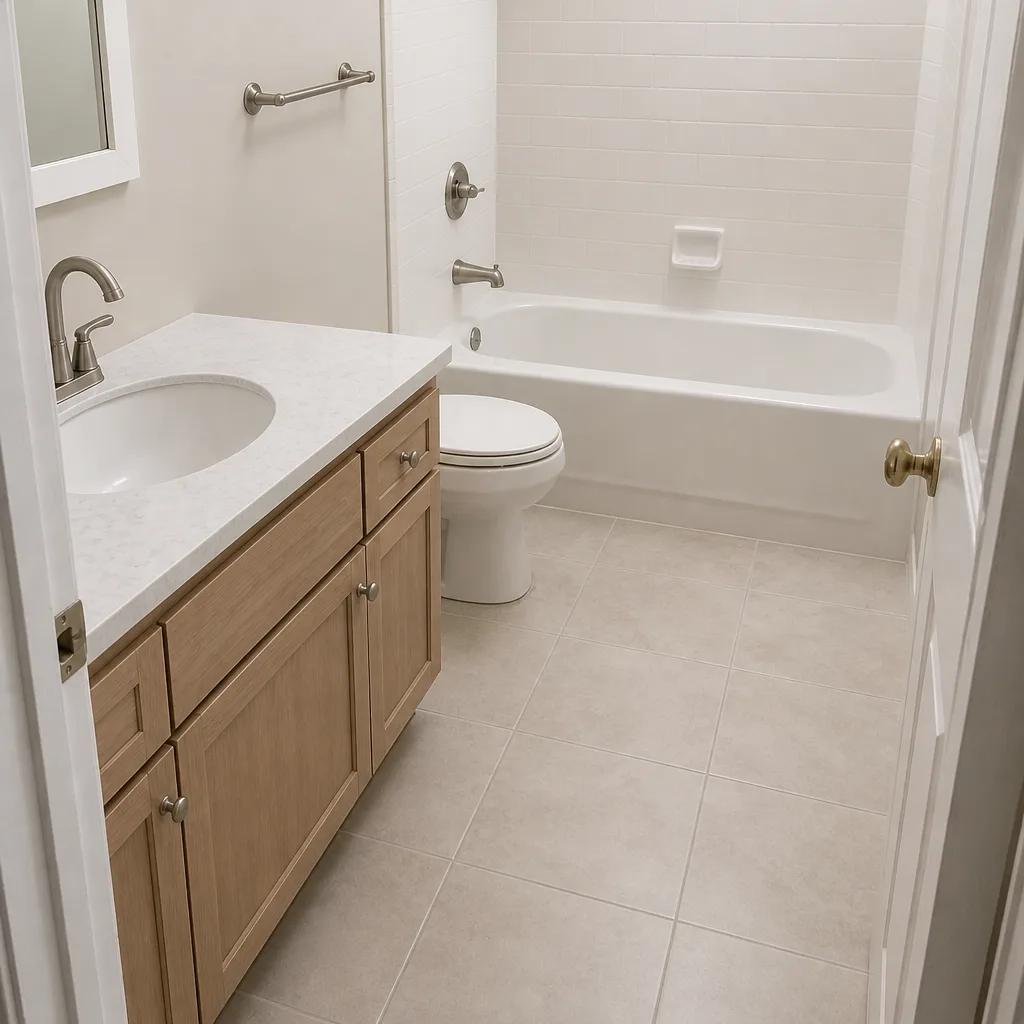
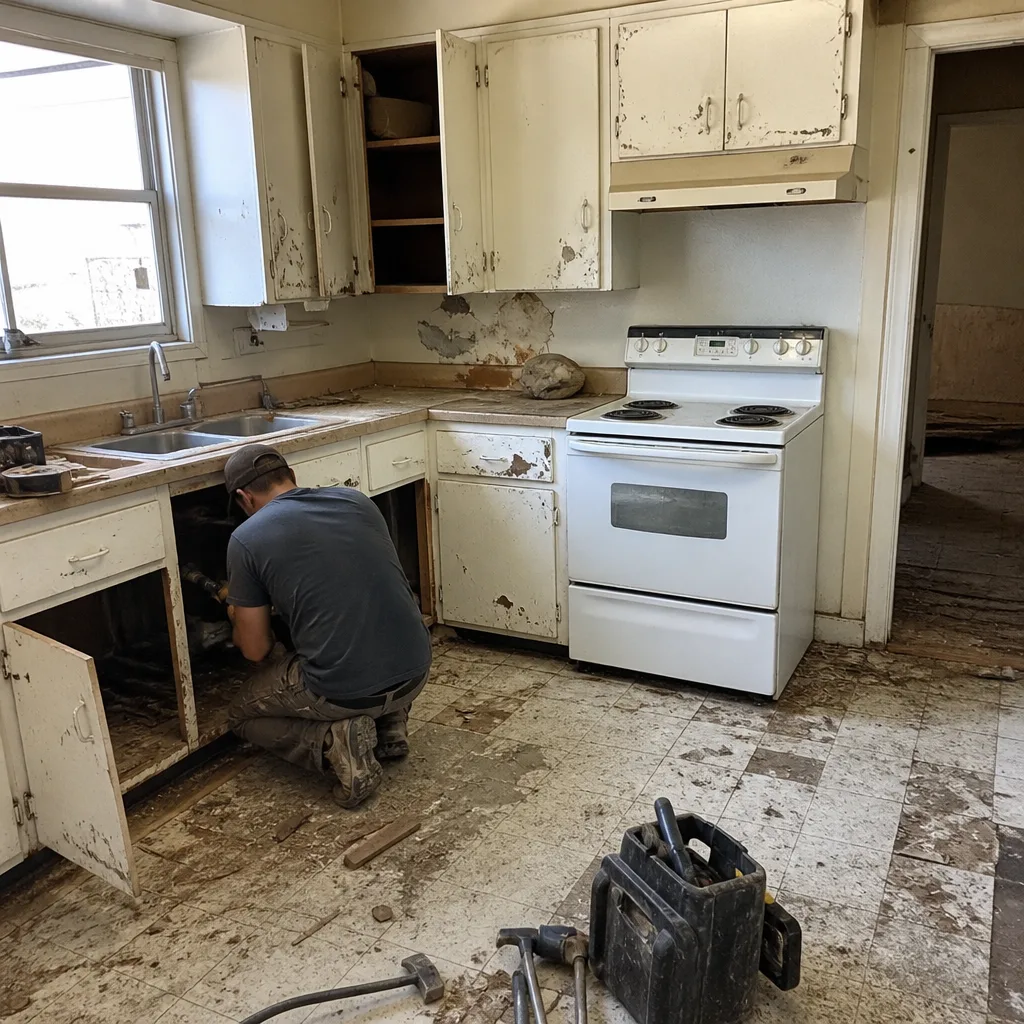
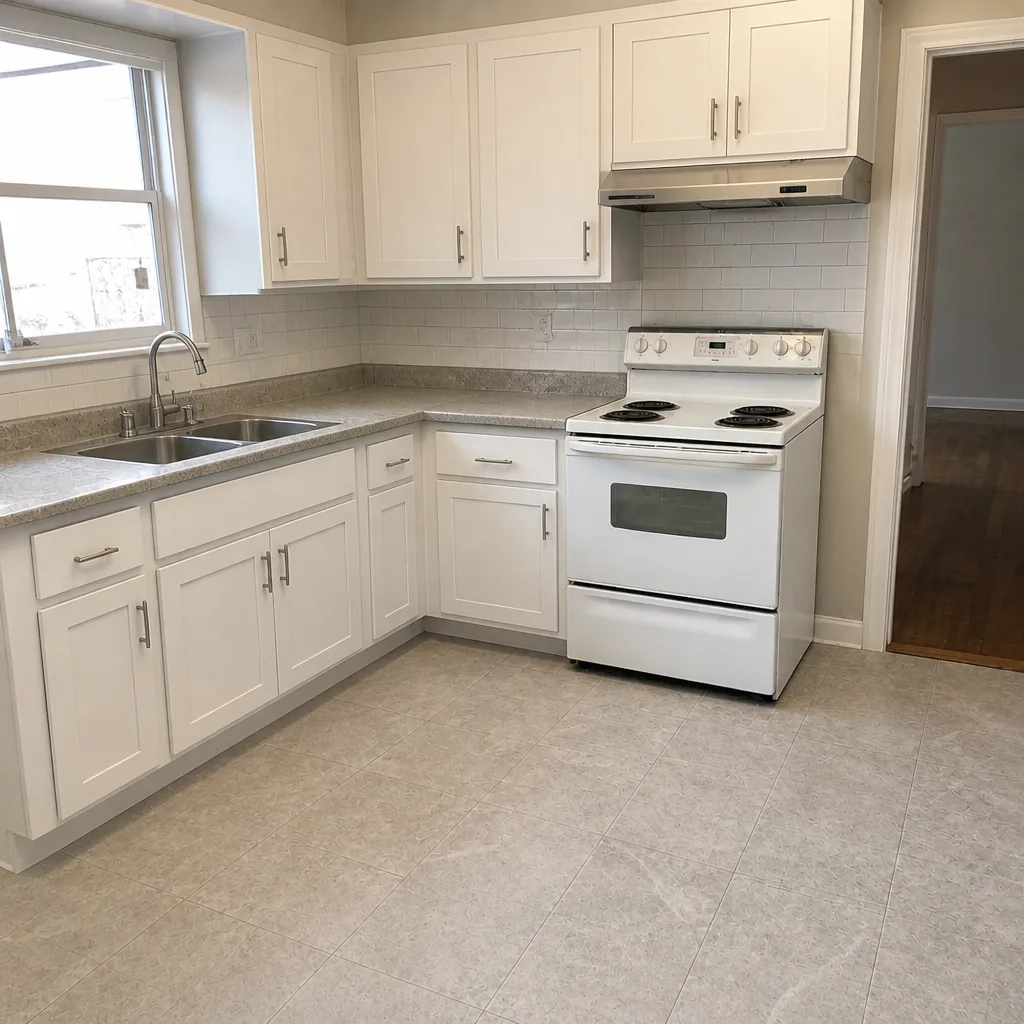
See the difference
 Before
 After
 Before
 After
 Before
 After
When to Call a Professional
Paver installation is not a weekend project, and for several scenarios it’s not a project to consider taking on at all. Call a professional when: the driveway is failing within five years of a previous install (that’s a base failure, not a paver failure, and requires full excavation to fix); the lot has any slope, expansive clay, or sits above a retaining wall; the work touches the public right-of-way; the driveway meets a garage slab or an entry step and needs a specific grade transition; or the total area exceeds 300 square feet. Also call when a bid you’ve received doesn’t say what base depth, compaction percentage, or edge restraint type it includes – you need a second read on it. Rowan Construction Group Glendale offers free estimates in Glendale, and the quote is a flat written price with a written scope before anyone starts. Call (844) 320-5930.
Frequently Asked Questions
A concrete paver driveway in Glendale runs $18 – $28 per square foot installed, and natural travertine runs $28 – $45 per square foot. A standard two-car driveway (400 – 600 square feet) typically lands between $8,800 and $13,200 for concrete pavers with proper base preparation and edge restraint. Call (844) 320-5930 for an exact quote on your property – estimates are free and the written price comes back before work starts.
Four inches of compacted Class II base is the minimum for passenger vehicle driveways in Glendale’s flat-lot soils. On hillside parcels with expansive clay, we spec 6 to 8 inches, sometimes with a geotextile separation layer between the subgrade and the base. The base depth should be written into the bid, not left to interpretation.
A like-for-like driveway replacement generally doesn’t require a building permit in Glendale. Projects involving more than 50 cubic yards of cut or fill, changes to drainage affecting adjacent properties, or work crossing the public right-of-way do require permits through Glendale Building & Safety. The exact triggers depend on your project scope – call (844) 320-5930 and we’ll walk through what applies to your lot.
No. The written price is the price, and no work proceeds on a change until a change order is signed. Unexpected site conditions (an old buried slab, a soft subgrade) can justify a change, but that change gets quoted and signed before any additional work happens. Bringing a competitor’s bid doesn’t change this – estimates are free, and second opinions on any written estimate are free.
A standard 400 – 600 square foot driveway is typically a 3 to 5 day project, weather permitting. Excavation, base prep, and compaction take a day and a half to two days. Paver setting, cutting, edge restraint, and final compaction take the rest. Hillside sites with deeper excavation and permitting requirements extend the timeline. Call (844) 320-5930 for a schedule estimate specific to your property.
Plastic spike-down edge restraint is the standard for flat residential driveways and works well under normal vehicle loads. Aluminum edge restraint is stronger and more dimensionally stable; we spec it on hillside driveways and where the outside edge sits above finished grade. For driveways retaining any slope change, a poured concrete border is the most durable option. Call (844) 320-5930 to talk through what your lot calls for.
The Bottom Line
The pavers are the visible part of the driveway, but the base, compaction, edge restraint, and drainage are what determine whether it survives Glendale’s wet seasons. Get those right and the material choice becomes a design decision, not a durability gamble. Get them wrong and even Belgard or Unilock will look their age inside three years. The bid that names base depth, compaction percentage, edge restraint type, and permit responsibility is the one worth comparing against. The one that doesn’t isn’t a bid, it’s a number. Under Clause 1 of the Haven Standard, the price is written before anyone starts – and the written scope behind that price is what makes it meaningful. If you’re evaluating an existing bid or starting from scratch, a free second opinion will tell you exactly what you’re being quoted for.
Contact
Rowan Construction Group Glendale quotes driveway and paver work with a flat written price and a written scope before any work begins. Background-checked crews, documented photo record on every visit, and the 365-Day Done Right Promise on every job. Call (844) 320-5930 for a free estimate, or reach out to schedule a second-opinion read on any written bid you’ve already received.
Written by the team at Rowan Construction Group Glendale.