Last updated November 16, 2026
Free written scope consultation - allowances, timeline, and change-order rules on paper before a single trade is scheduled
DIY vs Professional Bathroom Remodeling: What’s Safe to Do Yourself
Replacing a bathroom vanity without touching the plumbing requires no permit in California and takes a careful homeowner about four hours. Installing a new shower pan in that same bathroom without a City of Glendale plumbing permit can void your homeowner’s insurance on a water-damage claim. That gap – four hours and zero paperwork versus a hidden liability that surfaces two years later – is the real DIY-versus-hire decision, and it almost never shows up in a tutorial. In Glendale, CA, where a large share of the housing stock dates to the 1920s through the 1960s, the stakes are higher than in a newer suburb. This guide draws the safe line by task.
Quick Answer
Painting, swapping a vanity that doesn’t touch plumbing, hanging a mirror, and replacing hardware are genuinely safe DIY projects that save real money. Anything that moves a drain, adds or relocates a water line, installs a new shower pan, or alters the waterproofing membrane in a Glendale bathroom needs a permit and a licensed trade – and the sequencing of inspection before tile is where most DIY remodels fail.
Styles & brands we work with
- Kitchen remodeling
- Bathroom remodeling
- Home additions & ADU
- Roofing
- Windows & doors
- Driveway & pavers
- Fence
Table of Contents
- The Glendale Permit Matrix: What Needs a City Permit and What Doesn’t
- Moisture Sequencing: Why Tiling Before the Inspection Is the Most Expensive Mistake
- Where DIY Is Genuinely Safe and Saves Real Money
- Cost Comparison: Contractor Labor vs. the Realistic DIY Re-Do
- How Unpermitted Work in Glendale Affects Resale and Disclosure
- The Trades You Should Never DIY in a Bathroom
The Glendale Permit Matrix: What Needs a City Permit and What Doesn’t
Glendale Building & Safety, which operates under the city’s Community Development Department, follows the California Building Standards Code with local amendments. For homeowners the practical question isn’t the code section – it’s a simple yes or no on a specific job. Here’s how it breaks down for bathroom work in Glendale, CA.
Jobs that typically require a Glendale permit
- Adding, moving, or relocating any plumbing fixture – a new drain, a relocated toilet, a second sink in a double-vanity conversion. Permit and rough-in inspection required.
- Installing or replacing a shower pan or tub where the waterproofing membrane is disturbed or replaced. Plumbing and often building permit.
- Any electrical work beyond swapping a light fixture or switch – adding a GFCI outlet, moving an exhaust fan, running a new circuit. Electrical permit.
- Removing or altering a load-bearing wall between bathroom and adjacent space. Structural permit plus engineering.
- Converting a window to a door, or adding a window to an exterior bathroom wall. Building permit.
- Re-routing or extending mechanical ventilation through a wall or roof.
Jobs that typically do not require a permit
- Painting walls, ceilings, trim, and cabinetry.
- Replacing a vanity cabinet if no supply or drain lines move.
- Swapping a faucet of the same configuration, a toilet in the same location, or a showerhead.
- Hanging a mirror, replacing towel bars, drawer pulls, and cabinet hardware.
- Replacing a light fixture on an existing circuit.
Confirm any item with Glendale Building & Safety before work starts – permit thresholds occasionally shift, and a quiet phone call costs less than an inspection failure. We’ve also found that knowing the matrix in advance is exactly why our written quotes in Glendale can arrive with a fixed line for permits instead of a vague allowance.
Moisture Sequencing: Why Tiling Before the Inspection Is the Most Expensive Mistake
Every bathroom rebuild has a hidden layer between the studs and the tile: the waterproofing membrane. On a shower wall or floor, that membrane is what stops water from reaching the framing, the subfloor, and eventually the neighbor’s ceiling. The single most expensive DIY error in bathroom work isn’t choosing the wrong tile – it’s setting tile before the rough-in and waterproofing inspections are signed off.
The correct sequence, in order, looks like this:
- Demolition and rough framing.
- Plumbing rough-in and electrical rough-in – both inspected.
- Backer board and waterproofing membrane install.
- Waterproofing inspection (in Glendale this is typically a flood test on pan membrane and a visual on wall membrane).
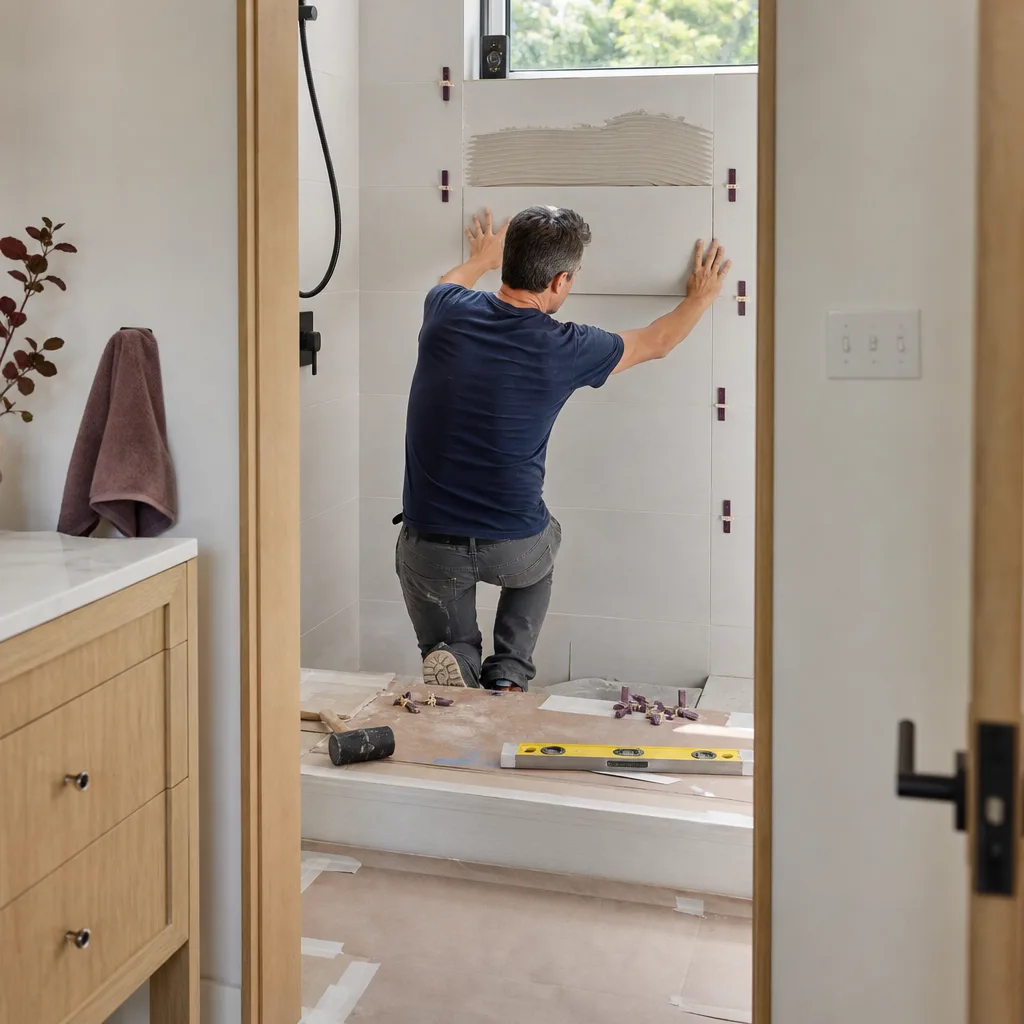
- Tile setting.
- Final inspection.
When tile goes down before step four, the only way to pass the inspection is to tear it back out. In Glendale’s older housing stock – some of it nearly a century old – a shower pan replacement often reveals cracked mortar bed, no pre-slope, and sometimes no membrane at all. Every one of those conditions has to be corrected before tile, and a YouTube tutorial that skips the flood test skips the one part that catches the leak. We’ve pulled out showers that failed three months after install because the slope was crowned instead of pitched toward the drain. The repair wasn’t the tile – it was the whole subfloor.
Where DIY Is Genuinely Safe and Saves Real Money
The tasks below are the ones where a thoughtful homeowner with basic tools does clean, code-compliant work – and keeps the money. In a Glendale bathroom remodel, the labor saved on these four jobs alone often covers the cost of a professional doing the shower.
- Painting. A bathroom needs a moisture-rated paint – a satin or semi-gloss acrylic with a mildewcide additive – and two coats after proper prep. Two gallons, a good brush, and a roller cover the average 5-by-8 bathroom in a day. That’s $60 to $90 in materials against roughly $400 to $700 in contractor labor.
- Vanity swap without plumbing. If the new cabinet is the same width and the supply and drain locations match, you’re looking at a straightforward unbolt and reinstall. The trap: the second you cut a drain hole differently or move a supply stub, the plumbing permit re-enters the picture.
- Mirror installation. A framed mirror over a drywall substrate uses the same anchor discipline as any heavy shelf. Skip the frameless glue-only route unless you’re confident in the surface prep; the adhesive failure mode is a shattered mirror on tile.
- Hardware replacement. Cabinet pulls, towel bars, TP holders, shower curtain rods. Measure twice, drill once, and use a level. The Glendale housing stock often has out-of-square walls, so a small shim or a slightly oversized escutcheon saves a visible gap.
Beyond these, the answer usually swings toward hiring – not because DIY skill is lacking, but because the permit and inspection work cost more to redo than to include upfront. If a project rolls into a larger scope, our Rowan Construction Group Glendale home page lays out how the trades connect.
Cost Comparison: Contractor Labor vs. the Realistic DIY Re-Do
The number most homeowners use to justify DIY is the labor line on a quote. The number that actually determines whether DIY saved money is the re-do cost after a failed inspection, a leak, or a bond failure. Here’s the honest five-task comparison for a Glendale, CA remodel, priced as ranges you’d see in 2026.
| Task | Contractor labor | DIY materials | Realistic DIY re-do |
|---|---|---|---|
| Vanity swap (no plumbing) | $300 – $550 | $90 – $180 | $0 – $200 (damaged cabinet or stripped valve) |
| Interior bathroom painting | $400 – $700 | $60 – $90 | $0 – $250 (mildew re-coat after moisture failure) |
| Shower pan replacement | $1,400 – $2,800 | $400 – $900 | $2,500 – $6,000 (tile + membrane + subfloor + inspection) |
| Tile wall install with membrane | $1,800 – $3,600 | $600 – $1,400 | $2,000 – $5,500 (demo + re-set + membrane) |
| GFCI / exhaust fan electrical | $250 – $550 | $60 – $150 | $400 – $1,200 (permit late fee + re-inspection + repair) |
The pattern is clear: the two labor-heavy trades – shower pan and wall tile – carry the worst re-do outcome if they fail. Painting and vanity work do not. That’s why the safe-DIY list isn’t a compromise; it’s the highest-return split of the work. And it’s why our written quote practice at Rowan Construction Group Glendale is designed around line items, not lump sums – a homeowner can look at the exact labor number and decide which tasks to keep. If your bathroom upgrade is part of a larger home project, our Home Additions & ADU in Glendale team can scope it against the bigger plan.
How Unpermitted Work in Glendale Affects Resale and Disclosure
Under California’s transfer disclosure laws, a seller has a duty to disclose known material facts about the property – and unpermitted bathroom work is a material fact. Glendale buyers’ inspectors know exactly what to look for, and a bathroom is one of the first rooms they photograph.
What inspectors and appraisers actually flag:
- Missing permit record in the Glendale Building & Safety file. Any bathroom renovation involving plumbing, electrical, or structural work leaves a paper trail – or it doesn’t, and that’s the problem.
- Finish lines that don’t line up. A shower pan that’s slightly proud of the tile, a drain not centered on the floor tile, an exhaust fan that doesn’t vent to the exterior. Bad sequencing shows in the finish.
- Exhaust fan routing into the attic. A common Glendale correction – a fan flexed into the attic instead of out the roof or wall. It’s an easy tell and a moisture problem.
- Missing or incorrect GFCI protection at bathroom receptacles – code-required for decades, and a frequent finding on older homes.
- Water damage at the base of the shower or at the toilet flange. The inspection turns up the leak the seller never fixed.
The cost of remediating unpermitted work at resale – permits pulled retroactively, inspection fees, corrections, and financing complications – routinely runs $5,000 to $15,000 on a full bathroom. A permitted job with a documented record is the cheaper path. Our Fence Installation in Glendale page covers the same disclosure principle for exterior work.
The Trades You Should Never DIY in a Bathroom
There are four trades in a bathroom where a mistake is a health hazard, a code violation, or a five-figure repair – none of which are recoverable by enthusiasm. We recommend a licensed professional for each.
- Any plumbing that moves a drain or water line. A leak in the wall is invisible until it isn’t. Plumbing permits exist because the failure mode is a soaked subfloor, not a wobbling faucet.
- Waterproofing and shower pan construction. The pan is a sloped mortar bed under a membrane under tile. Every one of those layers has a precise spec. Pre-slope, flood test, and corner membrane detail are not weekend skills.
- Electrical rough-in. Bathrooms are damp locations with strict GFCI requirements, and electrical work carries a genuine shock risk. Even a confident homeowner should not be running a new circuit in a wet zone.
- Anything structural. Removing a wall or altering a header between a bathroom and another room needs a permit, an engineer, and a careful plan. Cutting a stud by feel is how a floor sags over time.
If you’re sourcing tile or fixtures before you start, brands like Techo-Bloc and Unilock come up often on adjacent outdoor projects, and the same sourcing discipline applies to bath tile – pick the spec, then the installer. For a full driveway or exterior scope alongside the bathroom, see our Driveway & Pavers in Glendale service.
Common Mistakes to Avoid
- Tiling before waterproofing inspection. The fastest way to turn a $2,000 shower into a $6,000 shower. In Glendale, the inspection is the safeguard and it happens before tile.
- Assuming “small” plumbing moves don’t need a permit. Relocating a toilet two feet in California is a plumbing permit. The permit cost is minimal; the unpermitted version is a resale headache.
- Skipping the pre-slope on a shower pan. A flat membrane over flat concrete is a slow leak into the subfloor, not a shower pan. Glendale’s older homes often need the subfloor rebuilt before the pan goes in.
- Venting the exhaust fan into the attic. Seen regularly in Glendale attic inspections – it pushes bathroom moisture into the roof cavity and into the framing. The fan must vent out.
- Choosing paint without a mildewcide. A bathroom wall needs a moisture-rated coating. Regular flat paint on a Glendale bathroom ceiling is a mildew magnet within a year.
- Waiting to order tile until after rough-in. Glendale suppliers regularly quote two to three weeks on tile orders. That is exactly the window when the inspection happens – order early so the sequencing doesn’t stall.
- Removing a load-bearing wall without a structural permit. What looks like a partition in a 1930s Glendale home is sometimes the only thing holding the ceiling up. Get an engineer’s read before the sledgehammer.
See the difference
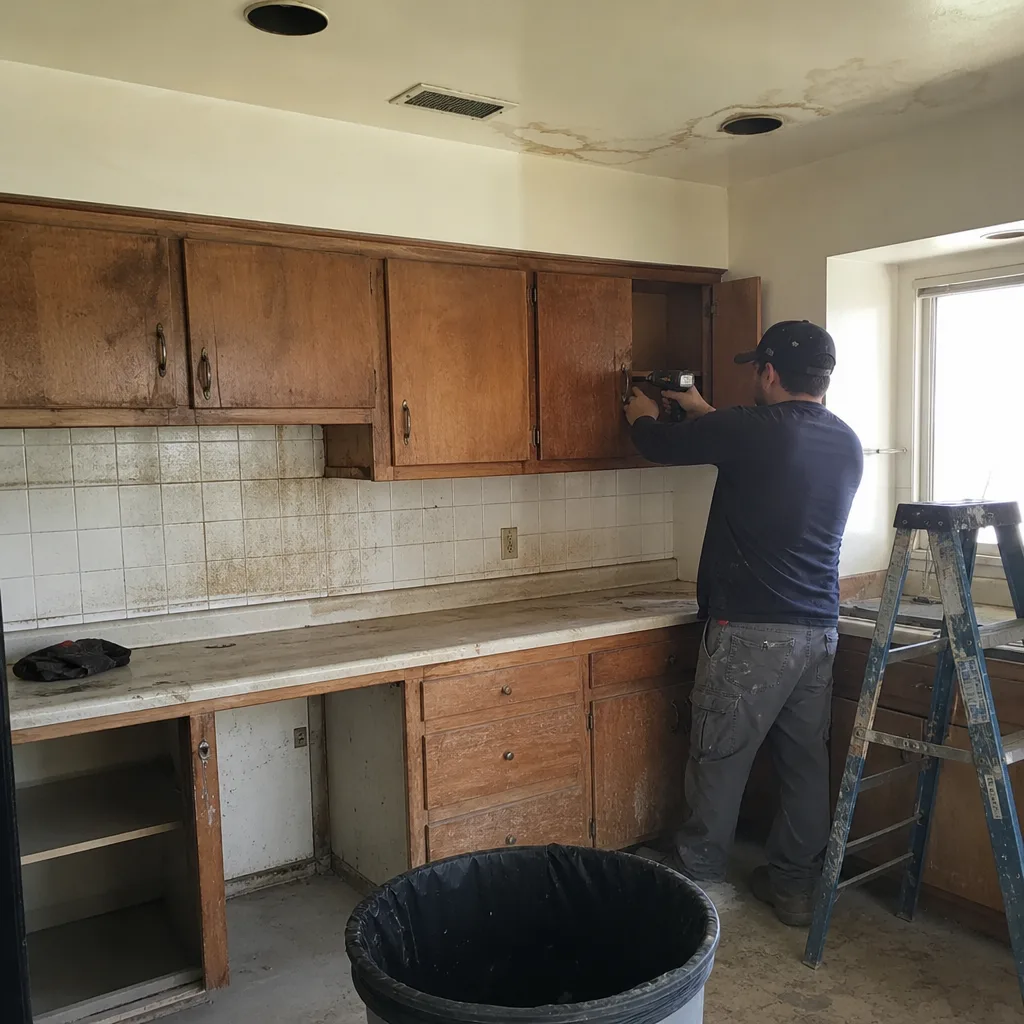 Before
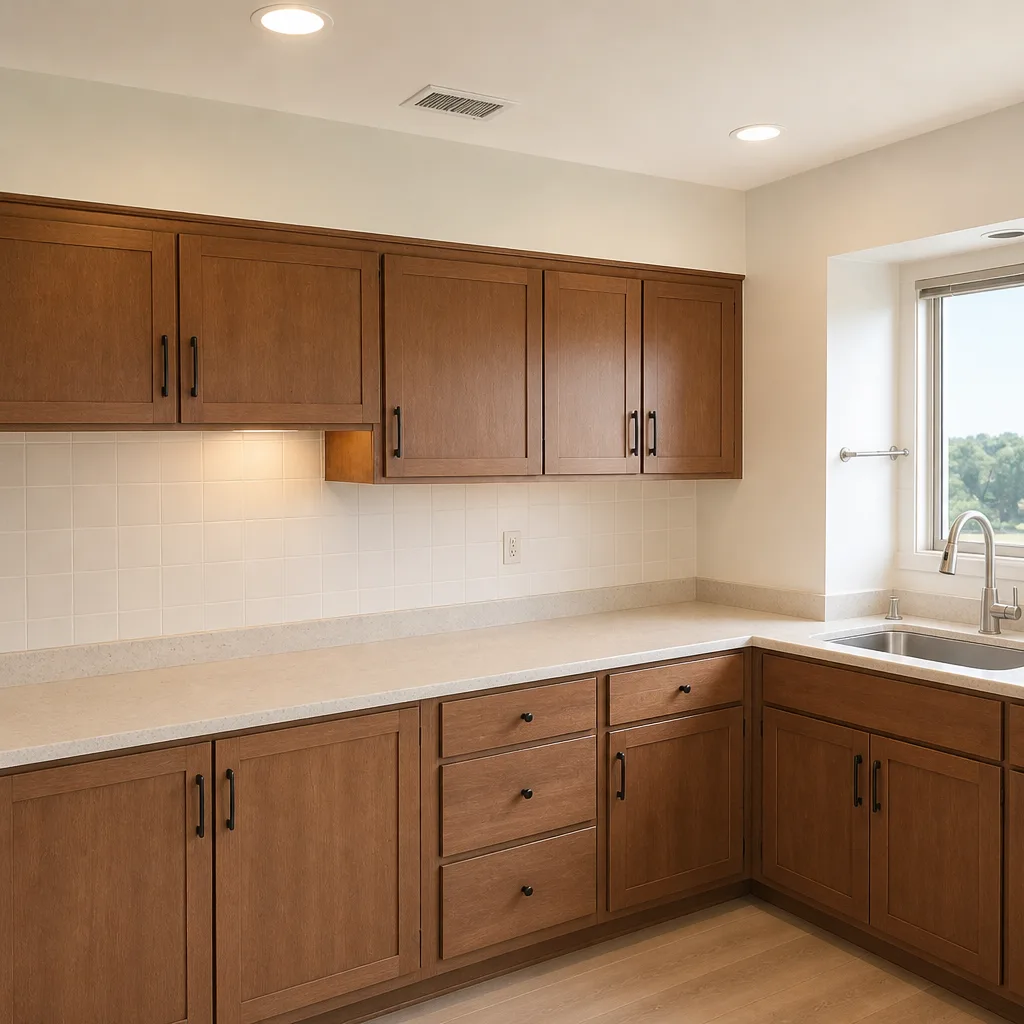 After
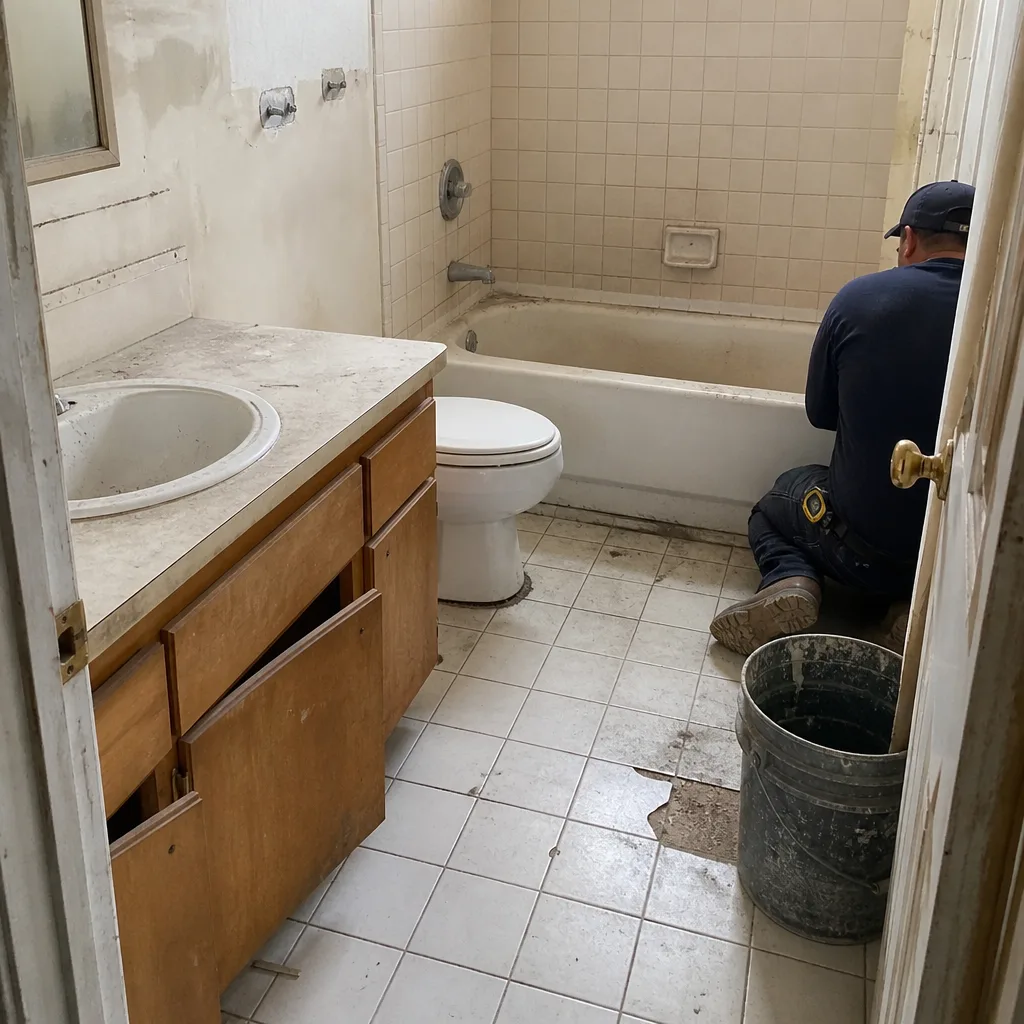 Before
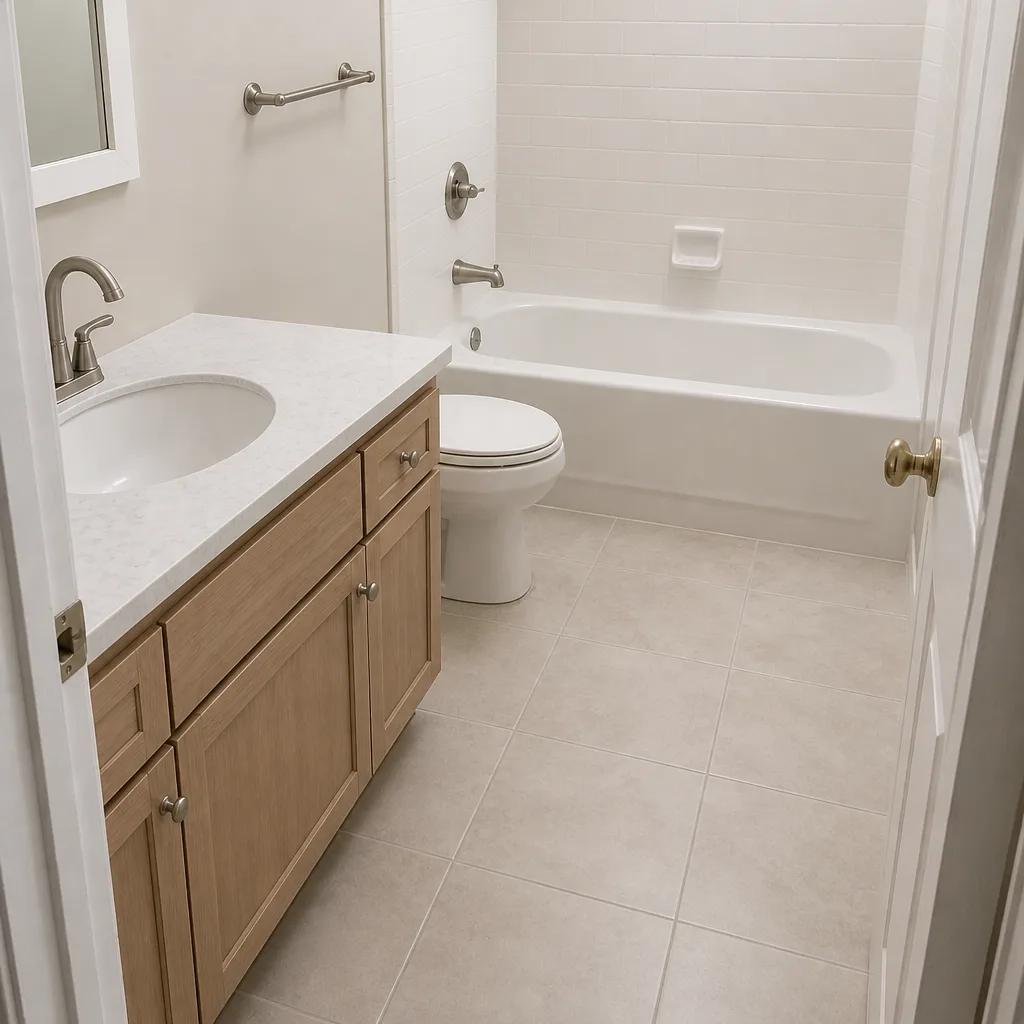 After
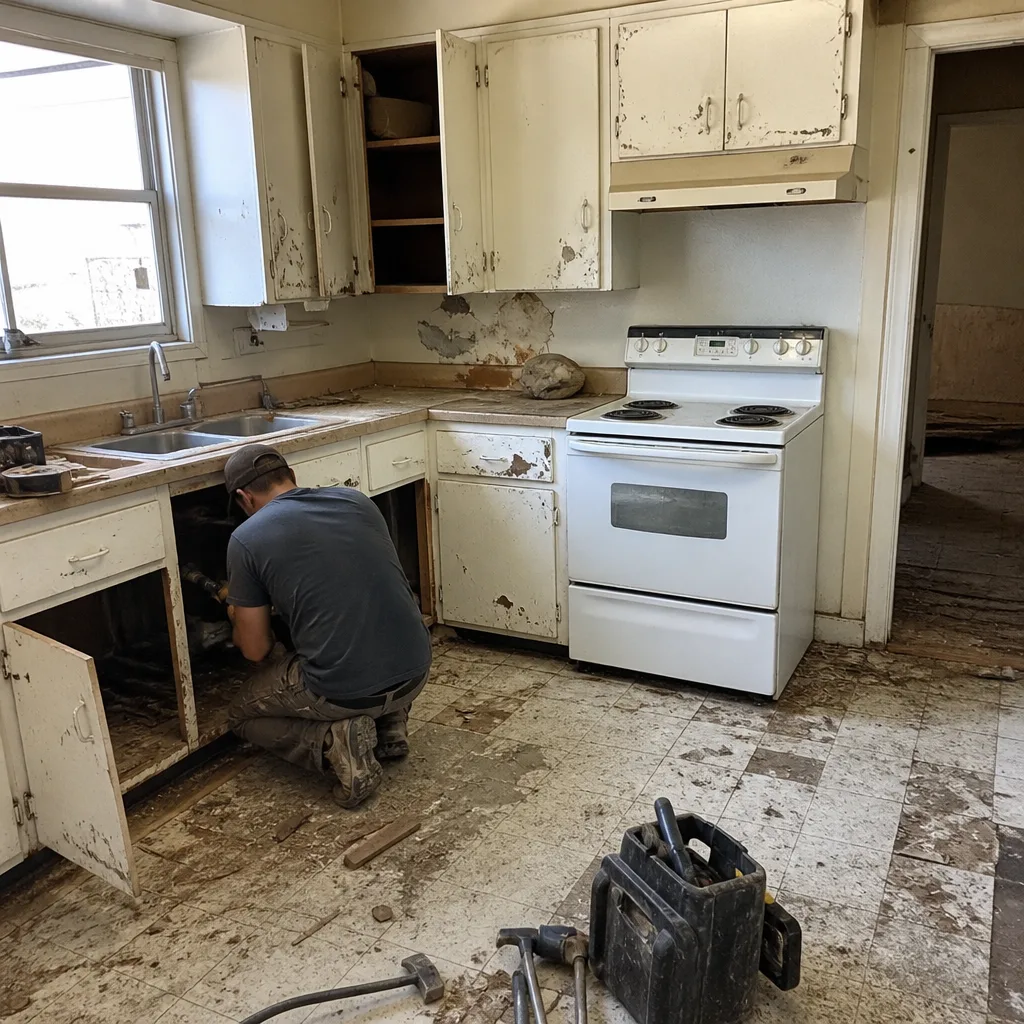 Before
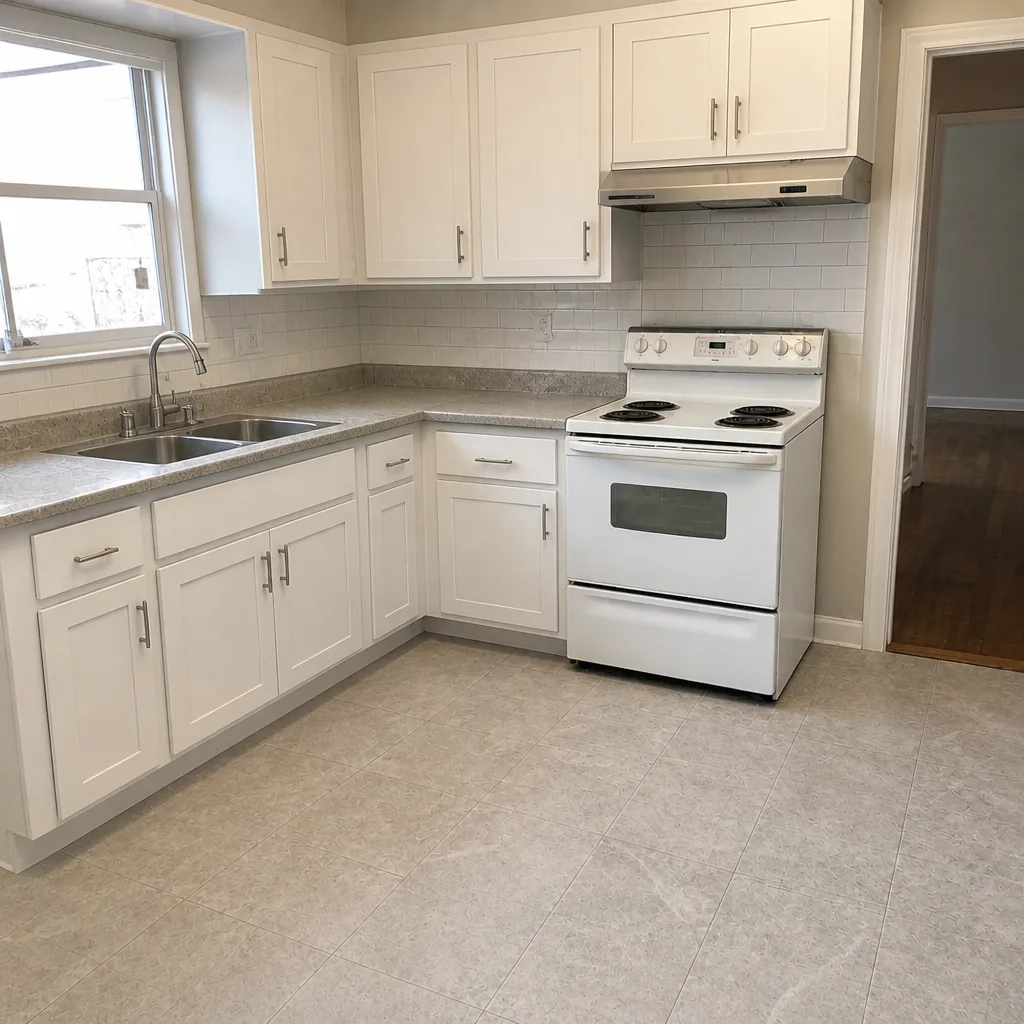 After
When to Call a Professional
Call a licensed professional when the project involves any of the following: a new or moved drain or water line, a new shower pan or a membrane replacement, a new electrical circuit or GFCI location, a structural wall change, or a conversion that changes the bathroom footprint. These are the tasks where a Glendale permit, an inspection, and a documented record combine to protect the homeowner’s insurance and resale. Rowan Construction Group Glendale offers free estimates in Glendale – call (844) 320-5930. We quote a flat written price with a written scope before work begins, and we bring a documented photo record on every visit as a standard deliverable. If you already have a competitor’s estimate, we’ll review it line by line at no charge.
Frequently Asked Questions
Yes for any work that moves a plumbing fixture, adds or relocates electrical, replaces a shower pan, or alters structure. Painting, a same-footprint vanity swap, mirror installation, and hardware replacement typically do not require a Glendale permit. Confirm with Glendale Building & Safety before starting, and if you’re unsure which side of the line a task falls on, call (844) 320-5930 for a free second opinion on your written estimate.
A residential bathroom permit in Glendale typically runs a few hundred dollars for a basic scope and scales with the value of the work – plumbing, electrical, and mechanical permits are often issued together on the same application. Compare that to the $5,000 to $15,000 average to remediate unpermitted work at resale. Call (844) 320-5930 to have the permit line item quoted in writing before any work starts.
In practical terms, no. Replacing a shower pan disturbs the waterproofing membrane, and a Glendale plumbing permit plus an inspection is required. That inspection happens before tile, which means the sequencing – not the skill – is the reason to hire this one. We quote flat-price shower work with a written scope; call (844) 320-5930 for a free estimate.
Painting is the clearest answer – the labor saved is $400 to $700 against $60 to $90 in materials, and there’s no permit exposure. A same-footprint vanity swap is a close second if the plumbing isn’t touched. When a project moves past those two, get a written price from a licensed contractor before deciding.
Yes. California transfer disclosure laws require disclosure of known material facts, and unpermitted work is one. Glendale buyers’ inspectors flag missing permit records, misaligned finish lines, fans venting into the attic, and missing GFCI protection – all common findings. The remediation and negotiation costs almost always exceed the cost of doing the permit properly.
Yes – a flat written price with a written scope and written warranty is delivered before any work begins, every time. No change proceeds without a signed change order. Call (844) 320-5930 for a free estimate; our teams are background-checked and uniformed, and calls are answered by a live person 24/7. Every visit includes a documented photo record as a standard deliverable, backed by the 365-Day Done Right Promise.
The Bottom Line
The DIY-versus-hire decision in bathroom remodeling is a permit-and-sequencing decision, not a test of nerve. Painting, a non-plumbing vanity swap, mirror installation, and hardware replacement are genuinely safe DIY work that saves $400 to $700 per task – and in Glendale, those tasks require no permit. Anything that moves a drain, replaces a shower pan, touches the waterproofing membrane, or adds electrical needs a licensed professional, a City of Glendale permit, and inspection before tile. The re-do cost on a failed shower pan runs $2,500 to $6,000; the permit runs a few hundred dollars. That comparison is the whole guide.
At Rowan Construction Group, we work under The Haven Standard: the price is written before anyone starts, change orders are signed before any change proceeds, and the 365-Day Done Right Promise backs the work. Our technicians have up to 19 years of experience, and every visit includes a documented photo record. Call (844) 320-5930 to schedule your free estimate.
Written by the team at Rowan Construction Group Glendale.