
Last updated November 16, 2026







Free written scope consultation - allowances, timeline, and change-order rules on paper before a single trade is scheduled
Bathroom Remodeling Warning Signs Every Homeowner Should Know
A bathroom remodeling bid that doesn’t specify waterproofing membrane brand, thickness, and installation method isn’t an incomplete document. It’s a liability transfer. If it’s not written down, the contractor isn’t responsible for it. Most remodeling disasters we’re called in to fix were visible long before the first tile was set: they were visible at contract signing, buried in the missing lines of a bid. This guide teaches you to audit a bathroom proposal the way an inspector audits a rough-in, by what’s missing rather than what’s wrong. We’ve walked hundreds of Glendale homes where the paperwork was the real problem, and we’ll show you exactly where to look.
Quick Answer
The biggest warning signs in bathroom remodeling are absent line items: no named waterproofing membrane, no listed plumbing and electrical permit, no schedule, no written change-order process. A bid that leaves these out lets the contractor shift cost and risk to you later. Audit the document first, then the site.
Styles & brands we work with
- Kitchen remodeling
- Bathroom remodeling
- Home additions & ADU
- Roofing
- Windows & doors
- Driveway & pavers
- Fence
Table of Contents
- The Seven Line Items Every Legitimate Bathroom Bid Must Contain
- Reading the Paperwork: Warning Signs in the Contract Itself
- On-Site Warning Signs During Demo: What Rot and Bad Framing Look Like
- How to Spot a Subcontractor-Heavy Operation
- What ‘Show Me Your Last Three Signed Change Orders’ Reveals
- Physical Warning Signs in an Existing Bathroom
- Hidden Scope: What Soft Tile, Efflorescence, and Running Toilets Usually Cost
The Seven Line Items Every Legitimate Bathroom Bid Must Contain
Audit a written estimate the way you’d inspect a rough-in: the value is in what’s specified, not in what looks tidy. In our experience across Glendale, the proposals that turn into cost overruns are the ones that read well and specify little. Here are the seven line items that must appear, in writing, before anyone picks up a tool.
- Waterproofing system named by brand and thickness. Not “waterproofing included” but the actual product and method. A liquid-applied membrane and a sheet membrane are not interchangeable, and the bid should say which.
- Permit responsibility stated explicitly. Who pulls it, who pays for it, and who meets the inspector. If the bid is silent, ask why.
- Tile substrate specification. Cement board or foam board, with thickness and fastener schedule. Over a wood subfloor, that detail governs whether the floor stays flat.
- Plumbing scope by fixture and brand. Rough-in, relocation, valve replacement, and drain work called out separately from finish fixtures.
- Electrical scope. GFCI protection, exhaust fan CFM rating, and whether the existing circuit can carry the added load.
- Written schedule with milestones. Demo, rough-in inspection, tile, finishes. A bid with no dates is a bid with no accountability.
- Change-order process in writing. The exact rule for how a change gets priced and approved, signed before work proceeds.
When a written quote names KraftMaid or Wellborn cabinetry and Cambria or Silestone surfaces down to the model, that’s the sign of a contractor who prices from a real scope rather than a rough guess. Compare that level of specificity against our Rowan Construction Group Glendale home page and you’ll see the standard we hold ourselves to.
Reading the Paperwork: Warning Signs in the Contract Itself
The red flags cluster in four places once you know to look. In Glendale, where many bathrooms sit in homes built between 1920 and 1960, the paperwork matters more than the tile because the hidden scope is bigger. Read for these traps before you sign.
- “Allowance” language with no cap. An allowance is a placeholder number. Without a stated ceiling and a written process for overages, it becomes an open check. Ask what the allowance covers and what happens when the real cost exceeds it.
- Verbal guarantees. If the warranty isn’t printed in the document, it doesn’t exist. Under Clause 1 of our Haven Standard, the price is written before anyone starts, and the warranty is written on the same page.
- No scope for the substrate. A bid that starts at tile and finishes at fixtures, skipping demolition, framing repair, and waterproofing, has priced a cosmetic job and will discover a structural one.
- Missing insurance and license documentation. A legitimate contractor puts license and insurance details on the page, not just in a text message.
Read the exclusions section twice. What a contractor excludes tells you where they expect trouble, and an exclusion is a cost that lands on you later. If the bid excludes “unforeseen subfloor repair,” that’s a warning that the seller either hasn’t looked or won’t be responsible when it’s found.
On-Site Warning Signs During Demo: What Rot and Bad Framing Look Like
Demo day is the moment the truth comes up. The point isn’t to panic; it’s to understand what you’re looking at before you’re committed to a scope. In Glendale’s older housing stock, we regularly open a wall and find three things at once. Here’s how to read them.
- Subfloor rot. Look for soft, dark, crumbly wood around the toilet flange and tub edges. A screwdriver pressed into the surface should resist; if it sinks, the plywood is compromised and the floor needs replacing before tile goes down.
- Previous unpermitted work. Look for mismatched pipe materials, a shower valve with no access panel, or a drain that doesn’t align with the original rough-in. These signal a prior owner cut corners and the current bid must account for redoing it.
- Incorrect vent stack sizing. A drain that gurgles or a toilet that empties slowly often points to an undersized or improperly tied vent. Correcting it is plumbing work, not a cosmetic fix.
This is where a written change-order process earns its keep. When demo reveals rot or bad framing, no work should proceed on the change until the change order is signed. That discipline is what keeps a Home Additions & ADU in Glendale or a bathroom project within a few percent of the agreed number instead of drifting.
How to Spot a Subcontractor-Heavy Operation
A subcontractor-heavy operation isn’t automatically bad. What matters is whether the general contractor manages the subs or simply passes them through. The difference shows up in your change-order exposure. In Glendale, where trades are busy and scheduling is tight, a company that books six jobs through one framing crew will discover problems late and bill for them.
Watch for these signs:
- You’re introduced to a different person for every trade and none of them knows the full scope.
- The bid lists “labor” as one line rather than breaking out plumbing, electrical, tile, and carpentry.
- Change orders arrive as a text message with a number and no scope description.
- No one can tell you the schedule beyond “the crew will be there.”
The opposite looks like this: background-checked, uniformed technicians, a documented photo record on every visit, and a written scope that names each trade. That’s the standard under the Haven Standard, and it’s why a contractor with a real written process is easier to hold to their number. If you’re weighing a larger project, the same audit applies to a Fence Installation in Glendale or a Driveway & Pavers in Glendale job, where a vague bid hides the same risk.
What ‘Show Me Your Last Three Signed Change Orders’ Reveals
Ask any contractor this question before you sign, and watch what happens. A contractor who manages costs will produce three clean, signed change orders with a written scope and a flat number on each. A contractor who runs on verbal agreements will hesitate, explain that their change orders are “informal,” or change the subject. That hesitation is the answer.
Here’s what the three signed documents actually tell you:
- Whether changes are priced or negotiated. A signed change order has a number and a scope. An unsigned one is a conversation.
- How often changes happen. If all three were for the same type of surprise (rot, framing, plumbing), the scope was probably too thin at signing.
- Whether the customer approved before work started. The date on the signature versus the date work began shows the discipline.
- Whether the final invoice matched the change orders. A clean reconciliation means the record is real.
This is the kind of question homeowners in Glendale should ask every bidder, and it’s the discipline we print into every contract. Rowan’s projects stay within a few percent of the agreed cost across 4,000-plus jobs precisely because the change-order signature comes first. If a contractor can’t show you three, ask for their written process instead.
Physical Warning Signs in an Existing Bathroom
Some warnings are visible before anyone opens a wall. They show up in the existing bathroom and tell you the hidden scope is bigger than the surface suggests. We see these in Glendale constantly, especially in bathrooms that were last touched in the 1990s.
- Soft or hollow-sounding tile. Tap a few floor tiles with a coin. A hollow ring means the thinset has debonded; the substrate is likely failing and the floor will need re-set.
- Efflorescence on grout lines. That white, powdery bloom is mineral salt pushed out by moisture migrating through the assembly. It usually means water is getting behind the tile or the shower pan has no proper vapor barrier.
- A running toilet. A flapper that doesn’t seal wastes water and can signal a fill valve on its way out; a constantly running toilet in an older home often means the supply line is undersized too.
- Caulk that keeps failing. Recurring mold at the tub-shower joint, cleaned and recaulked more than twice, usually points to movement in the substrate, not a caulk problem.
Each of these is a scope signal, not a cosmetic chore. If a bidder looks at a soft floor and quotes tile replacement only, that’s the warning sign in the paperwork made visible.
Hidden Scope: What Soft Tile, Efflorescence, and Running Toilets Usually Cost
Homeowners want a number before they commit, so here’s how these conditions typically price out when they’re found in a Glendale bathroom. These are ranges, not quotes, and the exact figure depends on what’s behind the wall.
- Soft tile with a failed substrate: re-setting the floor, replacing compromised plywood, and re-waterproofing typically runs several hundred to a few thousand dollars depending on square footage and whether joists are involved.
- Efflorescence from a failed shower pan: rebuilding the pan and waterproofing membrane with proper slope is one of the most common mid-project costs, and one of the most expensive to skip.
- Running toilet and failing supply lines: usually a modest fix on its own, but a warning that other supply and drain lines may be due.
- Unpermitted prior work: correcting it to meet current code usually adds a line item for both rework and inspection.
When a bid leaves all of this out, the low number isn’t a bargain; it’s a deferral. A written price with the hidden scope surfaced is the number you can actually plan around. Ask for a flat written price with a written scope and a written warranty, and expect the same from any bidder you’re comparing.
Common Mistakes to Avoid
- Choosing the lowest bid without comparing scope. Two bids can look similar and cover entirely different work. Compare line by line, not total to total.
- Accepting an allowance as a fixed number. An allowance with no cap is an overrun in waiting. Get the ceiling in writing.
- Skipping the permit question. Unpermitted bathroom work follows the house and resurfaces at resale. Glendale home sales have been slowed by this more than once.
- Letting a change start before it’s signed. A verbal “we’ll square it up later” is the most common way a project drifts away from its agreed price.
- Ignoring a gurgling drain or a slow toilet. These often mean a vent or drain problem that’s cheaper to fix during a remodel than after.
- Assuming the warranty is standard. A 365-Day Done Right Promise should be printed on the page, not described in conversation.
- Trusting enthusiasm over documentation. The bid that lists the membrane, the schedule, and the change-order rule is the one to take seriously.
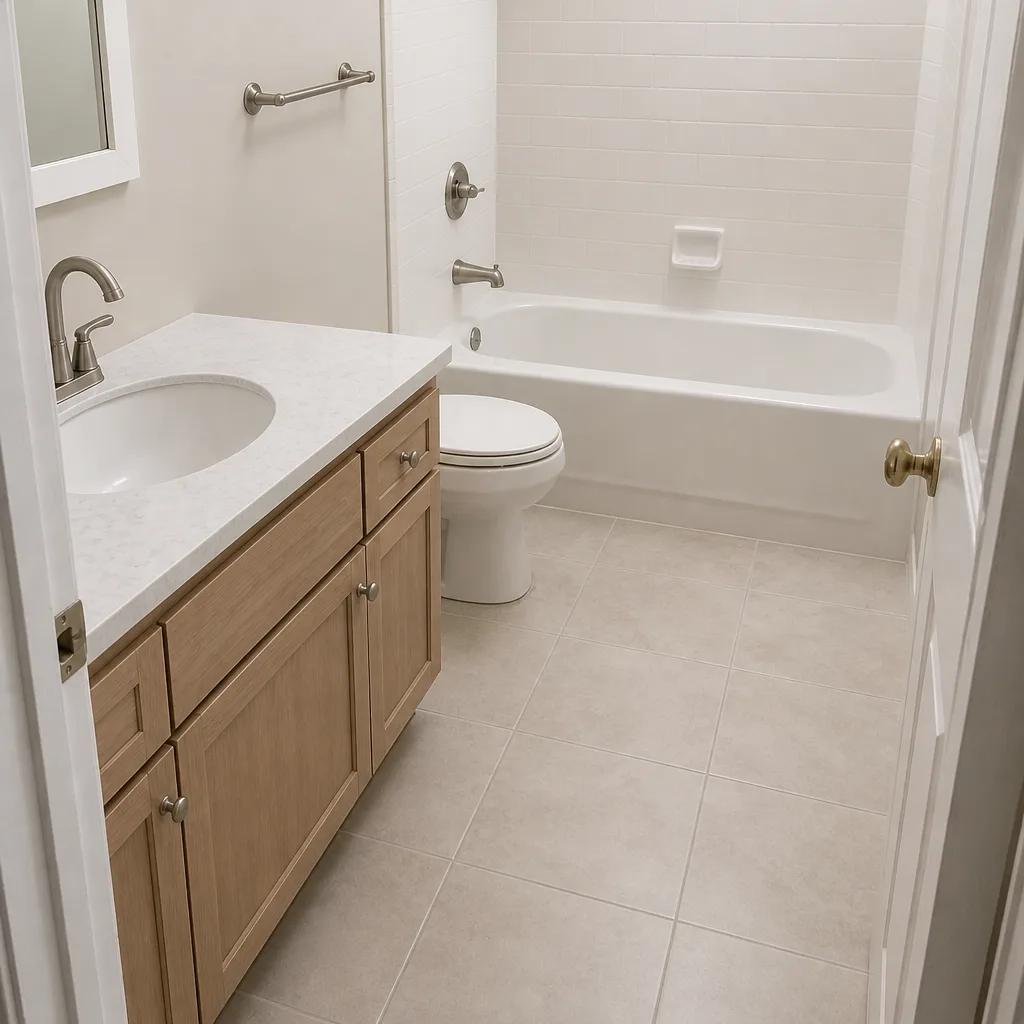
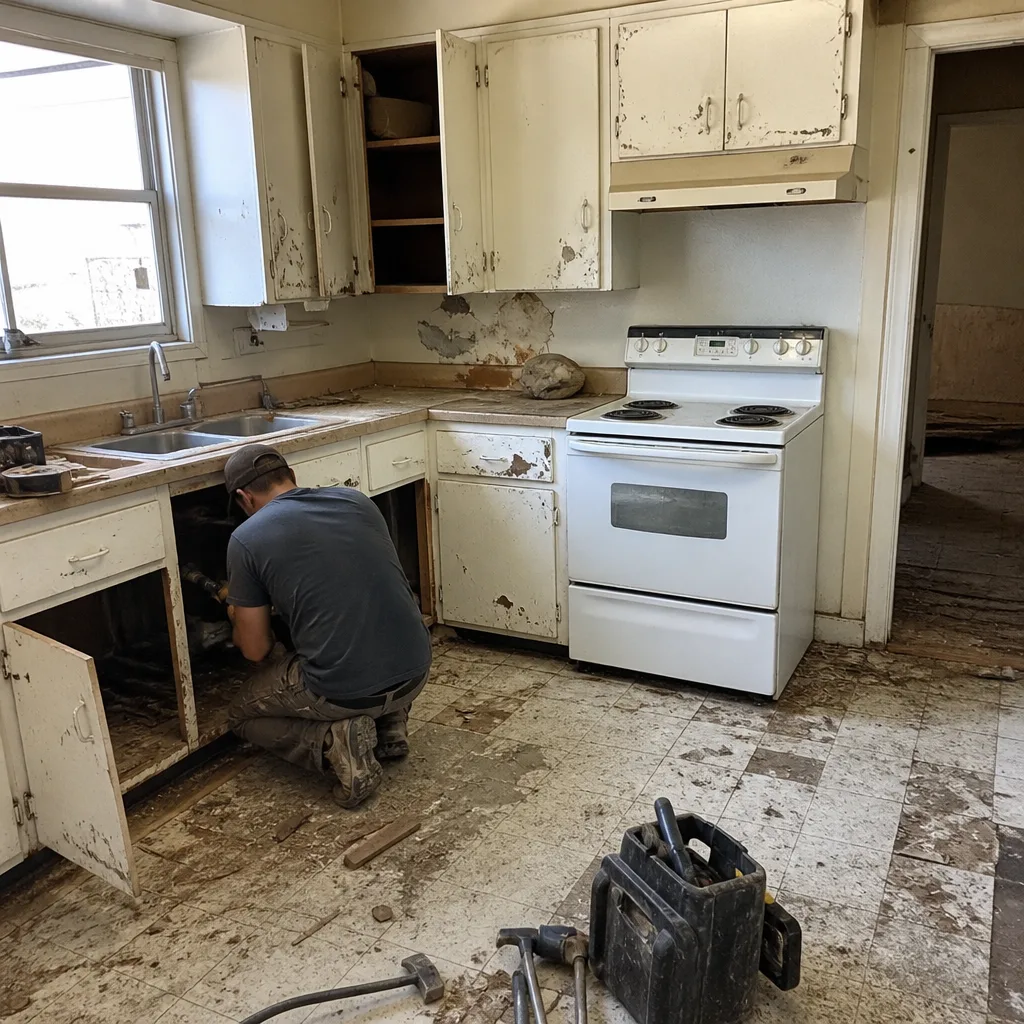
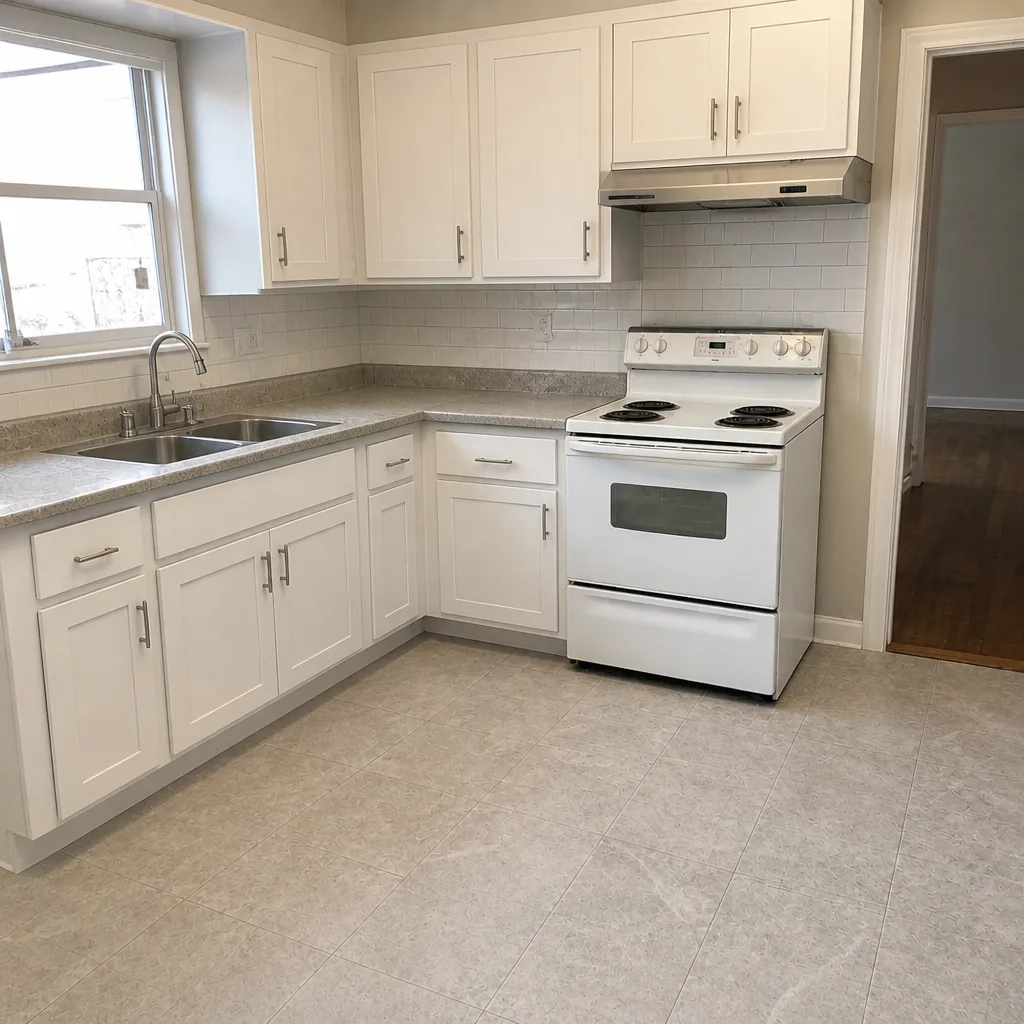
See the difference
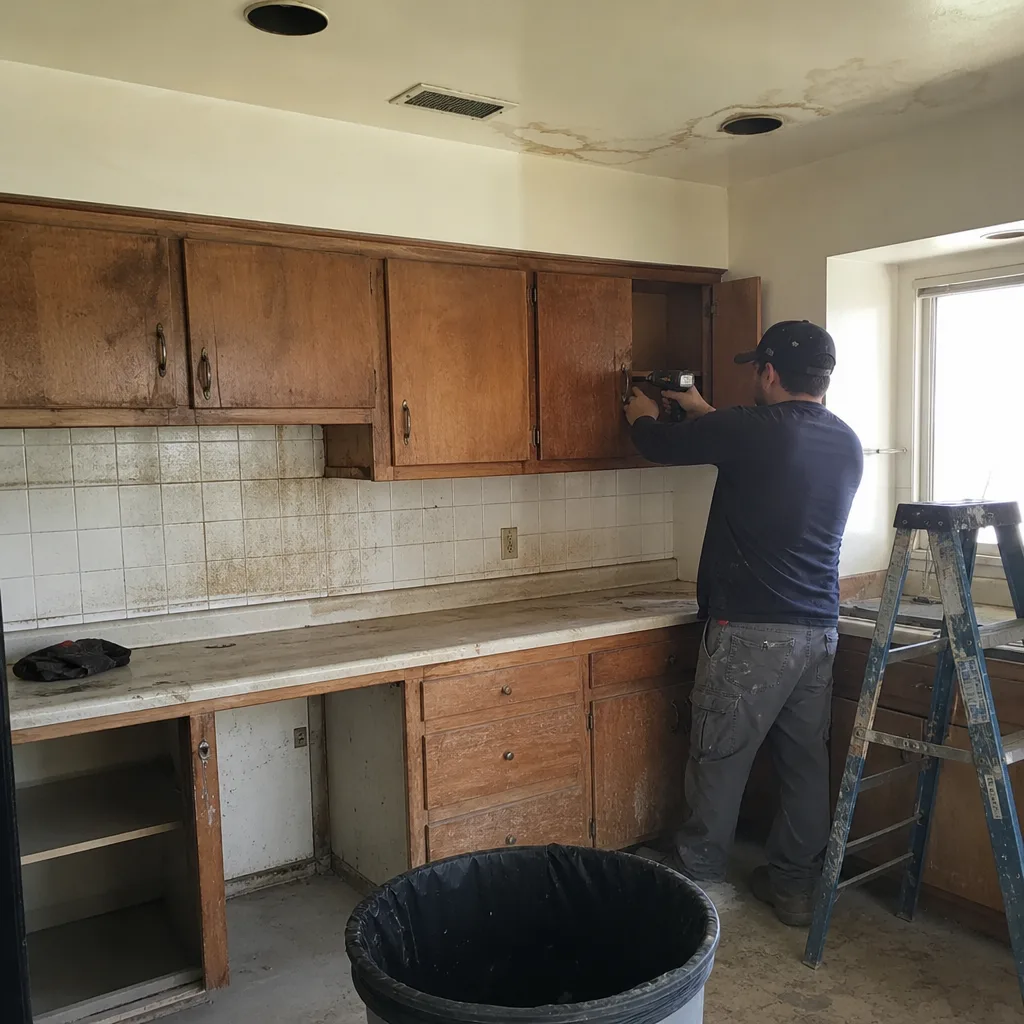 Before
 After
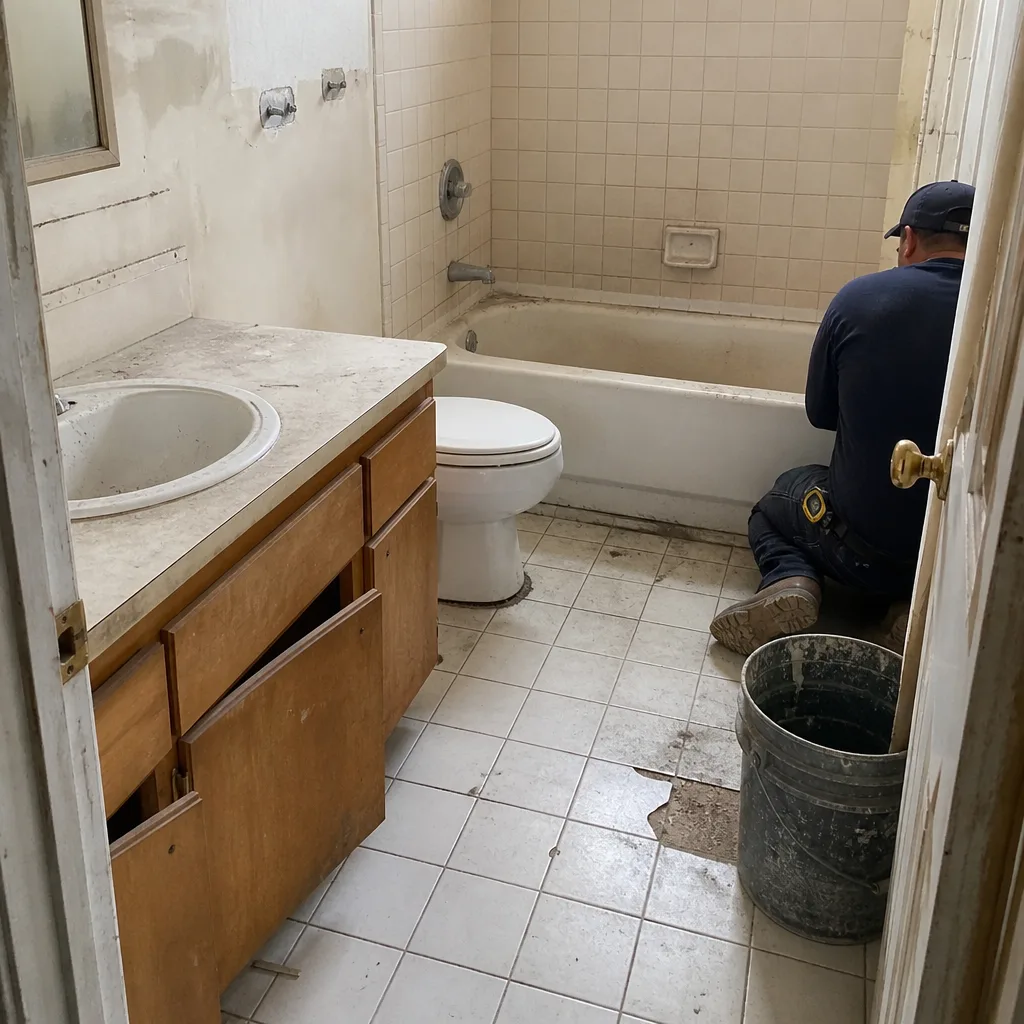 Before
 After
 Before
 After
When to Call a Professional
Call a professional when the bid is missing a waterproofing specification, when demo reveals rot or a prior owner’s unpermitted work, or when a running toilet and re-caulked joints keep returning. These are signals that the visible scope is smaller than the real one, and a written price with a documented record is the only way to plan for the difference. Rowan Construction Group Glendale offers free estimates in Glendale, and a live person answers calls 24/7. Our technicians have up to 19 years of experience, and every visit includes a documented photo record. Call (844) 320-5930 to schedule your free estimate, or bring a competitor’s quote for a free second opinion on any written estimate.
Frequently Asked Questions

An unspecified waterproofing system is the biggest red flag, because it’s the line item most likely to hide a failure and most expensive to redo. A bid should name the membrane brand, thickness, and installation method. Without that, the contractor isn’t responsible for what fails behind the tile. Call (844) 320-5930 for a written estimate that specifies it.
Hidden water damage from a failed shower pan or soft subfloor typically adds several hundred to a few thousand dollars to a Glendale bathroom project, depending on how far the moisture has spread. The cost is highest when it reaches framing or joists. A written estimate with the substrate and pan scope surfaced up front is the only way to know. Call (844) 320-5930 for an exact quote; estimates are free.
Yes, in almost every case. Moving plumbing, electrical, or a drain line requires a permit and inspection. A legitimate contractor states who pulls the permit in the written bid. If the bid is silent, ask before you sign.
It shouldn’t, if the change-order process is written and followed. Under Clause 1 of the Haven Standard, the price is written before any work starts, and nothing proceeds on a change until the change order is signed. That’s the discipline that keeps projects within a few percent of the agreed number.
Look for mismatched pipe materials, a shower valve with no access panel, or a drain that doesn’t line up with the original rough-in. Those are typical signs of a prior DIY or unpermitted job. Demo usually confirms it, which is why the bid should leave room for correction.
Recurring mold at grout lines usually means water is getting behind the tile or the shower pan lacks a proper vapor barrier, not that the caulk is bad. Efflorescence, the white bloom on grout, is the same signal. The fix is in the assembly, not the surface. Call (844) 320-5930 to have it assessed before the next remodel.
The Bottom Line
Bathroom remodeling warning signs usually live in the paperwork, not the tile. A bid that names the waterproofing membrane, states who pulls the permit, lists a schedule, and writes the change-order rule gives you a price you can actually hold. A bid that stays silent on those four things transfers the risk to you. Audit the document first, ask for three signed change orders, and read the exclusions. The contractors worth hiring will show you the record, not just describe it.
Rowan Construction Group Glendale offers free estimates in Glendale, with a flat written price, a written scope, and a written warranty before any work starts. Every visit includes a documented photo record, and our technicians have up to 19 years of experience. The 365-Day Done Right Promise is printed on the page, not tucked into an asterisk. Call (844) 320-5930 to schedule your free estimate, or bring a competitor’s quote for a free second opinion.
Written by the team at Rowan Construction Group Glendale.