Last updated November 16, 2026




Free written scope consultation - allowances, timeline, and change-order rules on paper before a single trade is scheduled
Construction Emergency Preparedness Guide for Glendale Homes
After a significant rain event on Glendale’s hillside lots, retaining wall movement of more than 1 inch in 24 hours is a City of Glendale Public Works notification threshold. Most homeowners don’t learn that number exists until a wall is already leaning over a driveway. The gap between a manageable problem and a genuine construction emergency usually comes down to knowing which failures need a city call, which need a licensed contractor, and which you can stabilize yourself and document for insurance. This guide draws those lines for Glendale homes, with the specific steps, thresholds, and paperwork that hold up when it matters.
Quick Answer
For Glendale homeowners, a construction emergency is any failure that threatens life safety or structural integrity right now: a roof breach letting water into framing, a retaining wall moving more than 1 inch in 24 hours, foundation drainage that’s undermining a footing, or excavation that has brought a tool near a gas line. Everything else can usually be stabilized and documented for a licensed contractor to assess. Knowing the difference is the whole skill, and this guide gives you the sequence.
Styles & brands we work with
- Kitchen remodeling
- Bathroom remodeling
- Home additions & ADU
- Roofing
- Windows & doors
- Driveway & pavers
- Fence
Table of Contents
- The Three Calls: Which Failures Go Where
- Post-Earthquake Inspection Sequence for Glendale Homes
- Temporary Stabilization You Can Legally Do Without a Permit
- What to Photograph in the First 2 Hours
- Pre-Emergency Prep: Records and Your Construction Emergency Kit
- Why Glendale’s Hillside Lots Fail Differently
The Three Calls: Which Failures Go Where
The first decision in any construction failure is not “who do I hire” but “who do I call first.” Those are different questions, and getting the order wrong costs time you don’t have.
Call the City of Glendale first (Public Works or the fire department, depending on severity)
These are failures where a city record and possibly a city inspection matter for safety and for your insurance file:
- Retaining wall movement over 1 inch in 24 hours, or any visible lean toward a structure, street, or neighboring property.
- A gas smell near excavation, a severed utility line, or any digging that damaged a service.
- Structural collapse of any portion of a home, carport, or accessory structure.
- Chimney separation after a seismic event where the chimney has pulled away from the roofline.
- Any failure that makes the home unsafe to occupy.
Call a licensed contractor next
Roof breaches with active water intrusion, foundation drainage that’s pooling against a footing, windows or doors that no longer close square after an event, and pool or site drainage that’s redirecting water under a slab all belong with a licensed professional. These are structural and water-management problems where the scope has to be written down before anyone picks up a tool.
Owner-manageable stabilization
Tarping a roof, sandbagging a drainage path, moving valuables, photographing everything. That last one is the one most people skip and the one that pays.
Post-Earthquake Inspection Sequence for Glendale Homes
After a seismic event, the order you check things in matters more than the speed. Run this sequence in order, and take a photo at each step. Our technicians have up to 19 years of experience in Glendale and the surrounding foothill neighborhoods, and this is close to the sequence we’d walk ourselves.
- Confirm gas shutoff. If you smell gas or hear hissing, shut off the meter valve with a crescent wrench, then leave and call from outside. Do not flip breakers or use light switches first. Once the valve is off, only the utility reopens it.
- Map visible foundation cracks. Walk the perimeter. Note crack width and direction in a notebook, not memory. A hairline crack is cosmetic. A crack wider than a pencil, or one that’s stepped diagonally along a masonry joint, gets photographed and flagged for a licensed assessment.
- Check the chimney. Look at the roofline from outside and up the flue from inside. A chimney that’s pulled away at the roofline, or a visible gap in the mortar at the roof junction, is a licensed contractor call before you use the fireplace again.
- Plumb-check retaining walls and fences. Hold a level against the face of any retaining wall on the property. More than 1 inch of lean over the wall’s height gets documented and reported. Same for fence posts that have pulled out of grade.
- Check door and window operation. If interior doors suddenly stick or swing open on their own, the framing has moved. Note which doors, in which rooms, and photograph the gaps at the jamb.
- Photograph everything before any contractor arrives. This is your baseline. It’s worth more than any verbal description.
Temporary Stabilization You Can Legally Do Without a Permit
California allows a homeowner to perform certain temporary stabilization measures without pulling a permit, as long as the work is genuinely temporary and isn’t a permanent structural repair. The line is worth understanding because crossing it can void insurance coverage and expose you to liability if something fails.
Roof tarping (allowed)
For insurance documentation, a tarp needs to do three things: fully cover the breach with at least 6 inches of overhang on all sides, be fastened at the grommets with screws or batten boards rather than weighting the tarp with bricks or lumber, and be photographed before and after installation with a timestamp. Lay a 6-mil or heavier tarp with the slope direction (never against it), and don’t nail through finished shingle beyond the damaged area. If the roof is steep or wet, don’t get up there, call a licensed roofer. The most common injury in Glendale roof-breach calls is a homeowner on a wet 6/12 pitch.
Sandbag drainage diversion (allowed)
Fill sandbags halfway, not full, and stack them in a running-bond pattern with the tied end facing uphill. Direct water away from the foundation and toward a graded flow path. Don’t stack more than three high against a wall, the weight itself becomes the problem.
Shoring (do NOT do this yourself)
Temporary shoring of a foundation, a failing wall, or a structural opening crosses the line into licensed contractor territory in California. Shoring has to be engineered and inspected; a jack post placed under a damaged beam without an engineer’s call can turn a fix into a collapse. This is the one temporary measure where the right move is always to call. Gas-line proximity excavation is the same answer: if a tool has come near a gas service, stop, don’t backfill, and call from a safe distance.
What to Photograph in the First 2 Hours
Insurance claims and contractor scope disputes are won or lost on first-hour documentation. In our experience, the homeowner who photographs before they tidy up has a claim that settles faster and a scope that doesn’t get padded. Shoot in this sequence:
- Wide shot of the whole area before you touch anything, including a recognizable landmark or the house number. This anchors every close-up that follows.
- Close-ups with a tape measure or coin in the frame to give scale. Cracks and gaps without a reference point get argued about.
- Water intrusion paths, including ceiling stains, moisture on framing, and the exterior source of the water.
- Any pre-existing damage separately from new damage. Honest documentation keeps a claim clean.
- Your temporary stabilization work before and after, with timestamps.
- The as-built plan against the actual condition if you have one, that’s the photo that saves contractor hours and your money.
Cloud-sync immediately, or text the photos to yourself. A phone in a flooded basement is a phone you’ve lost.
Pre-Emergency Prep: Records and Your Construction Emergency Kit
The people who navigate a construction emergency well are almost always the ones who prepared on a quiet Tuesday. Two things to do before anything fails.
Download your permit records now
The City of Glendale hosts permit records and inspection history online through its public records portal. Before a disaster, take a half-hour and download: the original building permit for your home, any remodel or addition permit, the approved site plan if one exists, and any inspection reports. Store them in a cloud folder you can open from another device. When a contractor arrives, an as-built plan shortens the assessment by hours and gives a licensed engineer the framing-size information they need without a destructive investigation.
Build a construction emergency kit
Keep a dedicated bin or shelf with:
- A gas meter shutoff wrench (a 12-inch crescent wrench or the utility-supplied tool) zip-tied near the meter.
- Printed copies of the as-built plan and permit records.
- A contractor contact list with at least one licensed roofer, one general contractor, and one waterproofing specialist, plus the City of Glendale Public Works number.
- A photo baseline set: 20-30 photos of your home’s current condition exterior, foundation, roofline, retaining walls, utility shutoffs, taken on the same day and dated. New damage vs. old is a claim made easy.
- Two tarps (10×12 or larger), 20 sandbags, a box of 1-5/8″ screws, and a staple gun.
- A flashlight and a charged power bank, and a paper notebook with a pen.
Why Glendale’s Hillside Lots Fail Differently
Glendale’s topography is the reason the same rain event means different things in different neighborhoods. Homes in the foothill areas – around Chevy Chase Canyon, the Verdugo Woodlands, and the hillside streets above Brand Boulevard – sit on slopes that channel water fast and concentrate it. A storm that brings 1 inch to a flat lot in Glendale’s southern flatlands can deliver several vertical feet of runoff to a hillside retaining wall in a matter of hours.
That runoff is why retaining wall movement is the signature emergency on Glendale hillsides. It’s also why foundation drainage matters here more than in neighboring cities with flatter terrain. Homes that sit near a canyon mouth or at the base of a burned slope are especially exposed to debris flow, which carries material the water couldn’t move on its own and exerts far more pressure than clear runoff.
Roofing failures in Glendale tend to cluster in the same neighborhoods for a related reason: the valley’s heat cycling and its wind events stress the same details on the same GAF and Owens Corning installations. The GAF Timberline and Owens Corning Duration shingles on Glendale roofs perform well when the flashing at wall junctions and valleys is done right; when it isn’t, the failure shows up in the first serious rain, not in the first gentle one. If you’re weighing a full roof replacement against a spot repair after a recent breach, the Rowan Construction Group Glendale home page lays out the trade-offs by condition. ADU and addition projects on hillside lots have their own drainage and grading sequence, which the Home Additions & ADU in Glendale page covers in more detail.
For the exposed edges of a hillside property – the perimeter fences, the driveway approach, the drainage swales – the failures are often the first sign that site water management needs attention. Fence installation and repair in Glendale needs to account for soil movement, and the guide at Fence Installation in Glendale covers post depth and grading for hillside lots. Driveways that are being undermined by runoff are a separate assessment, which the Driveway & Pavers in Glendale page addresses.
Common Mistakes to Avoid
- Using a brick or sandbag to weight a tarp down. It gets picked up by wind and becomes a projectile. Fasten at grommets with screws or battens instead.
- Shoveling or backfilling near a suspected gas leak. Any movement near a damaged gas service can worsen it. Leave it, call from a distance.
- Photographing damage without a scale reference. A 1/8-inch crack and a 1-inch crack look similar in a close-up. Use a coin, a tape, or your hand.
- Calling a contractor before calling the city on a retaining wall movement over 1 inch in 24 hours. The city record matters for your insurance file, and the contractor needs it too.
- Trying to shore a failing foundation. A jack post placed without engineering judgment can accelerate a collapse. That’s a licensed call.
- Cleaning up before you photograph. It feels efficient. It’s the fastest way to lose a claim.
- Assuming your permit records aren’t online. Glendale’s public records portal holds most of them. Download them before you need them.
See the difference
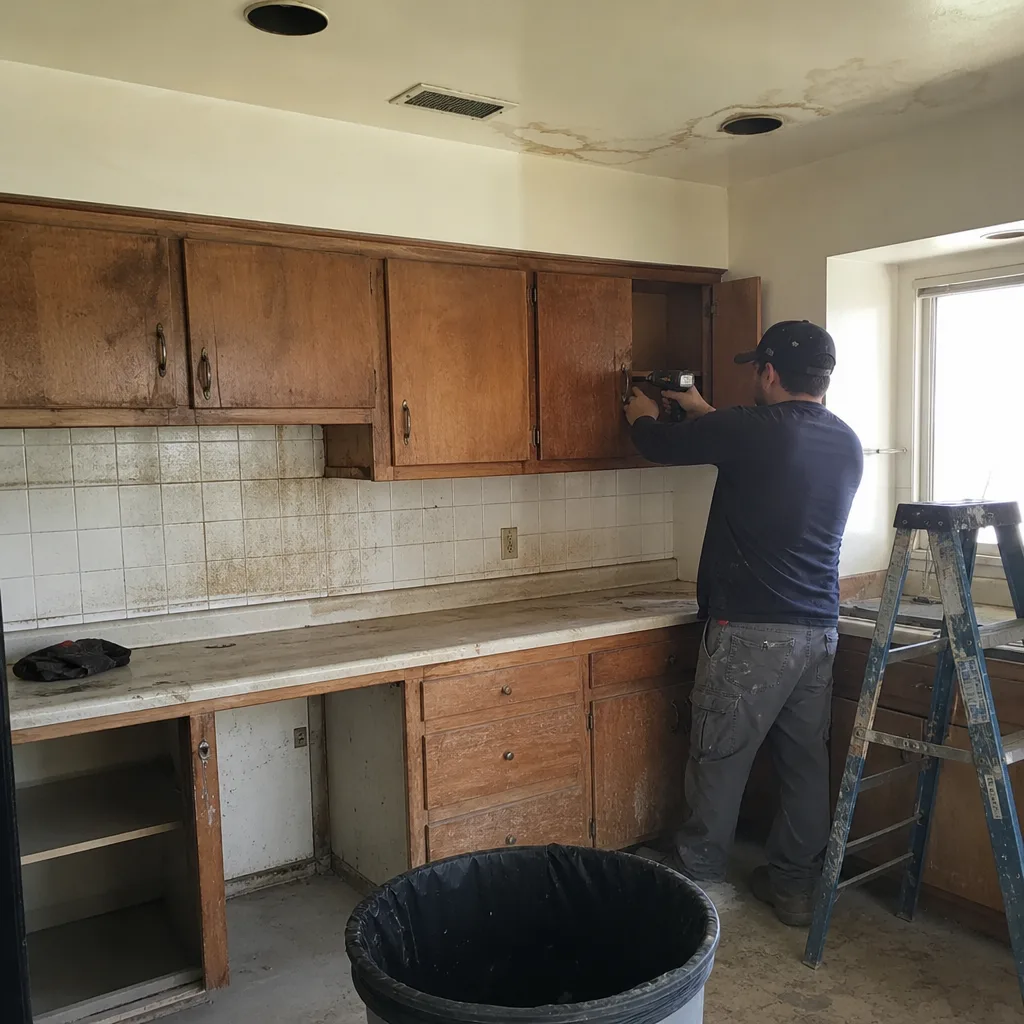 Before
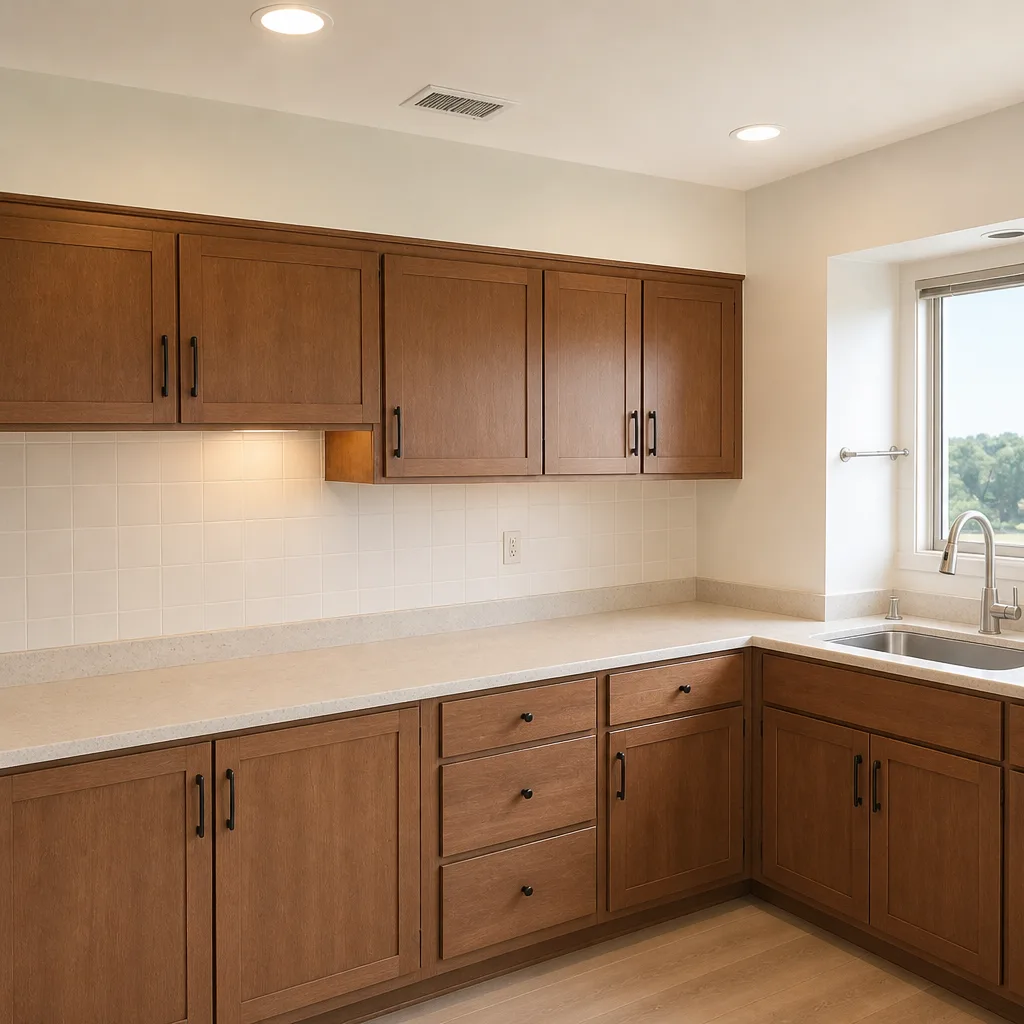 After
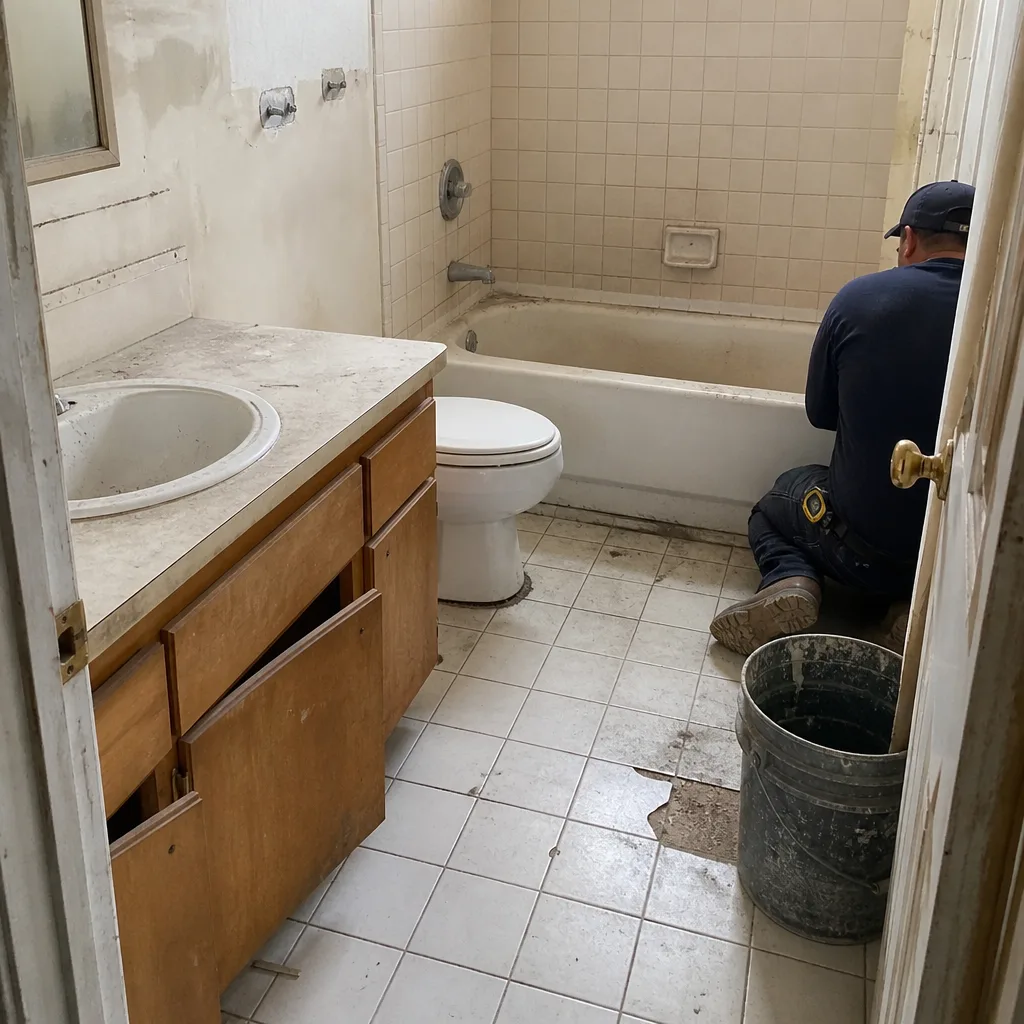 Before
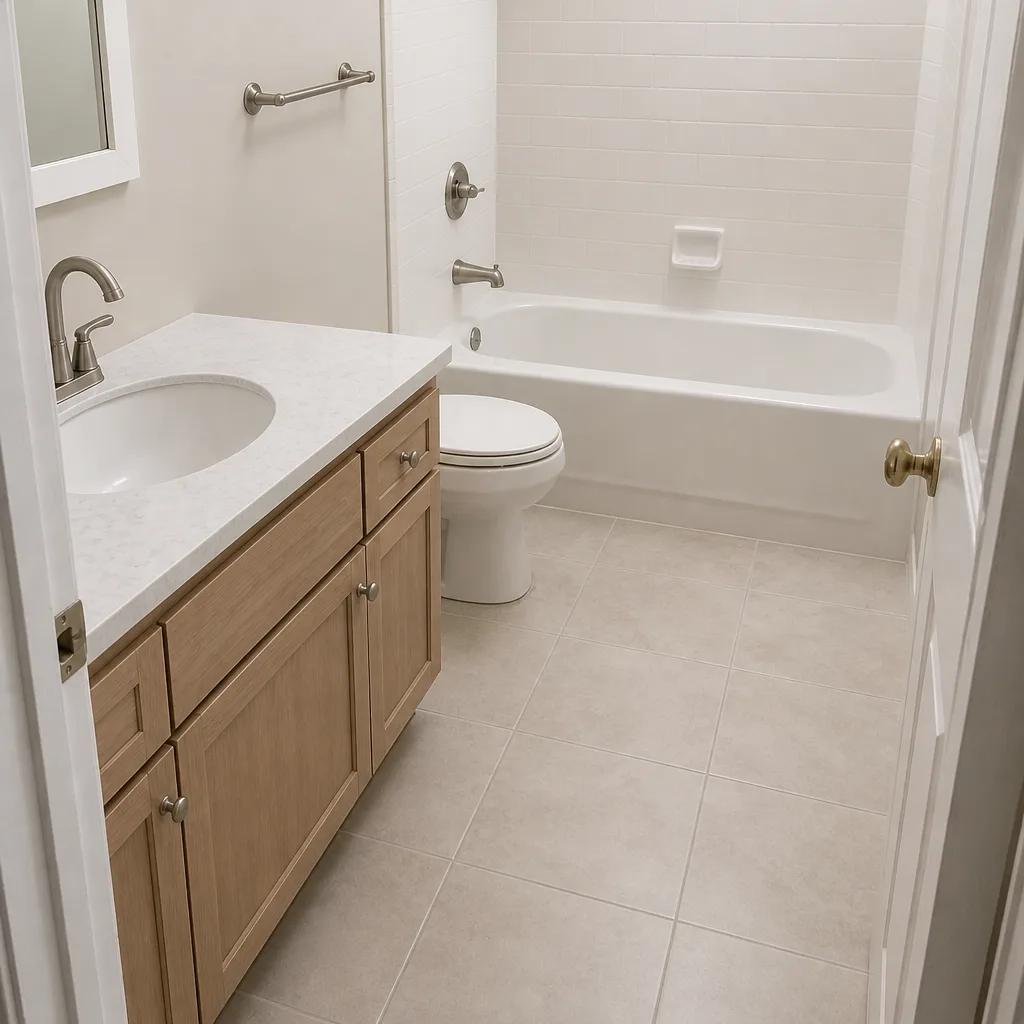 After
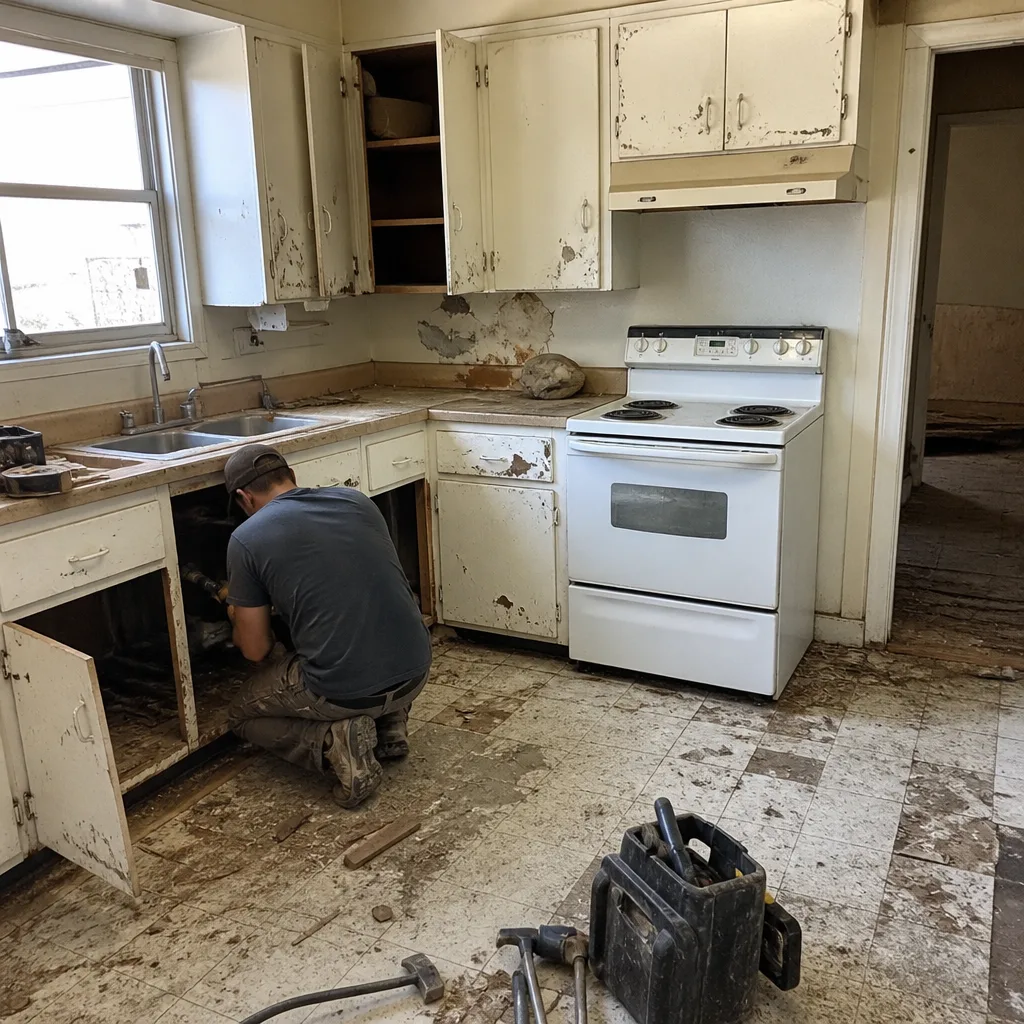 Before
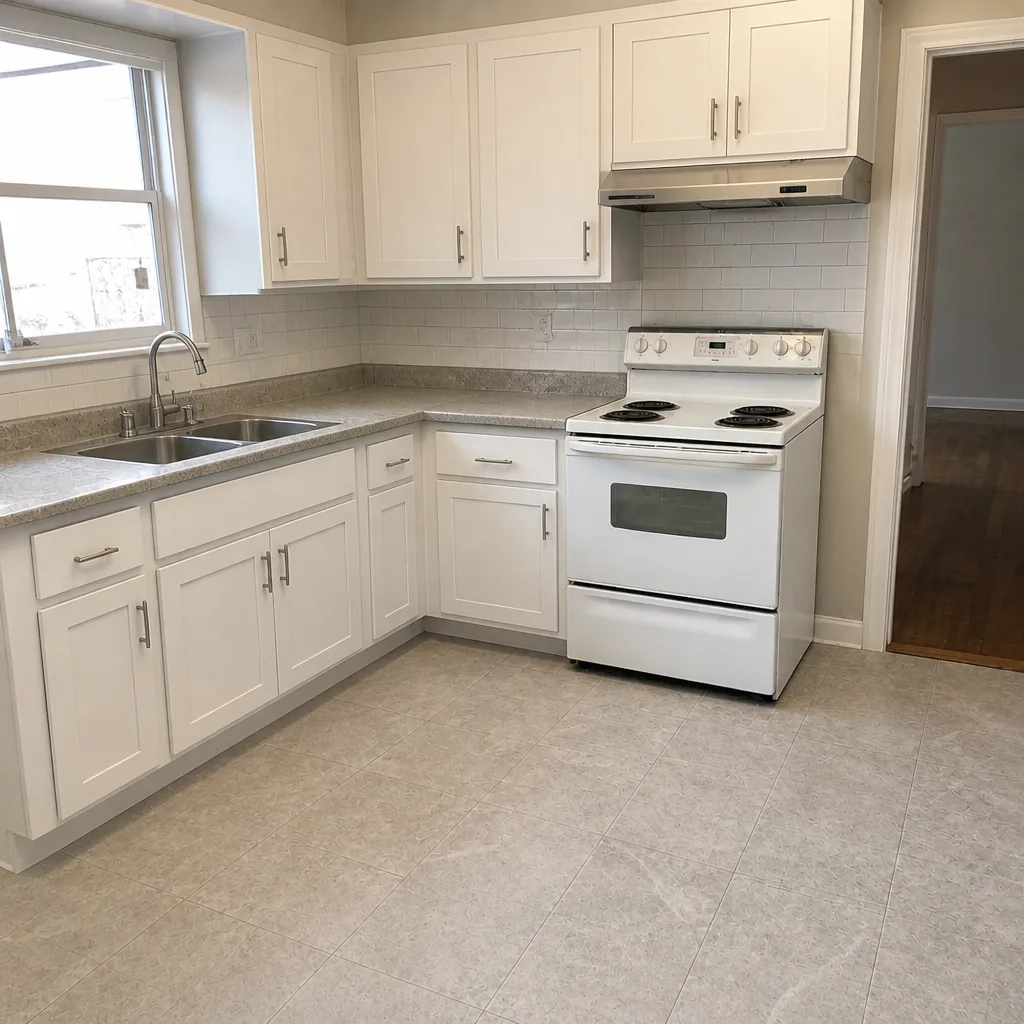 After
When to Call a Professional
Call a licensed contractor when the failure involves structure, active water intrusion, or gas. Concretely: a roof breach that’s letting water into framing or insulation, foundation cracks wider than a pencil or stepped along a masonry joint, retaining wall movement over the 1-inch-in-24-hours threshold, a chimney that’s separated at the roofline, a door or window opening that’s suddenly out of square, or any excavation that’s brought a tool near a gas service. These are the failures where a written scope and a documented assessment matter as much as the repair itself. Rowan Construction Group Glendale offers free estimates in Glendale. We put the price in writing before any work starts, every time, and we answer calls with a live person around the clock. Call (844) 320-5930 to schedule a free estimate or a written assessment.
Frequently Asked Questions

A construction emergency is any failure that threatens life safety or structural integrity right now: an active roof breach, a retaining wall moving more than 1 inch in 24 hours, foundation drainage undermining a footing, or excavation too close to a gas line. Everything else can usually be temporarily stabilized and documented for a licensed assessment. When in doubt, call the city and a licensed contractor in parallel, the two calls aren’t mutually exclusive.
No. Temporary roof tarping is an owner-performable stabilization and doesn’t require a permit in California. For insurance documentation, cover the breach with a tarp that overhangs at least 6 inches on all sides, fasten at the grommets with screws or battens, and photograph before and after. If the roof is steep or wet, stay off it and call a roofer.
Confirm the gas. If you smell gas or hear hissing, shut off the meter with a wrench, leave, and call the utility from outside. Then walk the perimeter for visible foundation cracks and photograph them with a scale reference before anything gets moved. The sequence matters more than the speed.
The City of Glendale hosts permit records and inspection history through its public records portal. Download the original building permit, any remodel or addition permits, the approved site plan, and inspection reports, and store them in a cloud folder. A contractor with the as-built plan can assess a failure far faster than one starting from scratch.
It depends on the failure and the scope, which is exactly why we won’t quote a number before we see the site. What we will do is give you a flat written price with a written scope before any work begins, and no work proceeds on a change until you’ve signed a change order. That’s the discipline behind our record of finishing within a few percent of the agreed cost across more than 4,000 projects. Call (844) 320-5930 to schedule a free estimate.
Often, yes, if the work is genuinely temporary and documented. The key is the photo record: before and after, with timestamps, and with a clear distinction between new damage and pre-existing conditions. A written scope from a licensed contractor and a photo record from the first two hours are what most adjusters want to see. We include a documented photo record on every visit as a standard deliverable.
The Bottom Line
The Glendale homeowner who handles a construction emergency well isn’t the one who reacts fastest; it’s the one who prepared on a quiet day. Download your permit records from the city portal, build a construction emergency kit, take a dated photo baseline of your home today, and know which failures go to the city, which go to a licensed contractor, and which you can tarp or sandbag yourself. The 1-inch-in-24-hours retaining wall threshold is the single most useful number on this page – put it in the kit with the wrench and the tarps. Everything else is a sequence you can walk through calmly when the ground is still moving.
Rowan Construction Group Glendale writes the number before anyone picks up a tool. That promise holds on an emergency call the same as it holds on a kitchen remodel, a roof replacement, or an ADU addition. Our technicians have up to 19 years of experience, every crew member is background-checked and uniformed, and every visit includes a documented photo record as a standard deliverable. We answer calls with a live person around the clock and offer a free second opinion on any written estimate you’ve received. Call (844) 320-5930 to schedule your free estimate in Glendale.
Written by the team at Rowan Construction Group Glendale.