
Free written scope consultation - allowances, timeline, and change-order rules on paper before a single trade is scheduled
Unilock Home Additions & ADU: The Glendale Owner’s Guide
We build Unilock-compatible home additions and ADUs in Glendale, and a typical project runs $45,000 – $130,000 for an addition and $90,000 – $220,000 for a detached ADU, quoted as a flat written price before any work starts. “Unilock-compatible” matters here: Unilock is a hardscape and wall-block manufacturer, so when an addition or ADU plan specifies Unilock retaining walls, seat walls or paver hardscape around the structure, the blocks and their connectors are the parts that have to match. Owners usually discover a problem the same way – a retaining wall behind the addition bows slightly after a wet winter, a block face spalls and exposes aggregate, or a cap stone works loose above a new patio slab and water starts tracking into the wall core.
We’re an independent construction contractor and not affiliated with Unilock. What we do is match the right Unilock system to your structure, price it in writing, and build it to the plan the city approves.
Key Takeaways
- Unilock makes the wall blocks, caps and pavers around and beside your addition – not the addition’s framing, roof or foundation.
- The part that fails first on a Glendale retaining wall is usually the drainage behind it, not the block itself.
- A $45,000 – $130,000 addition quote should itemize the Unilock hardscape as a separate line so you can see what you’re paying for.
- Every project gets a written flat price, a signed change order before any scope change, and a documented photo record when the crew leaves.
Which Unilock Models This Applies To
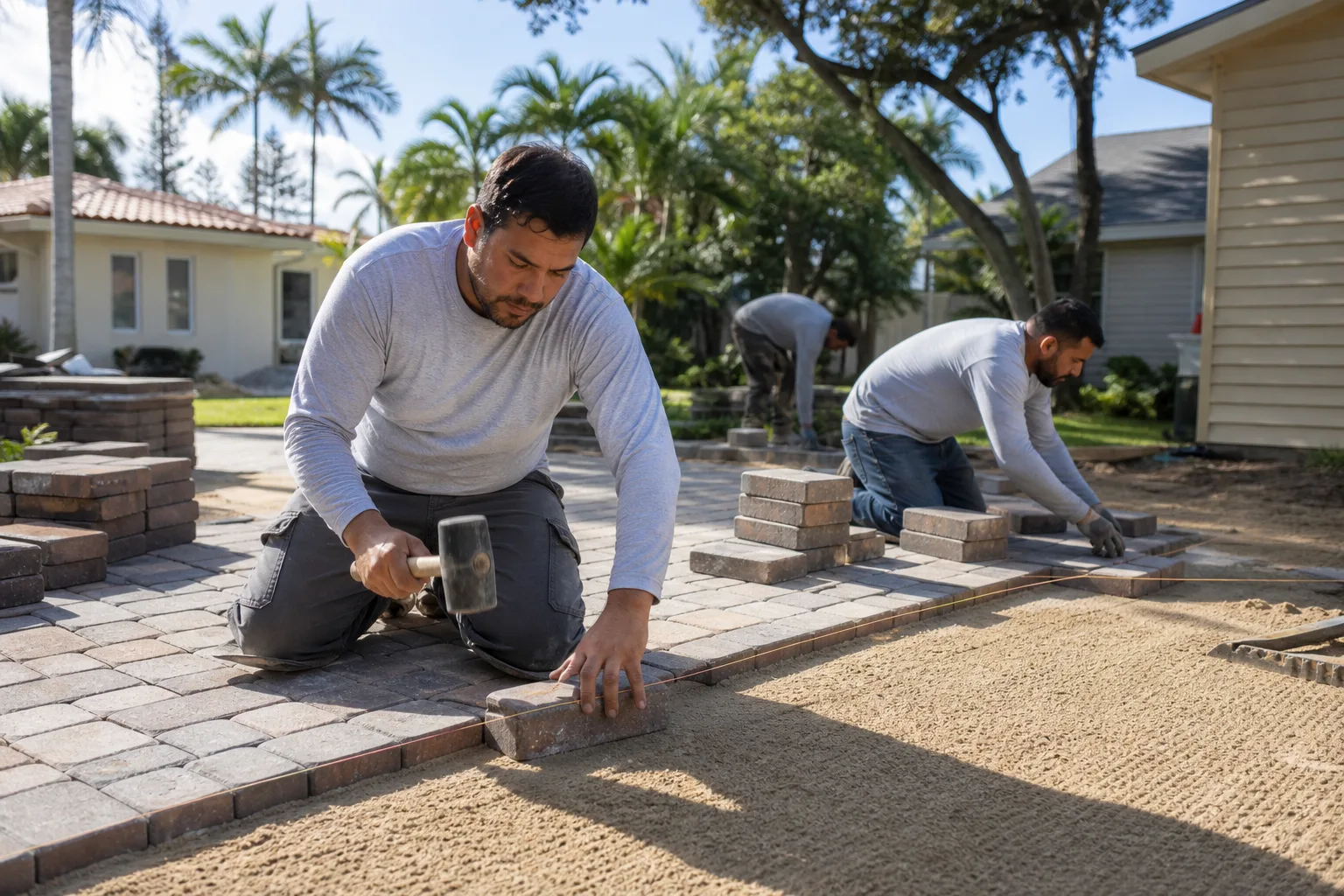
Unilock’s retaining and freestanding wall systems each use a different block geometry and connector, and mixing them is where most mismatches happen. The Brussel Block and Brussel Dimensional series are the small-block systems often specified for low garden walls and step risers around a patio. The Olde Quarry and Estate Wall series are larger, heavier retaining units rated for taller walls and typically pinned with fiberglass rods rather than friction alone. The Rivercrest and Ledgestone lines are wall veneers and caps, which is a different product class again – a cap from one series will not seat correctly on the block core of another.
To identify what you actually have, pull the original project drawings or the contractor’s submittal sheet if the previous owner kept them. Failing that, measure a single block face (length, height, depth in inches) and photograph the connector style where one block meets the next. Those two details narrow the series quickly.
On the OEM-versus-aftermarket question for Unilock specifically: the block units themselves should come from the same series to keep the wall’s interlock and color lot consistent, and color lots do drift between production runs, so a patch of new blocks against five-year-old blocks can read as a visible seam. Connectors, geogrid and drainage aggregate don’t need to be Unilock-branded – those are commodity components and any spec-compliant equivalent is fine. We source across more than fifty vetted brands, and for interior finishes on an addition we regularly work with KraftMaid, Cambria and Silestone alongside the hardscape.
Styles & brands we work with
- Kitchen remodeling
- Bathroom remodeling
- Home additions & ADU
- Roofing
- Windows & doors
- Driveway & pavers
- Fence
Signs Your Unilock Home Additions & ADU Is Failing
These are the conditions we actually find on Glendale properties, and what’s usually behind them.
- The wall leans or bows outward at the top. That’s lateral soil pressure with nowhere to go, which almost always means the drainage gravel behind the wall is clogged or missing and hydrostatic pressure is pushing the blocks. A bowed retaining wall is a structural condition, not a cosmetic one.
- White chalky bloom on the block face. Efflorescence is mineral salts drawn to the surface by moisture moving through the block. It’s a symptom of water in the wall core, not a stain to scrub off, and it returns until the water path is corrected.
- Spalling or aggregate showing through the face. Freeze-thaw is rare in Glendale, but repeated wetting and drying cycles on a wall with poor drainage will pop the face off a block over time. Once the face is gone the block’s structural section is reduced.
- Cap stones rocking or a visible gap at the top course. Caps are usually adhered, and the adhesive fails when the wall moves underneath. A rocking cap lets water straight into the core.
- Sunken or heaved pavers where the patio meets the addition. That’s base compaction or a failed edge restraint, and it typically shows up within a season or two of a poorly prepped install.
See the difference
 Before
 After
 Before
 After
 Before
 After
Replacement Cost & What’s Included
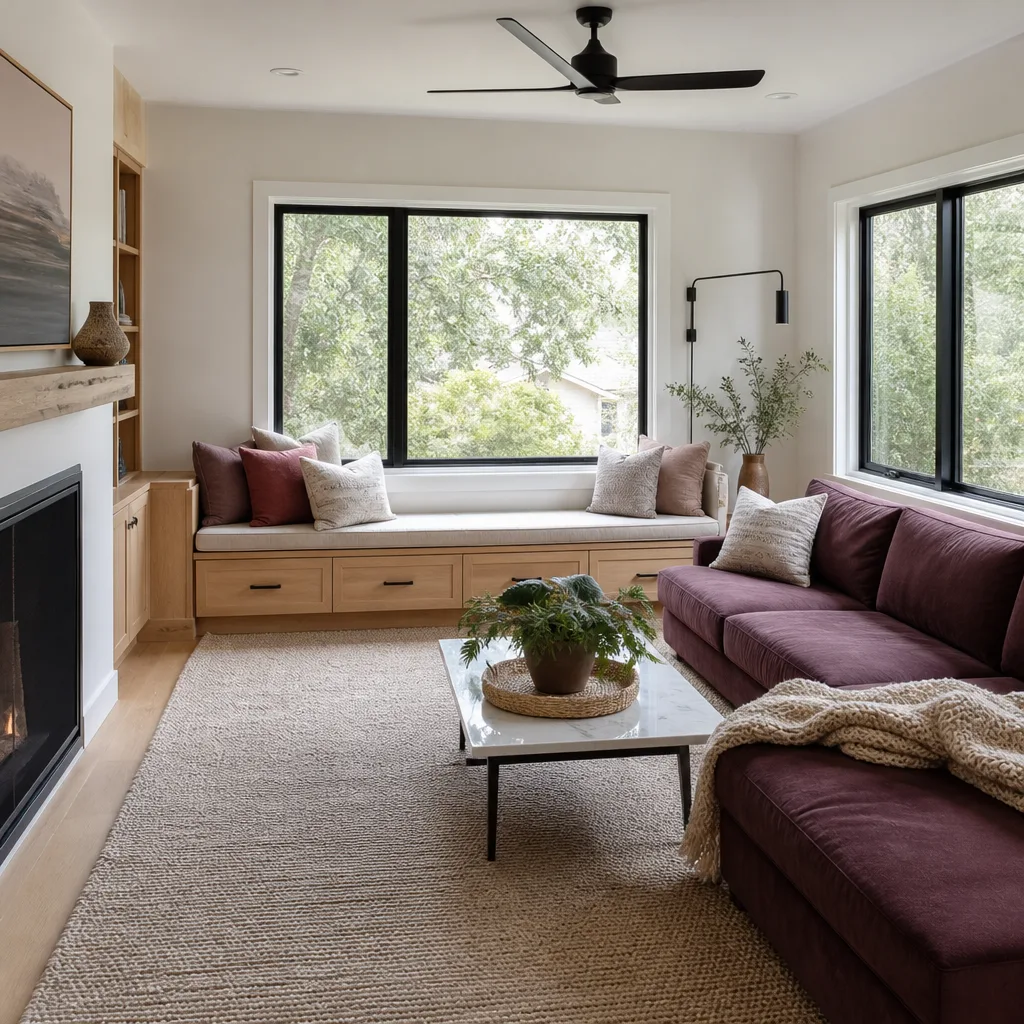
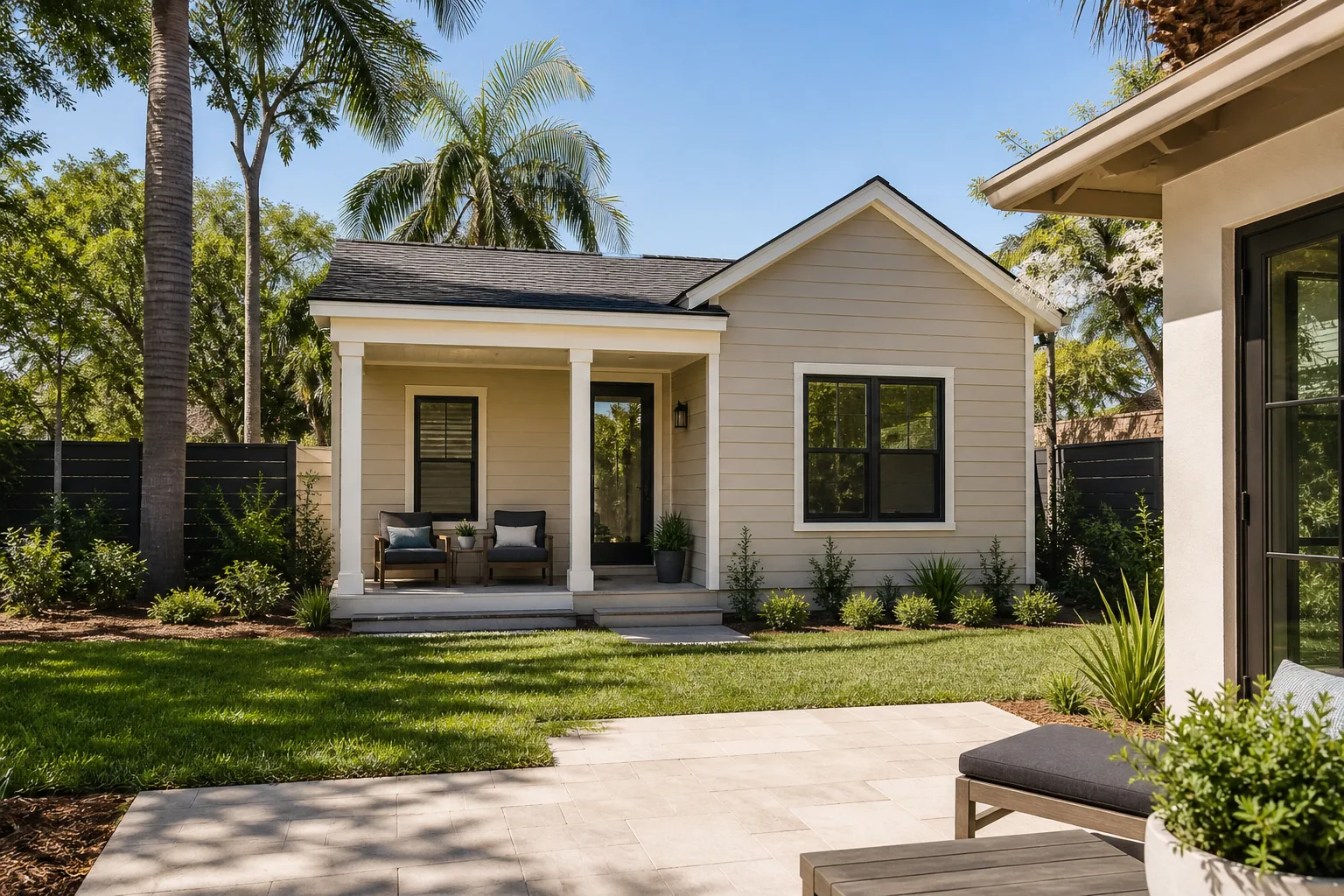
For a full home addition in Glendale, we quote $45,000 – $130,000 depending on square footage, foundation type and whether the roofline has to be tied into the existing structure. A detached ADU runs $90,000 – $220,000, and a garage conversion – often the least expensive path to a rentable unit – runs $30,000 – $80,000. Where the Unilock hardscape is part of the scope, we list it as its own line so the wall and paver work isn’t buried in the framing number.
What moves the range: foundation and grading, whether the site needs a retaining wall at all, roof tie-in complexity, utility runs to a detached ADU, and the finish level inside. Every quote is a flat written price with a written scope and written warranty attached. No work proceeds on a change until the change order is signed – that discipline is why our projects finish within a few percent of the agreed number. The 365-Day Done Right Promise covers the work; if it’s not done right, we make it right.
A separate note on the wall itself: if the failing Unilock system is a retaining wall holding back a slope, and the addition sits above it, have that wall assessed before anything else is built. Under Clause 1 of the Haven Standard, that assessment and its price are in writing before a single block comes out.
DIY or Call Us?
A retaining wall that’s bowing, leaning, or holding back soil above a structure is genuinely dangerous to take apart yourself. A failed wall can release hundreds of pounds of saturated soil and block at once, and the failure doesn’t announce itself – it just goes. We’d rather tell you that plainly than sell you a fix you don’t need.
What you can safely check: photograph the wall from both sides, note any lean with a level against the face, look for efflorescence and spalling, and check whether the drainage outlet at the base is clear. Don’t dig out behind a loaded wall to “see what’s going on.”
For additions and ADUs, the project involves permits, structural review and inspection sign-offs, so it isn’t a DIY scope at all. Call (844) 320-5930 for a free estimate, and a live person answers around the clock. If you already have a written estimate from another contractor, we’ll review it line by line at no charge – bring it and we’ll tell you what’s missing and what’s padded.
FAQs
A properly built Unilock wall with working drainage typically holds for 20 to 30 years or more; the block itself is durable, and the drainage behind it is what sets the real service life in Glendale’s wet-winter, dry-summer cycle. Walls that fail early almost always fail because the gravel and filter fabric behind them clogged or were never installed. Call (844) 320-5930 for an assessment of what you have.
Sometimes, yes. Efflorescence and minor cap issues are often a drainage correction plus re-adhesion of the caps, which is far less than a rebuild. A wall that has visibly rotated or bowed past a few degrees usually needs to come down and go back up with proper geogrid and drainage – patching a moving wall doesn’t stop the movement. We’ll tell you which one you’re looking at in writing.
A single garden wall section can be rebuilt in a day or two; a full retaining wall around an addition or ADU typically runs one to two weeks depending on length and access. An addition itself runs several months and an ADU longer, and the schedule is written into the quote before we start. Call (844) 320-5930 and we’ll give you a realistic timeline for your specific site.
We match the block series from your drawings or a physical measurement and confirm the color lot before ordering, because a mismatched lot is visible immediately against an existing wall. Connectors, geogrid and aggregate come from spec-compliant suppliers. We don’t claim to stock parts or carry them on a truck – the right unit is ordered to the job. Call (844) 320-5930 and we’ll walk through what your wall needs.
If you’re in Glendale and looking at an addition, an ADU, or a Unilock wall that’s started to move, the next step is a written price, not a sales visit. We give you the number before anyone picks up a tool, the scope in writing, and a photo record of what we found and what we did. Call (844) 320-5930 to schedule your free estimate.
Written by the team at Rowan Construction Group Glendale, serving Glendale and nearby areas.