

Free written scope consultation - allowances, timeline, and change-order rules on paper before a single trade is scheduled
Silestone Home Additions & ADU: The Glendale Owner’s Guide
Silestone is a quartz surface, so it doesn’t have “parts” the way a garage door or a furnace does. What fails in a Glendale home addition or ADU is the substrate and the seams under the Silestone: the slab itself, the cabinetry carrying it, the caulk at the wall, or the framing that shifted. An installed Silestone surface in a Glendale addition or ADU addition runs $45,000 – $130,000 for the full project, with countertop work inside that at $2,000 – $6,500 and islands at $3,000 – $10,000. Owners usually find the problem the same way: a hairline crack that appeared overnight near the sink cutout, a seam that has gone dark, or a cabinet run that suddenly rocks when you lean on the counter.
We’re an independent contractor and not affiliated with Silestone. We install, repair and replace the surfaces and the cabinetry that holds them, and we quote the number in writing before anyone picks up a tool.
Key takeaways
- Quartz like Silestone is engineered stone, not natural slab. It doesn’t chip the way granite does, but it fails at seams, cutouts and unsupported overhangs.
- Glendale’s older housing stock, much of it built between the 1920s and 1950s, has framing that has moved. A Silestone counter installed over a floor that deflects will crack at the sink or the dishwasher cutout within a few years.
- The fix usually isn’t a new slab. It’s the substrate, the seam, or the cabinet run underneath.
Which Silestone Models This Applies To
Silestone is made by Cosentino, and the product is sold by color line rather than by model number. The lines you’ll see in Glendale homes include the Eternal, Stellar, Iconic, Le Chic and Loft series. Each is a quartz composite with a specific slab thickness, and that thickness is what determines how a repair or replacement is scoped. Standard Silestone slabs are 2 cm or 3 cm; the 3 cm slabs are far more common in kitchen islands and in countertops where the edge is exposed.
How to identify what you actually have: look for the Cosentino label on the underside of the slab, near the sink or in a cabinet bay. It lists the color name and the slab thickness. If there’s no label, measure the slab edge with a tape. Two centimeters reads just under three-quarters of an inch; 3 cm reads slightly over an inch. That measurement tells us whether a replacement has to match an existing thickness or whether the whole run gets rebuilt.
The OEM-versus-aftermarket question is different for Silestone than for a mechanical part. Cosentino slabs are the only true OEM replacement, and mixing a new slab from a different production run into an existing one will show a color shift under Glendale’s afternoon light. Aftermarket quartz from other manufacturers is a legitimate option when the whole surface is being replaced, but not when you’re trying to patch a single section of an existing Silestone counter.
Styles & brands we work with
- Kitchen remodeling
- Bathroom remodeling
- Home additions & ADU
- Roofing
- Windows & doors
- Driveway & pavers
- Fence
Signs Your Silestone Home Additions & ADU Is Failing
Quartz doesn’t fail quietly. It gives you a warning in the first few months of a problem, and the warning is usually one of these:
- A hairline crack at a cutout. The most common failure. Quartz is stressed at the sink and cooktop openings, and if the cabinet run underneath has settled, the slab cracks along the cutout corner within a year or two. In Glendale, this shows up most in additions built on raised foundations, where the floor deflects slightly.
- A seam that’s gone dark or gritty. The seam between two slab sections is filled with a color-matched epoxy. When that epoxy fails, moisture and dust get in, and the line turns dark. Left alone, it spreads and the seam opens.
- A cabinet run that rocks or sags. If you can feel movement when you lean on the counter, the problem is the cabinetry or the floor, not the quartz. Silestone sits directly on the cabinet; a sagging run puts the slab under tension and it will crack.
- Separation at the wall or backsplash. The caulk joint between the counter and the wall opens when the house moves. In older Glendale homes with plaster walls, this is common and inexpensive to fix if caught early.
- A dull or cloudy patch that won’t clean. Silestone is non-porous, so a stain that won’t come up usually isn’t a stain. It’s surface damage from an abrasive cleaner or a hot pan, and it means the finish has been compromised in that spot.
See the difference
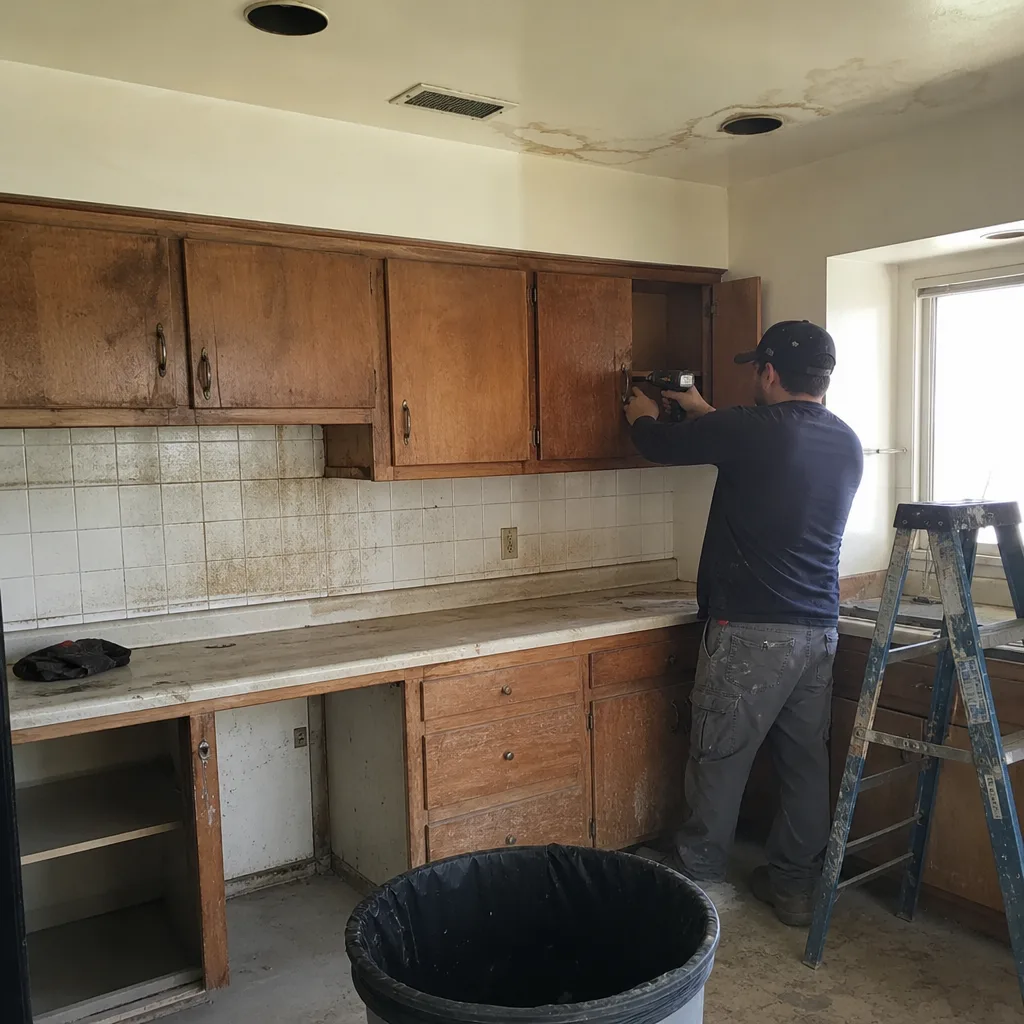 Before
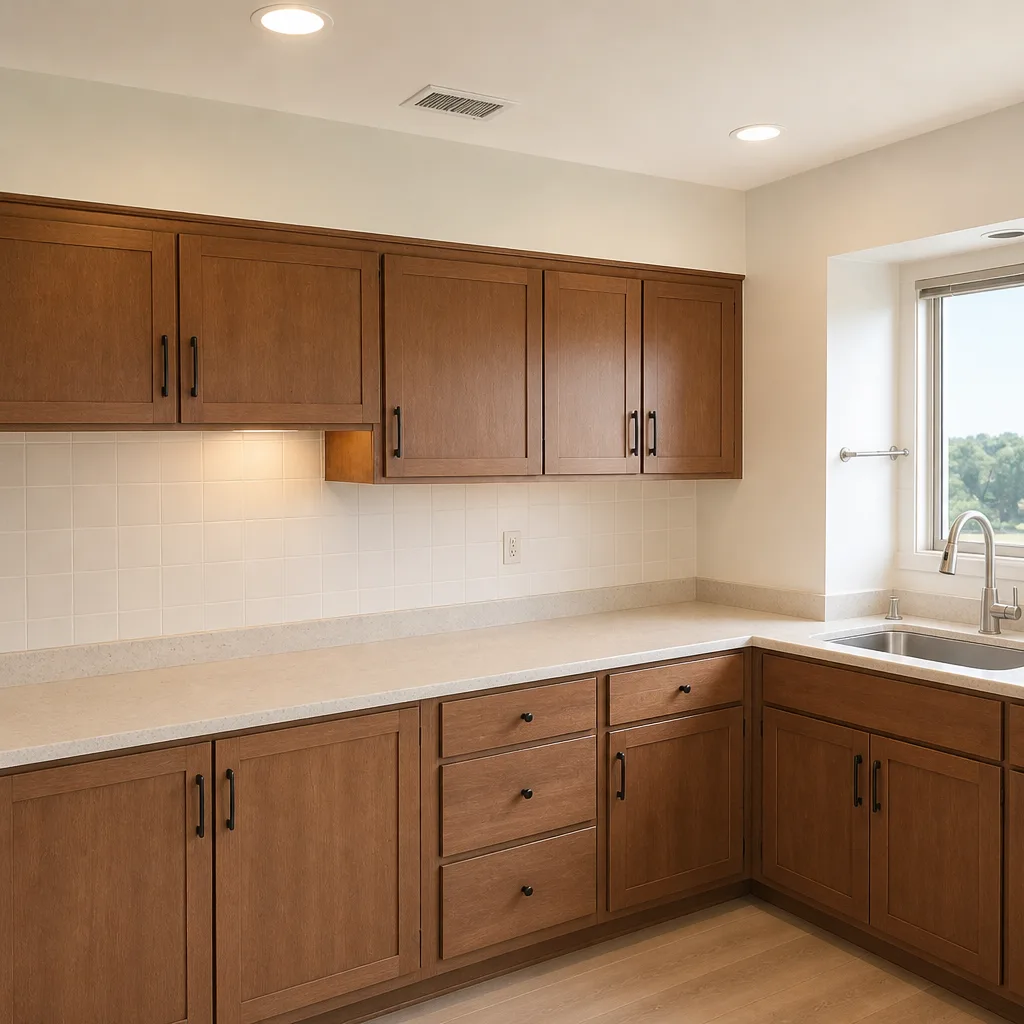 After
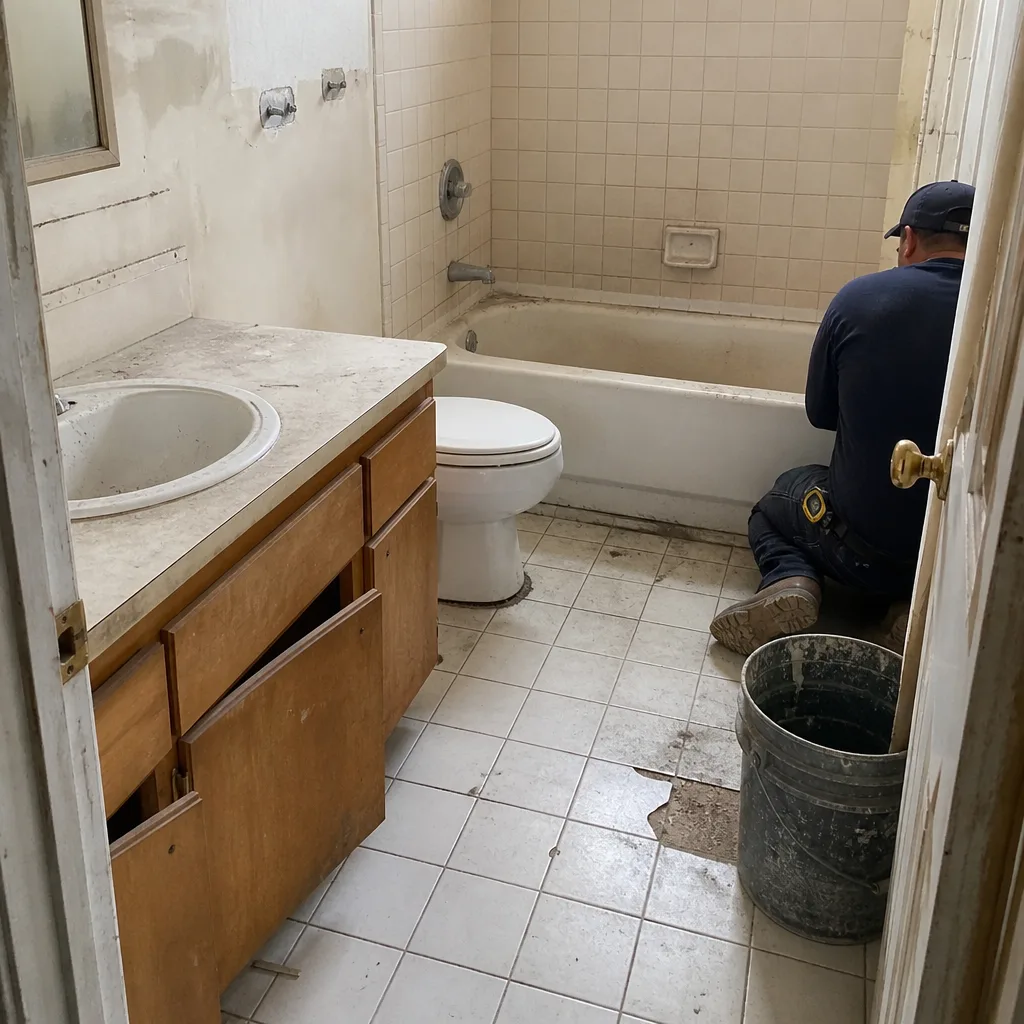 Before
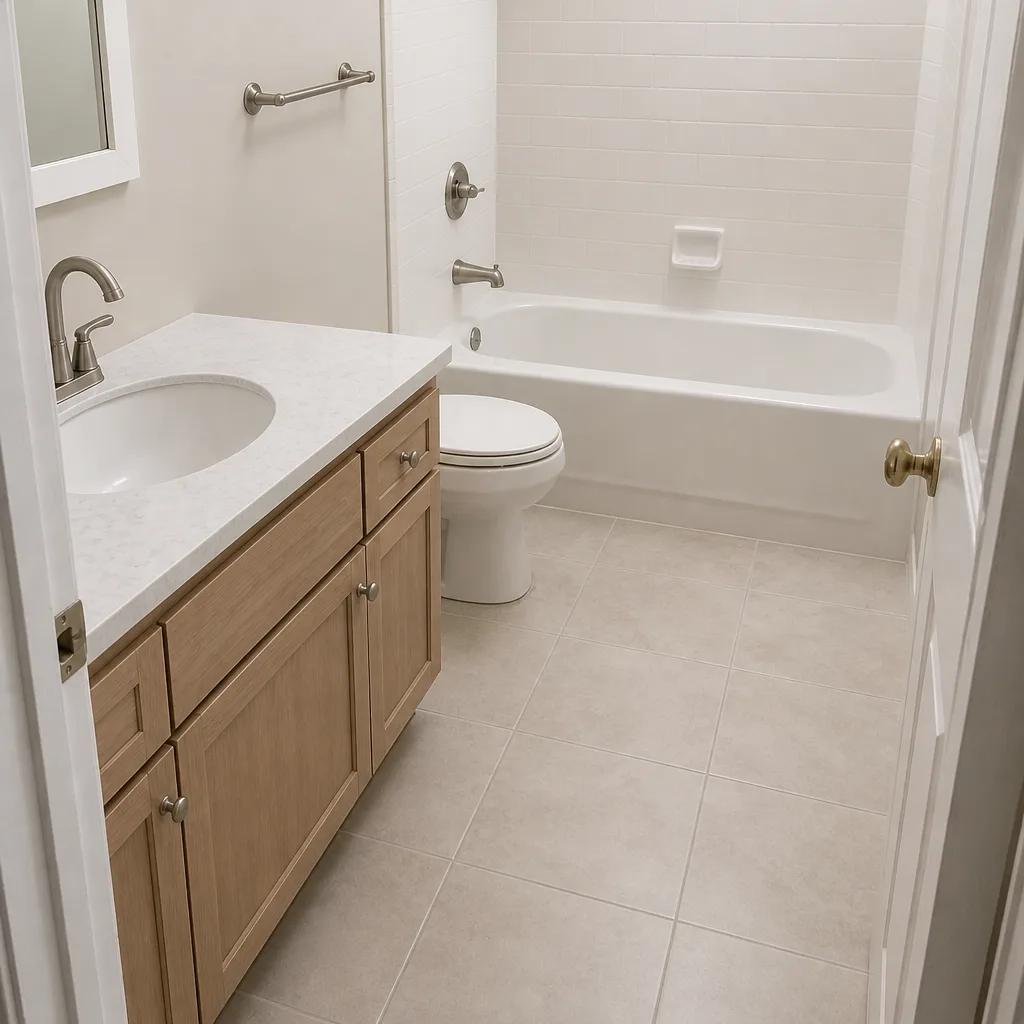 After
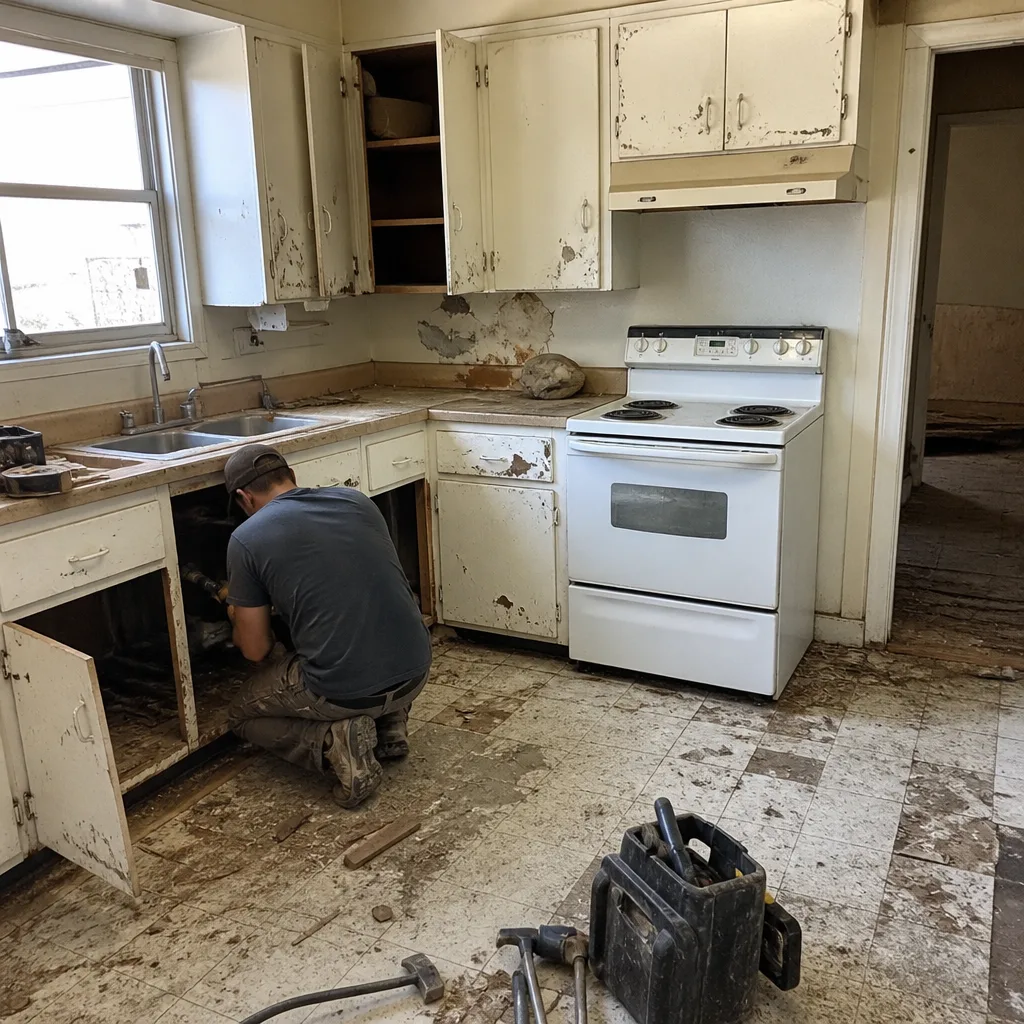 Before
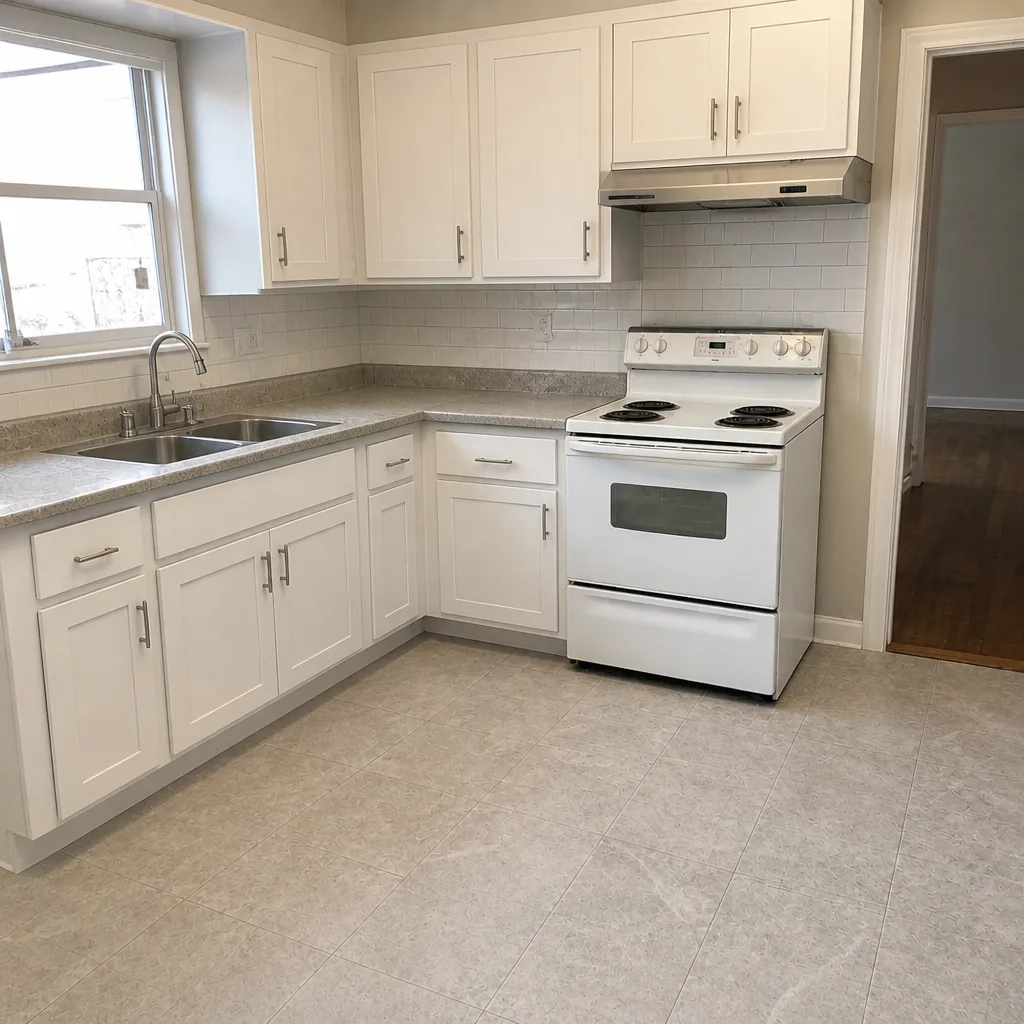 After
Replacement Cost & What’s Included
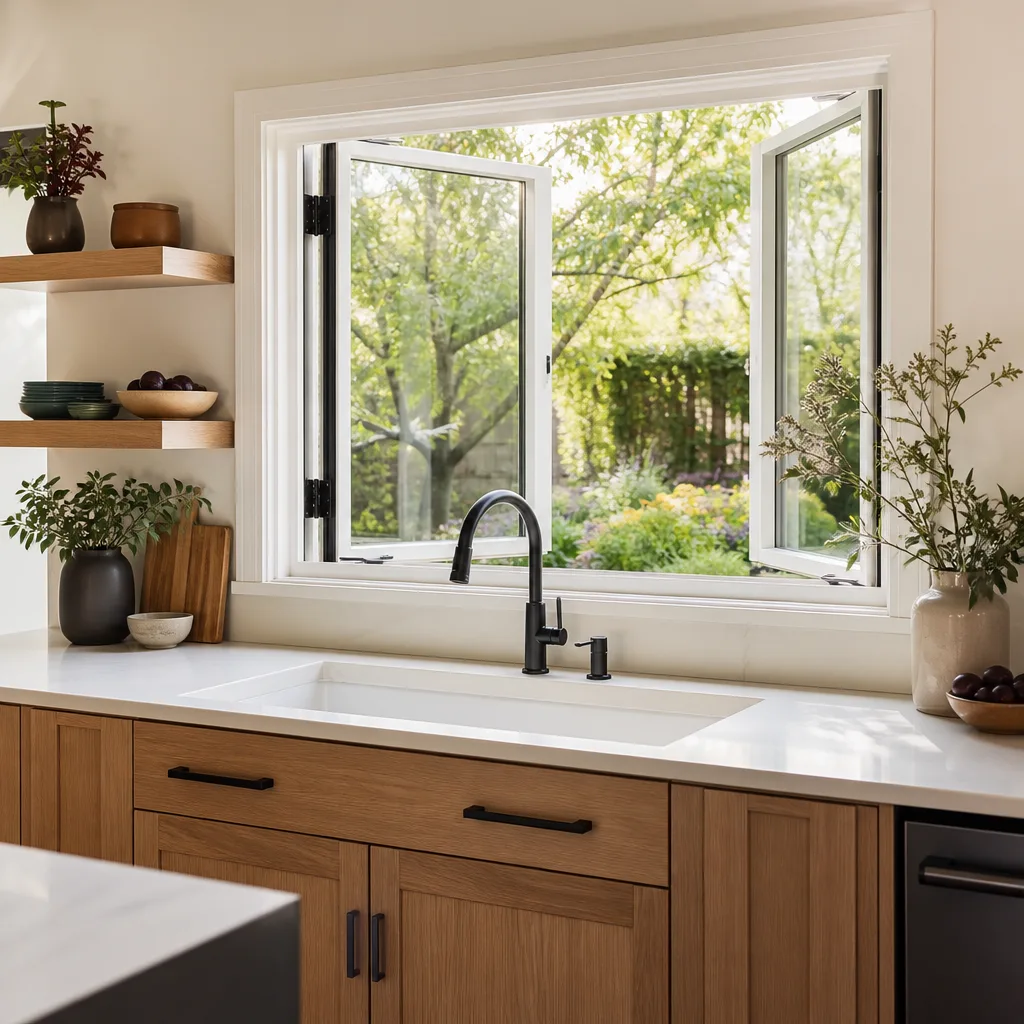
Replacing or repairing Silestone surfaces in a Glendale addition or ADU runs $2,000 – $6,500 for countertops, $3,000 – $10,000 for an island, and $800 – $2,500 for a backsplash. Where the failure reaches the cabinetry or the framing, the full addition scope is $45,000 – $130,000 and an ADU build is $90,000 – $220,000.
What drives the range: whether the existing slab can be saved or has to come out whole, the number of seams, whether the cabinet run needs re-leveling, and whether the sink or cooktop cutout has to be re-templated. Every quote we write is a flat price with a written scope and a written warranty. The parts line and the labor line are separate, so you can see what the slab costs and what the installation costs. No work starts until the change order is signed, and if a replacement turns out to need more than the quote said, the number doesn’t move without your signature. Under the 365-Day Done Right Promise, if the work isn’t right, we make it right.
DIY or Call Us?
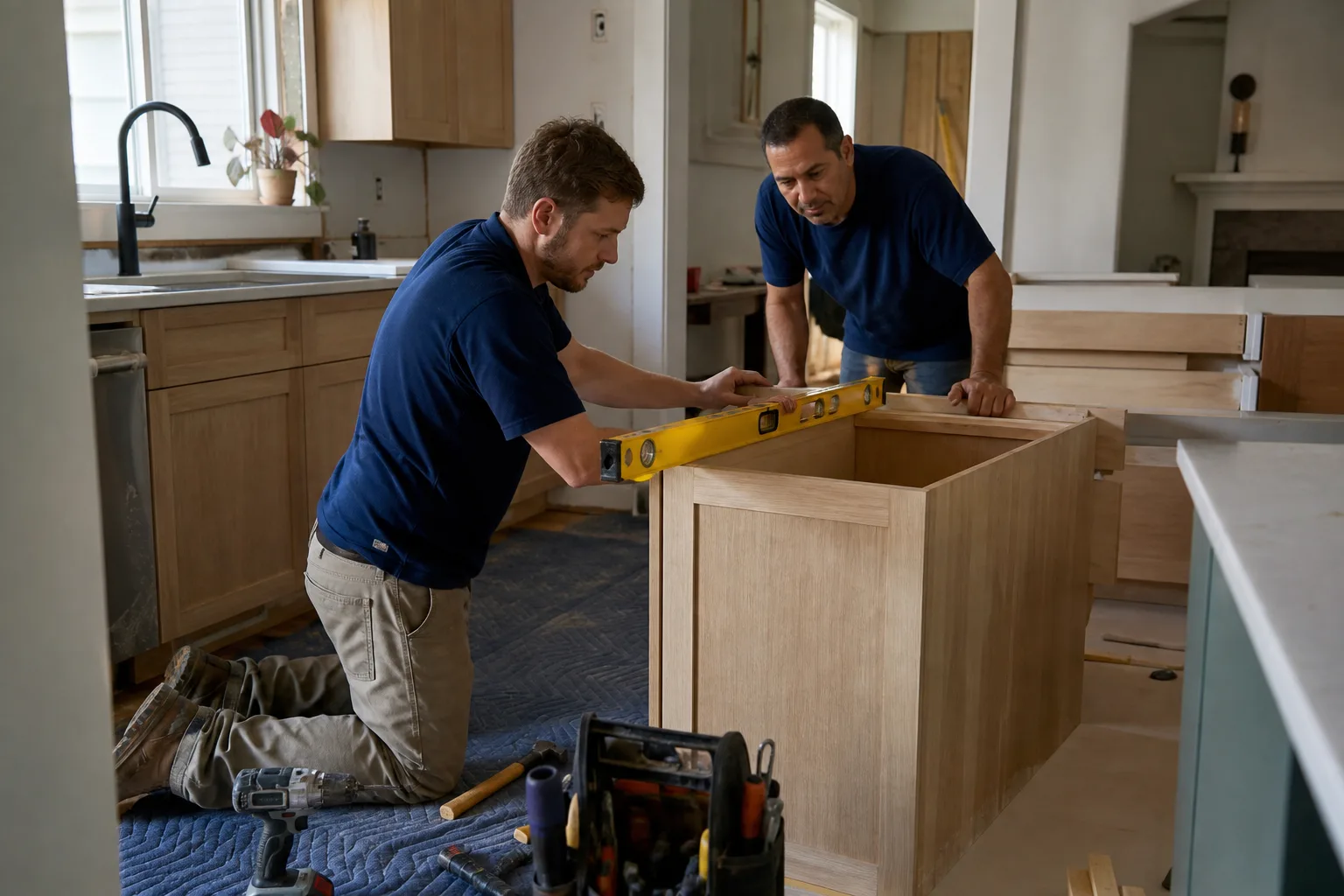
There’s a short list of things you can safely check yourself. You can wipe a seam and see if the epoxy is intact. You can put a level on the cabinet run and see if it rocks. You can look for the Cosentino label under the sink. You can re-caulk the joint at the wall, which is a legitimate homeowner repair.
Where it goes wrong: pulling a cracked slab without knowing whether the cabinet underneath is the actual cause. A homeowner who replaces the quartz without fixing the settling framing gets a second crack in the same place within a year, and the new slab is gone too. Quartz is heavy and the cutout edges are sharp, and a wrong move on a 3 cm slab is a $2,000 mistake before anyone gets hurt. If the crack is at a cutout or the cabinet run is moving, call us. We’ll tell you what we see, in plain terms, and quote it in writing. Call (844) 320-5930.
FAQs
A well-installed Silestone surface lasts 15 to 25 years in a Glendale home, and the slab itself is rarely what fails first. The seams, the caulk joints and the cabinetry underneath are what determine the lifespan, and those are the parts that get repaired. Call (844) 320-5930 for a free estimate.
Yes, if the crack is at a seam or a short hairline, and sometimes it’s the right call. A crack that runs from a cutout corner or shows any displacement of the two sides means the slab is stressed and needs to be replaced. We’ll tell you honestly which one you have before we quote anything.
A countertop replacement in a Glendale addition is typically a one-to-two-day job once the slab is templated and cut, and the template visit happens a week or more before installation. Repairs to a seam or a caulk joint are often a single visit. Cabinetry re-leveling adds a day. Call (844) 320-5930 to schedule the assessment.
We source through Cosentino’s distribution network, matching the color line and slab thickness to what’s already in the home, or specifying new Silestone when the whole surface is being replaced. We also work with Cambria and Caesarstone when a homeowner wants a different quartz, and with KraftMaid and Kohler for the cabinetry and fixtures that go under it. The slab is ordered after template, not before, so the measurement is the one that gets cut.
No, not without a signed change order. That’s the point of the written price. If we open the wall and find water damage behind the backsplash, we stop, show you the photo record, write a change order, and wait for your signature before anyone continues. The quote you agreed to stays the quote unless you sign something different.
Call (844) 320-5930 for a free estimate on your Silestone repair or replacement in Glendale. We’ll look at the seam, the cutout and the cabinet run underneath, tell you what we found, and put the number in writing before any work starts.
Written by the team at Rowan Construction Group Glendale, serving Glendale and nearby areas.