
Free written scope consultation - allowances, timeline, and change-order rules on paper before a single trade is scheduled
Plant Prefab Home Additions & ADU: The Glendale Owner’s Guide
We install and finish Plant Prefab-compatible home additions and ADUs in Glendale, with typical installed projects running $45,000 – $130,000 for an addition and $90,000 – $220,000 for a full ADU. Owners usually discover a problem the same way: a hairline crack widens along a module seam, a door in the new wing starts catching on its frame, or water shows up at the floor line months after the panels went in. A failed component in a prefab addition is rarely a single broken part; it’s usually a connection, a flashing detail, or a settling issue that a trained eye can read and price.
Those symptoms tend to show up slowly. The seam that was tight at handover opens a fraction of an inch. The room that felt solid in spring feels different by fall. In Glendale, where the ground moves with our dry-season shrink and wet-season swell, and where summer heat pushes interior temperatures hard against a sun-facing wall, the connection points do the most work and fail first. Below is what to check, what it costs to put right, and where a careful owner should stop and call.
Key takeaways
- Installed Plant Prefab addition work in Glendale runs $45,000 – $130,000; an ADU runs $90,000 – $220,000.
- Most “failed part” complaints trace to seam connections, flashing, and foundation settling, not the panel itself.
- Any work touching structure or a weather-tight envelope is a professional job, not an owner fix.
- We’re an independent service provider; we are not affiliated with Plant Prefab.
Which Plant Prefab Models This Applies To
Plant Prefab builds to a set of panelized and modular lines, and the addition or ADU you own will identify itself in two places: a factory data plate or label on or near the main panel edge, and the stamped plans that came with the permit set. Find both before you do anything else. The label tells you the panel series and the design snow, wind, and climate loads it was built to; the plans tell you the module dimensions and connection logic. Photograph the label and the first page of your stamped set for your records; it saves a return trip and it lets us quote against the actual assembly.
The compatibility question for Plant Prefab specifically comes down to the connectors. Their panel-to-panel and panel-to-foundation hardware is a specific gauge and finish, and substitutes with the same nominal size but a different coating or thread pitch can back out or corrode. That’s the OEM-versus-aftermarket decision in one line: match the connector and the flashing to what the label specifies, and treat generic hardware-store equivalents as a last resort. When we can’t source the exact OEM connector, we’ll tell you what we’re substituting and why, in writing, before anyone touches the addition.
Styles & brands we work with
- Kitchen remodeling
- Bathroom remodeling
- Home additions & ADU
- Roofing
- Windows & doors
- Driveway & pavers
- Fence
Signs Your Plant Prefab Home Additions & ADU Is Failing
- A widening gap at a module seam. Usually settling or a connector that’s worked loose. It’s cosmetic until it isn’t; once it opens enough to admit water or air, the envelope is compromised.
- Doors and windows in the addition sticking or not latching. A hinge-side bind often means the frame is out of square from movement. In a prefab wing, that points at the panel connection or the sill it sits on, not the door itself.
- Water staining or damp at the floor line or a panel joint. This is flashing or sealant failure letting water in behind the panel. In Glendale’s wet-season rain, a small breach in a roof or wall flashing gets worse fast.
- Bubbling paint, soft drywall, or a musty smell near an exterior wall. Moisture is getting in and staying in. The drywall is the messenger; the source is the envelope above or behind it.
- A sagging or uneven floor in the new addition. Foundation movement or a bad point load under a panel. This one gets a professional look before anyone walks it hard.
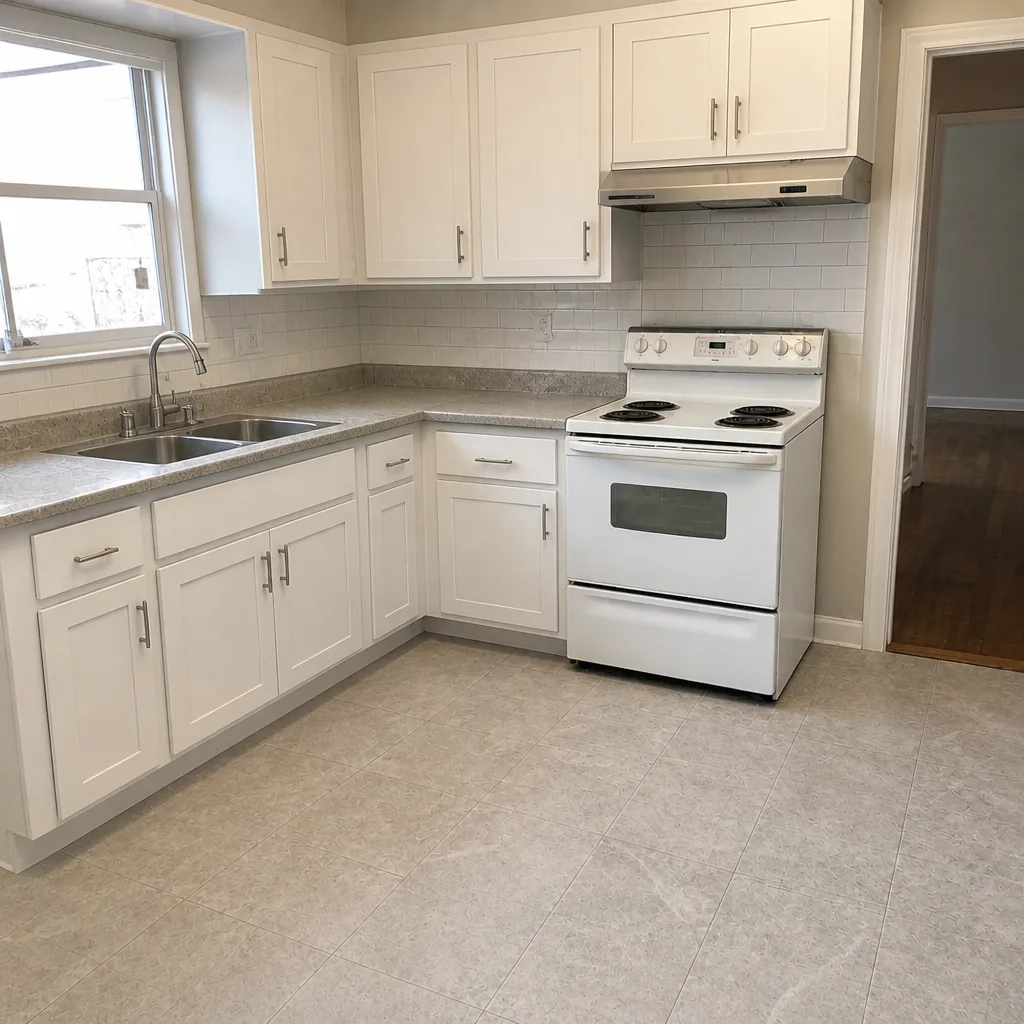
See the difference
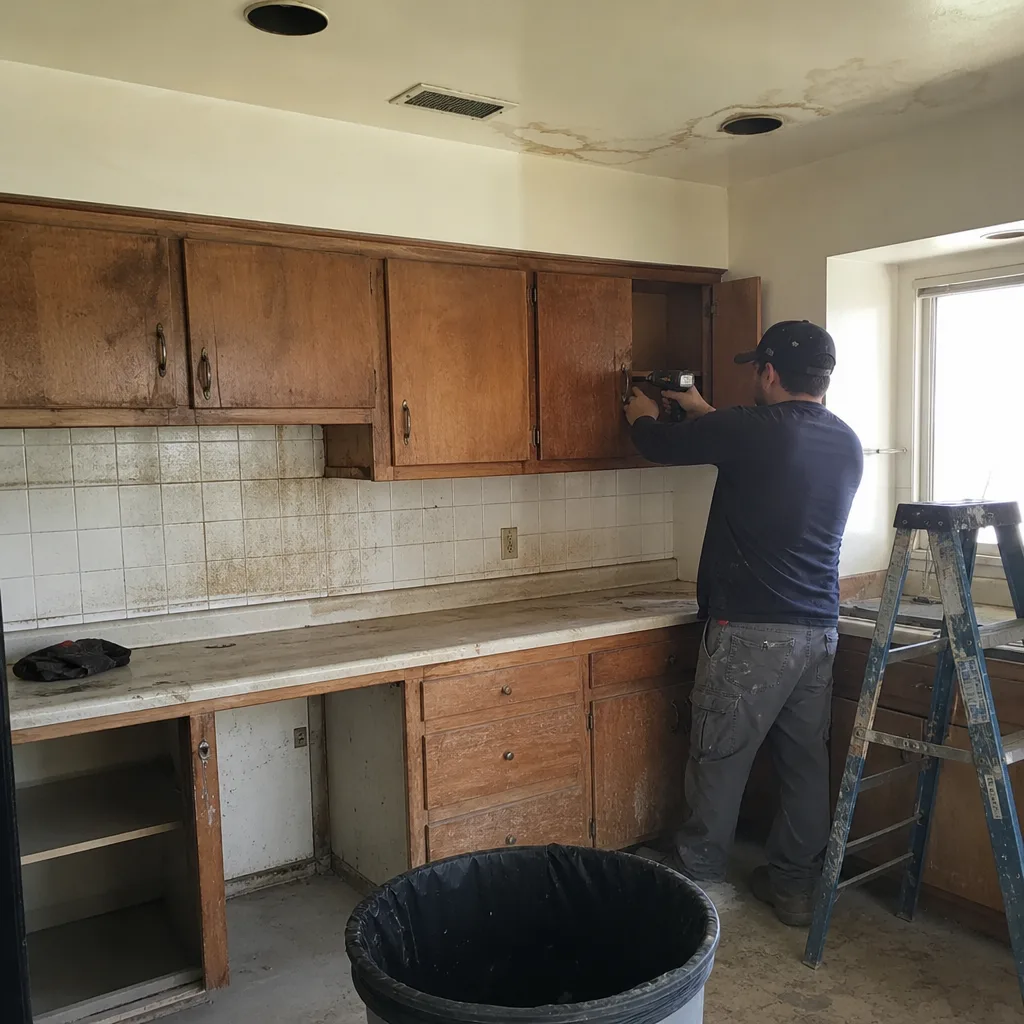 Before
 After
 Before
 After
 Before
 After
Replacement Cost & What’s Included
| Scope | Glendale installed range |
|---|---|
| Home addition (finish/repair scope) | $45,000 – $130,000 |
| ADU construction | $90,000 – $220,000 |
| Garage conversion to living space | $30,000 – $80,000 |
What moves a project within that range: how much of the existing assembly has to be opened up, whether the foundation needs work, whether the permit set has to be updated, and how fast you want the OEM connectors and flashing. Your price is written before any work starts, itemized so you can see the parts and the labor, with the scope and the warranty in the same document. If work uncovers something the written scope didn’t cover, no change proceeds until you’ve signed a change order, and that’s the discipline that keeps projects within a few percent of the agreed number. The 365-Day Done Right Promise covers the work: if it isn’t done right, we make it right.
DIY or Call Us?
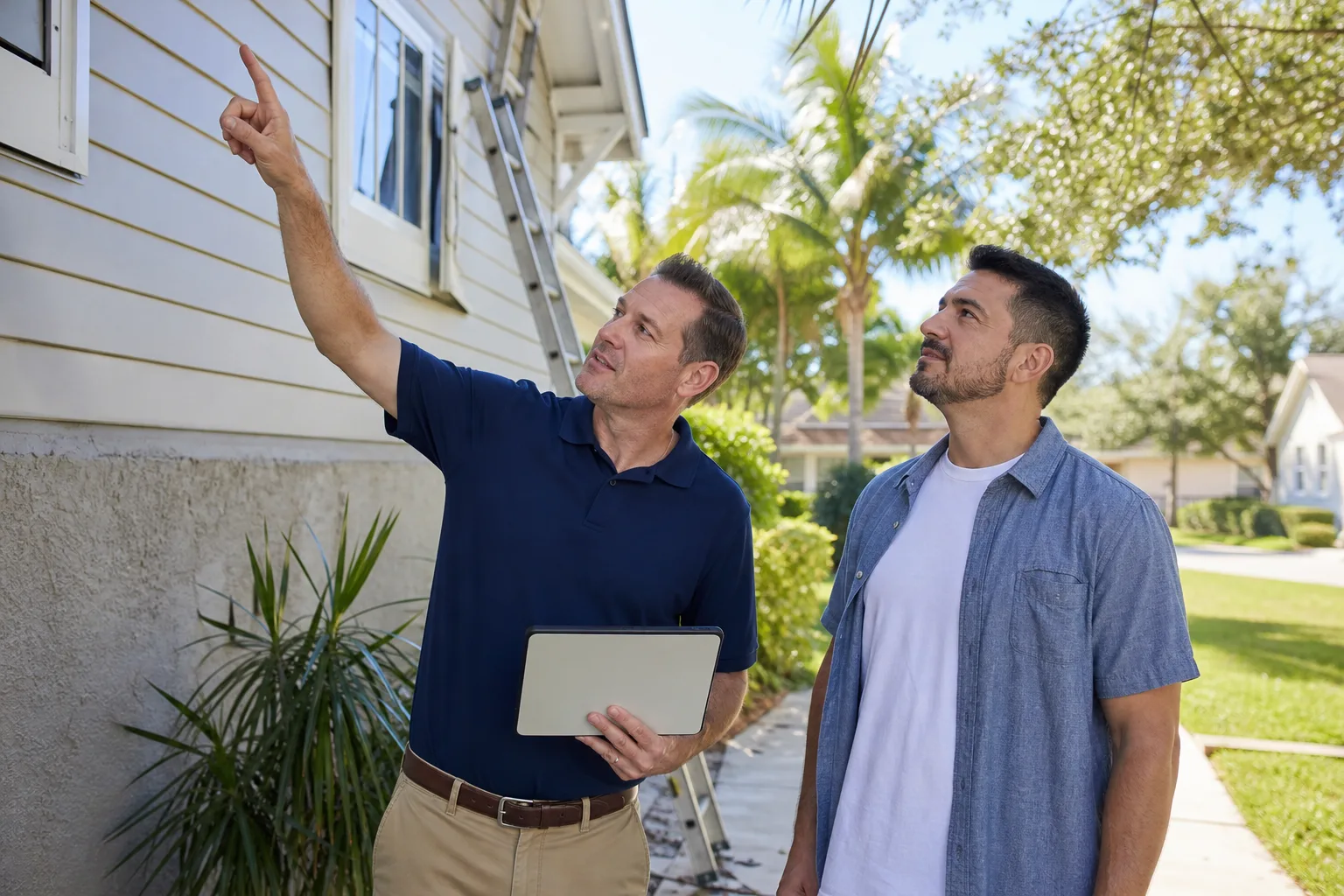
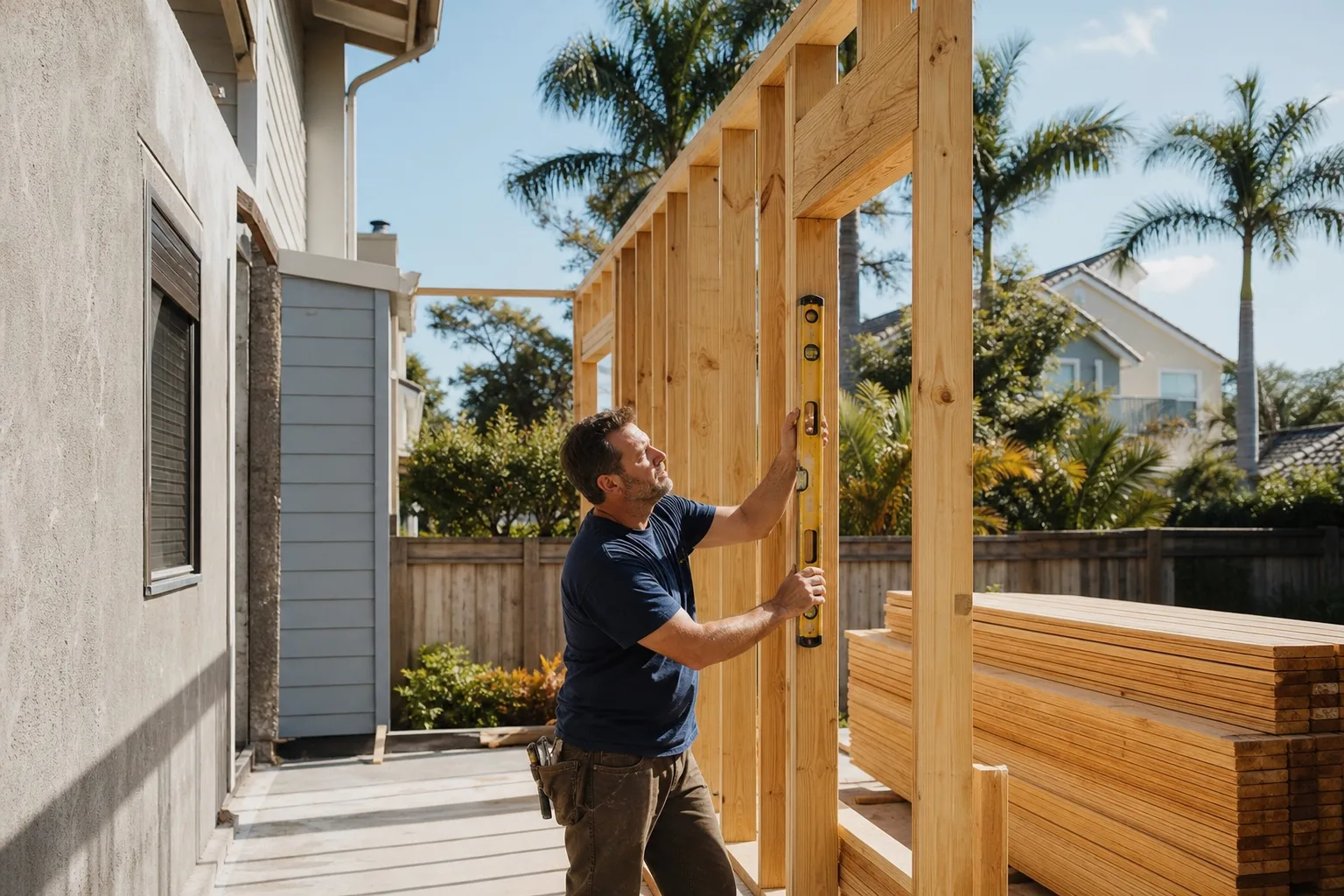
An owner can safely check a few things: photograph the factory label, look for daylight or water staining at a seam, note which doors and windows bind, and record the dates symptoms appeared. What you shouldn’t do yourself is tighten structural connectors, open the envelope to chase a leak, or touch the foundation. Panel connections and flashing carry load and keep water out, and a wrong fastener here or a resealed joint there can mask a bigger problem or make it worse. The honest rule: look and document, don’t disassemble.
Call (844) 320-5930 and we’ll read what you found, then put a written price in front of you. Estimates are free, and we’ll do a free second opinion on any written estimate you already have, line by line.
FAQs
The panels are built to last decades, but the connectors and flashing are the wear points, and in Glendale’s dry-summer, wet-winter cycle those are what you’ll be maintaining long before the panels themselves. Expect to inspect seams and flashing every few years and to address a sealant or connector issue in that window rather than waiting for water to show.
Often yes. A loose connector, a piece of failed flashing, or a joint that’s opened can be corrected without replacing the panel, and that’s usually the cheaper and faster path. We’ll tell you honestly when a repair holds and when something needs replacing, based on what we find when we open it up.
Small repairs, like a connector or flashing fix, typically come together in a day or two of on-site work. Anything that opens the envelope or touches the foundation runs longer and depends on permit timing, which we’ll spell out in the written scope so you’re not guessing.
We match the connector and flashing to the specifications on your factory label and stamped plans, sourcing the exact OEM part where we can and telling you in writing what we’re substituting when we can’t. We don’t claim to stock or carry Plant Prefab parts; matching is the job, and it’s done against your actual assembly. We also service KraftMaid, Cambria, and Silestone products on the same written-price terms.
Whether it’s an addition or an ADU, the first step is simple: call (844) 320-5930 and we’ll put a written price in front of you before any work starts. Our technicians have up to 19 years of experience, crews are background-checked and uniformed, and you get a documented photo record of every visit. Glendale homeowners deserve a number on paper, not a promise on the phone.
Written by the team at Rowan Construction Group Glendale, serving Glendale and nearby areas.